



On April 10, 2025, the New York City Bar Association, in partnership with the Society of Foreign Consuls in New York (“SoFC”), organized an illuminating two-part panel session entitled “Navigating Shifts in Immigration Policy.” This program—hosted by the Office of Diversity, Equity, Inclusion and Belonging of the New York City Bar Association—was held at the historic House of the New York City Bar Association Building, followed by a networking reception thereafter.
Founded in 1925, the SoFC “represents the world’s largest consular corps comprising Consulates, Consulates General, and Honorary Consulates based in New York City.” Working closely with the U.S. State Department’s Office of Foreign Missions and the NYC Mayor’s Office for International Affairs, the SoFC safeguards the interests of the consular corps in New York City and fosters cultural and economic ties with the United States of America. In 2025, the SoFC celebrated its one-hundredth anniversary and organized a series of events throughout the year to commemorate this milestone.
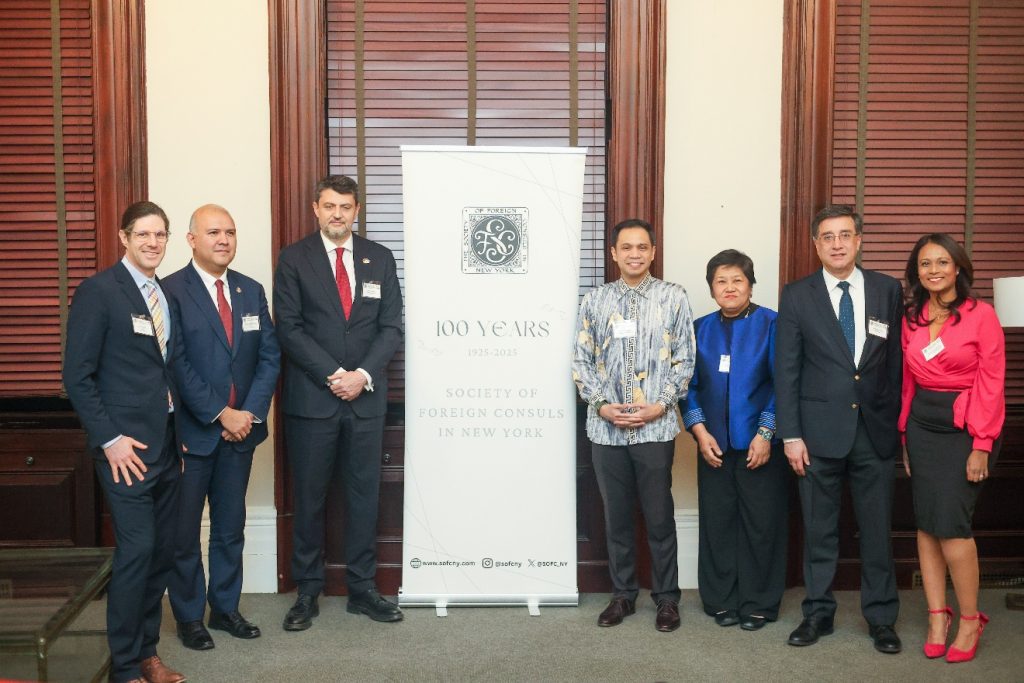
From left to right: AIC Executive Director Jeremy Robbins, Commissioner Manuel Castro of NYC’s MOIA, Consul General of Serbia Vladimir Božović, then Consul General of Malaysia and SoFC President Amir Farid Abu Hasan, Consul General of Thailand Somjai Taphaopong, Consul General of Peru Oswaldo Del Aguila, and Christina Chelliah, Corporate Counsel at TransPerfect and ABA BLS Fellow (Class of 2024–26). Photo courtesy of Christina Chelliah.
This first‑of‑its‑kind partnership emerged from a coffee meeting in early 2025 between the author—a current ABA Business Law Section Fellow (Class of 2024–2026)—and Amir Farid Abu Hasan, president of the Society of Foreign Consuls and then consul general of Malaysia. Organized as part of the SoFC centennial celebrations, the program created a formal platform for engagement between the SoFC and leaders in the legal profession.
Navigating Changing Policies in Times of Uncertainty
This invite-only event drew more than 130 attendees, including consuls general and consular representatives from thirty-four countries, lawyers in leadership positions from eighteen bar associations, legal experts, policymakers, and city representatives.
The first panel, moderated by Jeremy Robbins, executive director of the American Immigration Council (“AIC”), highlighted government and consular perspectives. Panelists included Commissioner Manuel Castro from the NYC Mayor’s Office of Immigrant Affairs (“MOIA”), Consul General of Serbia Vladimir Božović, and Consul General of Peru Oswaldo del Aguila. Commissioner Castro recounted his own journey as an immigrant in United States and emphasized the resources his office provides. The consuls general provided insights regarding the challenges faced by their respective diaspora populations and the support systems in place to deliver assistance. Robbins facilitated an excellent discussion between the panelists and spoke to the resources currently provided by the AIC as well as MOIA. This was beneficial information to the consuls general in attendance, as these resources will be helpful in dispensing assistance to the members of their respective diasporas who are facing immigration-related issues, which include visa renewal processes, removal proceedings, etc.
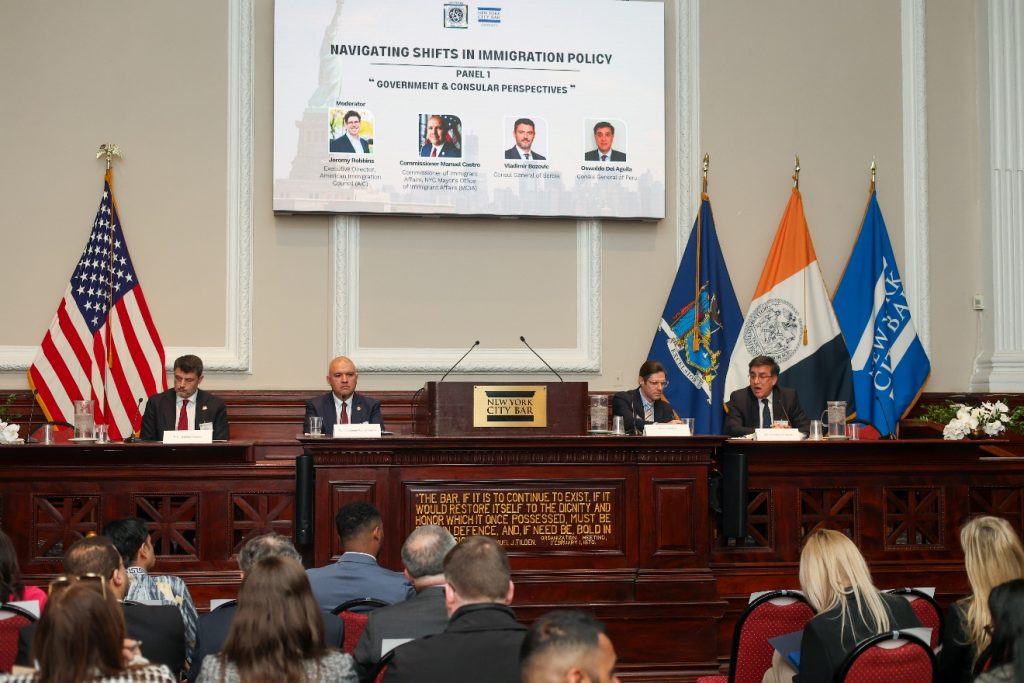
Consul General of Peru Oswaldo Del Aguila speaking during the event’s first panel session, “Government and Consular Perspectives.” Photo credit: Christina Chelliah.
The second panel, moderated by Benjamin Johnson, Executive Director of the American Immigration Lawyers Association (“AILA”), examined legal frameworks surrounding the issues raised in the first panel session and the shifting landscape of federal immigration laws. The lineup of panelists included renowned immigration law practitioners: Cyrus Mehta of Cyrus D. Mehta & Associates, PLLC; Rebekah Wolf, director of the Immigration Justice Campaign; and Professor Lenni Benson from New York Law School. One key takeaway from the second panel was that, beyond the right to legal representation, immigrants have the legal right to contact their consulate if detained by the authorities. Wolf explained that the only free call a detainee gets is to their consulate, which shows that consulates often have greater access to detainees, as they cannot be denied their right to call their consulate. In the event a detainee has no legal representation, or cannot afford to call a lawyer, then at the very least they get to make a call to their consulate.
Building a Bridge Between Diplomacy and Law
What began as a casual idea over coffee took on a life of its own and culminated in a first-of-its-kind event highlighting the intersectionality between diplomacy and law. Amir and I led planning efforts, leveraging our networks to organize a program that offered critical insights into the evolving landscape of immigration policy and provided the opportunity for future collaboration between legal experts, diplomatic representatives, and community leaders.
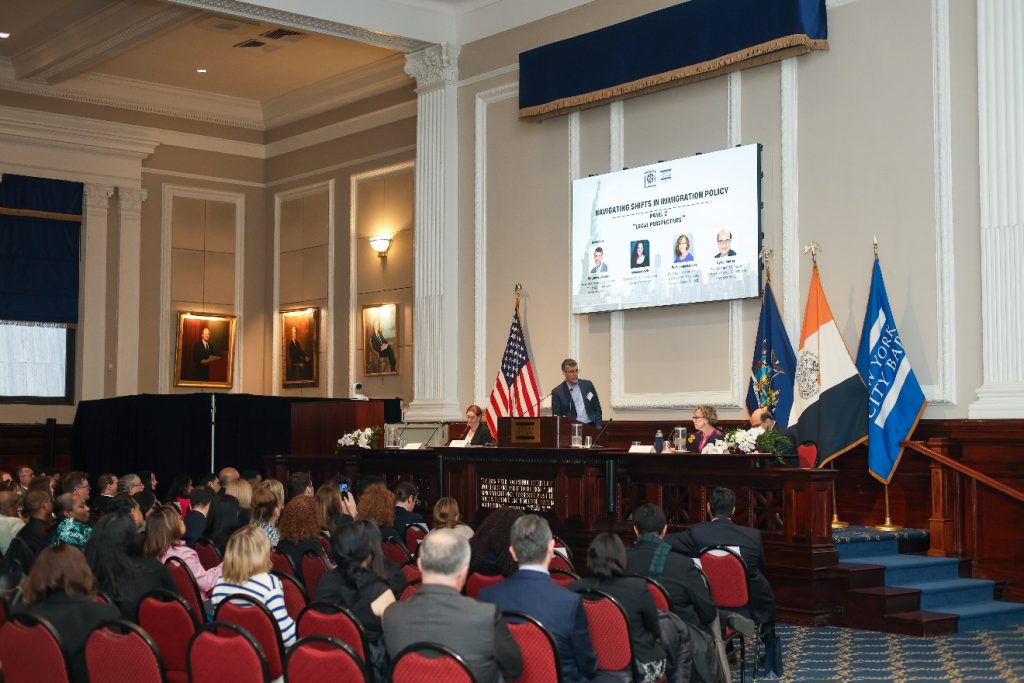
AILA Executive Director Benjamin Johnson moderated the second panel session, “Legal Perspectives.” Photo credit: Christina Chelliah.
In his opening remarks, New York City Bar President Muhammad Faridi said, “We recognize the vital role played by consulates in navigating these complex immigration issues alongside the legal profession. In these uncertain times, collaboration between our communities is more important than ever, so we can better serve and protect the rights and dignity of immigrants in New York.” He added, “Tonight’s gathering forms a powerful collaboration between the Society of Foreign Consuls and the New York City Bar Association—a partnership that reflects our shared commitment to justice, inclusivity, dialogue, and the dignity of immigrant communities.”
SoFC President Amir Farid Abu Hasan echoed the importance of consular support in his speech. “As diplomats, we are not here to question the decisions of the federal government,” he stated. “Rather, we seek to understand the legal and policy ramifications of new immigration rulings so we can better advise and serve our communities. Immigration issues are complicated—and this forum brings together two vital professions, diplomats and legal experts, to build bridges and share knowledge.”
Importance of Collective Action Through Bar Associations
In times like this, it is rare to build bridges between diplomacy and law, but this program was an example of the benefits of doing so. My vision for creating a space where leaders could connect across communities led me to draw on my own professional network to invite affinity bar association leaders to this event to meet foreign diplomats in the City of New York. It is uncommon to curate a specific guest list for an event such as this, but I wanted to invite not just lawyers, but lawyers who hold leadership roles in bar associations, given the topic of the panel discussion and the work that is already being done by these bar associations.
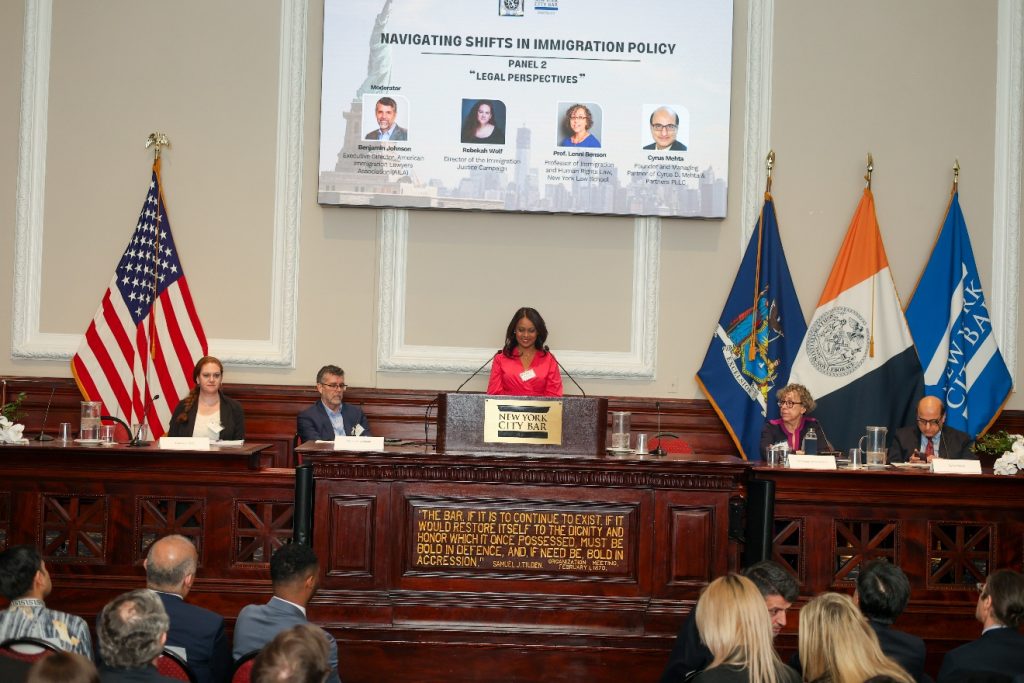
Christina Chelliah delivering closing remarks at the “Navigating Shifts in Immigration Policy” program at the New York City Bar Association. Photo courtesy of Christina Chelliah.
Reflecting on my own path, in my closing remarks I spoke about my immigrant journey and the challenges I faced integrating into the legal profession as a foreign-trained attorney. In the closing remarks, I said, “As an immigrant myself and a foreign-trained attorney who completed both my formal and legal education outside the United States, bar associations were a refuge for me. They helped me find my footing in the legal profession after I was admitted to practice in New York. To all the lawyers here tonight—what you do shapes the fabric of our collective communities. Your dedication doesn’t go unnoticed, and you are truly making a difference! It is my hope that tonight’s event serves as a unique opportunity for leaders in the legal profession to build meaningful connections with the consulates, where diverse perspectives can be leveraged in fostering future collaboration in support of both your communities and your diaspora.”
I am grateful to have played a unique role in facilitating this partnership between the New York City Bar Association and the Society of Foreign Consuls. Programs like these help us to uplift one another and our communities, and they also advance the tenets of ABA Goal III in promoting full and equal participation in the legal profession by minorities.

