This is the eighth installment in the Year in Governance Series from the In-House Subcommittee of the ABA Business Law Section’s Corporate Governance Committee. Each month, the series will share key tips on a different corporate governance topic. To get involved in the Corporate Governance Committee, please visit the committee’s webpage.
A message from Kathy Jaffari: “As Chair of the Corporate Governance Committee, I would like to extend my sincere appreciation to the authors for this publication. The Corporate Governance Committee has ongoing opportunities for writing and volunteering with various projects, whether it’s an article you want to publish or a CLE that you want to present. Our Committee is dedicated to helping you promote informative resources for corporate governance practitioners. You may contact me at [email protected] to get involved.”
Corporate directors play an essential role in the success of a company. Because they meet only periodically, it is important that directors and the board of directors as a whole conduct themselves in a manner that best serves the company and makes each meeting impactful. The “soft skills” demonstrated by directors can have a critical impact on the functioning of the board.
Be prepared. To meet their duty of care, directors need to show up at meetings and be fully prepared to discuss the topics on the agenda. If a meeting is in person, they should attend in person absent extenuating circumstances. Before the meeting, they must carefully read (not just skim) the pre-meeting materials and give thoughtful consideration to what decisions need to be made, what questions need to be addressed, or what additional information they may need to understand each topic.
Be curious. Directors need to read the materials and listen to presentations and discussion with an open mind. They should apply critical judgment to what is presented—management will emphasize what they want directors to take away, but management’s perspective might be limited. The value of directors is that they bring outside perspectives, enabling them to ask questions and challenge management’s assumptions. A director’s value is often demonstrated by the quality of their questions.
Noses in, fingers out. The role of board members is to oversee the company; it is not to roll up their sleeves and operate the company or make tactical decisions. Directors must hold themselves and one another accountable for keeping the dialogue at the right level, lest the line between management and the board become blurred.
Grow in the role. Directors are often nominated for their particular experience or expertise. But directors are responsible for oversight of the entire enterprise, not just their areas of expertise. By the same token, directors should not simply defer to the “expert” on the board; rather, all directors should inform themselves on matters for consideration, ask questions to seek understanding, and apply their own judgment. This way, decisions made by the board have the benefit of the full board’s wisdom and perspective.
Stay on task. Time is the most precious nonrenewable resource for a board. Directors must avoid discussion detours that don’t advance the meeting’s goals. Directors should seek clarity of objectives (e.g., whether an agenda item is informational or for decision) and be aware of the entirety of the agenda so that a particular item does not consume undue time or attention. An effective chair or lead director will facilitate appropriate allocation of time during a meeting by making sure all necessary items are addressed and that discussions stay on point.
Show courtesy and respect. A board needs to work as a team. Particularly when the company faces challenges, it is critical that directors be laser-focused on addressing those problems and not distracted by interpersonal conflict. Remember that each person was nominated for their expertise and experience. All directors should aim to foster an environment that enables each director to bring that value to the table, building trust and camaraderie. While doing so, they should keep in mind that courtesy and respect do not mean blind deference or keeping quiet when a point needs to be challenged.
Keep it in the boardroom. Directors must honor the confidentiality of what is shared with the board—both the materials and the discussion of topics. Recognize that investors, activists, and the media are always keen for more information that they can use to their advantage, and they might use various tactics to try to pry confidential information from directors. A leak erodes trust among directors and can seriously impair the effectiveness of the board. To minimize risk, any notes taken should be destroyed so that minutes are the only record of the meeting. Exercise caution when considering the use of recording devices or artificial intelligence for minutes or summaries, as these can be leak vectors.
Identify and manage conflicts. To meet their fiduciary duty of loyalty, directors must not act in conflict with the interests of the company. Directors should be mindful of their investments and the activities of their other associations and proactively bring to the attention of the company any issues that might present a conflict of interest. Doing this allows the director and the company to take precautionary measures such as raising awareness, recusing the director if needed, and documenting the action taken in minutes.
Challenge constructively. Directors should focus on discussing the matters at hand without emotion, and with an objective of resolving issues, not just criticizing. When a director disagrees with the direction taken, the disagreement should be addressed constructively (and recorded in the minutes if appropriate) and in a way that serves the best interests of the company. If it is appropriate for a director to resign because of a disagreement, the director and the board should seek to agree on a manner of disclosure that best serves the interests of the company.
Design board operations for success. Directors have responsibilities beyond their particular areas of expertise. To unlock the full value of directors, they should be encouraged and enabled to rotate committees and to attend any committee meetings. It is a good practice to assign mentors or “board buddies” to new directors so that they are comfortable participating as quickly as possible. The chair or lead director should establish channels for individual directors to raise concerns in a way that is not disruptive and does not create a problematic trail of evidence.
The views expressed in this article are solely those of the authors and not their respective employers, firms or clients.
Digital assets[1] are maturing. The tokenization of financial assets, the permeance of Bitcoin and Ether exchange-traded products (“ETPs”), and the rise of stablecoins exemplify how digital assets are coming of age and intersecting with traditional financial products and services.
This convergence raises significant policy, regulatory, and legal issues related to central matters such as taxonomy, custody of digital assets, and the function of market intermediaries. Specifically, what role should policymakers and regulators play when emerging technologies conflict with established regulatory frameworks that may be ill-suited for new products and services? As the legal and regulatory framework for digital assets evolves, fundamental market forces are emerging, driven by increased regulatory clarity and the development of commercially viable products and services that create efficiencies at scale.
Intersectionality of Digital Assets and Traditional Finance
The Trump administration’s pro-crypto stance has created interesting dynamics, including increased competition in the sector. The current political and regulatory environment has created an aperture for proponents of digital assets to gain access to previously inaccessible segments of the financial market and obtain legal and regulatory clarity for the industry.
On March 28, 2025, the Federal Deposit Insurance Corporation (“FDIC”) rescinded FIL-16-2022 and issued new guidance that allows FDIC-supervised institutions to engage in permissible crypto-related activities without needing prior approval from the FDIC.[2] Also, on May 28, 2025, the U.S. Department of Labor rescinded a 2022 guidance that cautioned plan fiduciaries to exercise extreme care before they consider adding a cryptocurrency option to a 401(k) plan’s investment menu for plan participants.[3] While these developments present tremendous opportunities, they also come with trade-offs for those looking to disrupt the financial sector.
Additionally, with the Guiding and Establishing National Innovation for U.S. Stablecoins Act (“GENIUS Act”) signed into law on July 18, 2025, providing regulatory clarity to the asset class, incumbent companies and banks are positioning themselves to enter the market. Reports indicate that Meta Platform, Inc. (formerly Facebook, Inc.) is in discussions with cryptocurrency firms to introduce stablecoins on its platform, following its failed attempt to launch Diem for cross-border payments in 2019. Likewise, Walmart, Amazon, and large commercial banks are exploring the prospect of issuing their own stablecoins.[4]
Increased Competition in the Digital Asset Industry
Counterintuitively, emerging disruptive digital asset projects had a competitive advantage by operating outside the mainstream financial system and in an environment of regulatory uncertainty. In essence, the regulatory risk associated with digital assets acted as a barrier to entry for established firms, while new entrants were better positioned to navigate and bear the risk. As digital assets integrate with traditional finance and regulatory risk decreases, competition is expected to increase as incumbents leverage network effects and institutional advantages to vie for market share. As a by-product, dealmaking is expected to increase as the industry consolidates with incumbents pursuing a buy, build, or partnership strategy, as exemplified by Robinhood’s recent acquisition of Bitstamp, one of the longest-running cryptocurrency exchanges.
The growing competition between established companies and new entrants will be significantly shaped by both legislative and regulatory developments. The U.S. Securities and Exchange Commission (“SEC”), as the primary regulator of the U.S. financial market, stands at the epicenter of these market dynamics as it works to establish a regulatory framework for digital assets that aligns with the current administration’s priorities and its mission of protecting investors; maintaining fair, orderly, and efficient markets; and facilitating capital formation. As part of its broader mandate to facilitate capital formation, the SEC aims to foster innovation in the economy. The SEC’s role will be crucial because the generally adaptable and flexible framework of securities law is beginning to show signs of discordance with the transformative potential of digital asset use cases, such as tokenization of assets, heightening the stakes in this rapidly changing landscape.
Tokenization of the securities market and financial assets is, in part, a continuation of the evolution of dematerialization. As technology advances, market participants are adopting disruptive technologies to increase efficiency and reduce friction in value transfer.
Traditionally, dematerialized records and information depicting ownership or value are maintained on centralized ledgers or databases with trusted central intermediaries. With the launch of Bitcoin, Satoshi Nakamoto introduced a cryptographic proof mechanism that employs blockchain technology to maintain information about crypto assets and facilitate peer-to-peer transactions in a decentralized manner, eliminating the need for a central intermediary.[5] This innovation opened up the market to new entrants.
Next-generation Layer-2 protocols, which mainly operate off-chain and do not record every transaction on the base-layer or Layer-1 blockchain networks, along with validation solutions—the consensus mechanisms used to maintain a consistent and reliable ledger and verify transactions—are emerging to address scalability and interoperability challenges. Tokenizing real-world assets to streamline value transfer across centralized and decentralized networks, on both permissioned and permissionless databases, using tools like smart contracts as accelerants, is evolving from mere proof of concept to implementation.
As digital assets continue to gain mainstream acceptance and the regulatory framework evolves, market forces will increase competitive pressure, creating both aligned and conflicting interests among established companies and new entrants. The SEC has committed to maintaining a merit- and technology-neutral approach as it considers various policy interests and competing perspectives to develop a regulatory framework for crypto assets that does not undermine established approaches for regulating noncrypto assets and transactions.
The Developing Regulatory Landscape and Its Impact on Competition
The SEC Task Force and Taxonomy
Recently, SEC Chairman Paul S. Atkins announced Project Crypto—“a Commission-wide initiative to modernize the securities rules and regulations to enable America’s financial markets to move on-chain.”[6] The announcement comes on the heels of the President’s Working Group on Digital Asset Markets releasing a report that, among other things, recommends that the SEC and other federal agencies use their existing authorities to provide clarity to market participants on issues such as registration, custody, trading, and recordkeeping.[7] Chairman Atkins directed the SEC’s policy division to work with the crypto task force to develop proposals to implement the report’s recommendations.
The SEC launched its crypto task force on January 21, 2025, headed by Commissioner Hester M. Peirce, to help develop a regulatory framework for digital assets. Subsequently, on February 21, 2025, Commissioner Peirce released a statement, “There Must Be Some Way Out of Here” (“Statement”), which provides an insightful framework for analyzing key issues in the developing regulatory structure of digital assets.[8] The Statement presents a potential taxonomy of four categories that serve as guideposts for a series of questions that the task force is considering to eliminate barriers for firms seeking to innovate with crypto assets and blockchain technology. The Statement requests public input on key topics, including security status, trading, custody requirements for various parties, ETPs, and tokenized securities.
Taxonomy, or the classification of digital assets for regulatory purposes, is a critical issue influencing competition between incumbents and new entrants in the financial market, as it forms the foundation for the regulatory treatment of these assets. To the extent that a new asset type serves similar functions or provides utility comparable to that of a traditional asset class, differences in regulatory costs or treatment can lead to unfair competitive advantages or disadvantages for market participants vying for market share. For instance, if an asset is deemed a security, the SEC will have primary regulatory jurisdiction, and the asset will be subject to the broad regulatory framework governing securities, including custody requirements and third-party intermediary obligations, such as those for exchanges, broker-dealers, and clearing agencies.
Technological advancements occasionally create dilemmas within a regulatory framework that require policymakers and regulators to reassess traditional classification lines and paradigms. As noted by industry experts, digital assets might have created such a dilemma in securities law. Broadly, the Securities Act and the Exchange Act enumerate several financial instruments that constitute a security, including the catchall term investment contract, which is intended to encompass various schemes that were not specifically listed.
During the secondary sale of digital assets that were the subject of the investment contract in an initial coin offering (“ICO”)—likely within the context of an exempt transaction—and that may not have any utility outside the ecosystem that created the investment contract, it is necessary to decouple the digital assets, which are merely computer code and alphanumeric cryptographic sequences, from the transactions or schemes in which the assets were sold, or to imply that the digital assets are more than just the subject of the investment contract.[9] Separating the digital asset from the investment contract creates a potential regulatory gap and ambiguity in which the digital asset falls outside the regulatory framework of securities laws, as digital assets are not enumerated securities and do not clearly fall within the purview of the Commodity Futures Trading Commission (“CFTC”).
Most market participants in the crypto industry agree that establishing a clear and consistent taxonomy would enhance clarity in the industry’s regulatory framework. However, opinions vary on the most effective approach to categorize crypto assets and transactions. One of the Statement’s categories decouples crypto assets that are offered and sold as part of an investment contract, which is a security, from the crypto asset that may not itself be a security.[10] Moreover, there is a specific category for tokenized securities.
Recent Guidance on Application of Federal Securities Laws to Digital Assets
In addition to taxonomy, the roles of market intermediaries and the custody of digital assets are crucial elements in the developing framework for digital assets, as they serve as key components in the competitive landscape and development of the digital asset ecosystem. As the SEC Staff (“Staff”) works on drafting definitive rules to regulate digital assets, it has issued several statements to clarify its position and provide guidance on the application of the federal securities laws to digital assets. Earlier this year, the Staff issued a statement clarifying that meme coins are presumptively not considered securities because they are typically purchased for entertainment, social interaction, or speculative purposes rather than as investments in a common enterprise with a reasonable expectation of profits, which are essential elements of an investment contract.[11]
On May 29, 2025, the Staff issued a statement clarifying that certain staking activities on blockchain networks using proof-of-stake as a consensus mechanism do not constitute an investment contract and are not subject to securities law.[12] The statement emphasized the difference between services that are merely administrative or ministerial and those that are entrepreneurial or managerial in nature. The former are indicative of nonsecurities transactions, while the latter have the propensity to be part of an investment contract.
Most recently, on August 5, 2025, the Staff issued a statement on certain liquid staking activities that have broad-reaching implications.[13] Generally, liquid staking is a type of protocol that issues newly minted digital assets or staking receipt tokens that evidence ownership of digital assets deposited with a third-party staking service provider. Staking receipt tokens enable holders to maintain liquidity, pledge them as collateral, and participate in revenue-generating applications without withdrawing the deposited digital asset from staking.
It is the Staff’s view that liquid staking activities, as defined, do not involve the offer and sale of securities, nor does the offer and sale of staking receipt tokens, as described, unless the deposited digital assets are part of or subject to an investment contract. Regarding liquid staking activities, the Staff believes that service providers do not undertake entrepreneurial or managerial efforts, but rather perform administrative or ministerial tasks. The two statements provide a useful framework for structuring staking programs and related activities outside the scope of securities laws and have been largely lauded by the industry. However, it is important to note that these statements are nonbinding and highly fact dependent.
Legislative Developments
Along with developments involving regulatory bodies, there has been significant legislative movement toward establishing a framework for digital asset businesses to operate in the United States. On July 17, 2025, the House of Representatives passed the Digital Asset Market Clarity Act (“CLARITY Act”).[14] Subsequently, the Senate Banking Committee released a draft of the Responsible Financial Innovation Act (“RFLA”) for responses.[15] While the two acts overlap in some areas, they also differ considerably. Notably, the CLARITY Act is much more comprehensive than the RFLA, but both establish a regulatory framework for digital assets by dividing authority between the SEC and CFTC based on whether an asset is classified as a security or “digital commodity,”[16] with the SEC having jurisdiction over securities and the CFTC over digital commodities. Generally, the CLARITY Act tends to classify more digital assets as digital commodities, while the RFLA gives the SEC more discretion to decide which assets should be considered “ancillary assets”—that are not securities—thus retaining more regulatory oversight. Whether and which version of this legislation ultimately gets enacted will greatly influence the trajectory of digital assets in the financial system, as legislation is lasting in nature and will shape the actions of regulators.
Nasdaq and SIFMA Recommendations
Market participants are highly vested in the evolving digital assets regulatory framework, as it will establish the foundation for competition in providing products and services, such as custody solutions, trading platforms, and broker-dealer services for financial products.
Notably, Nasdaq urged the SEC to promote fair competition among similarly situated financial instruments and market participants. It emphasized that “digital asset trading platforms and existing market participants should compete on a level playing field for all instruments.”[17] In essence, Nasdaq is advocating to treat like assets alike and avoid differences in regulation that create the opportunity and incentive for regulatory arbitrage.[18]
Similarly, the Securities Industry and Financial Markets Association (“SIFMA”) recommends that the SEC adopt the principle of “same risk, same activity, same regulatory outcome” to ensure that digital assets and market participants are subjected to regulatory outcomes that are risk-appropriate and consistent with those applied to traditional assets and market participants.[19] SIFMA advocates that regulatory treatment should be based on the underlying risks associated with a given asset or transaction rather than the technology used. Additionally, SIFMA encourages the SEC to apply existing and well-established securities regulatory principles to digital assets whenever feasible, rather than developing a separate regulatory framework for this new class of assets and transactions. Moreover, this approach should be implemented through flexible, principle-based guidance rather than prescriptive mandates.
Fairness and Evaluation of Compatibility with Existing Regulatory Frameworks
Competitive pressure is creating a subtle dichotomy between relatively new entrants (such as Circle, Coinbase, and Consensys) and traditional players in the financial industry. Generally, the former group prefers a tailored regulatory framework to efficiently serve their niche target market, while the latter group favors a broader regulatory approach. Policymakers and regulators find themselves in the middle, tasked with discerning which aspects of this new asset class are genuinely innovative and incompatible with regulatory regimes, warranting a reassessment of existing regulatory frameworks as they strive to advance their mission and priorities. The questions posed by the SEC in the Statement highlight this complexity.
A helpful approach to analyzing the issues raised by the questions in the Statement is to examine their impact on the emerging asset class, the various intermediaries competing for market share, and the overall financial market. This is particularly relevant as the SEC works to fulfill its mission and ensure that the regulatory framework for digital assets does not become impractical or unduly hinder innovation. For example, many crypto projects do not involve traditional actors, such as an issuer to whom ongoing reporting obligations can be ascribed, a cornerstone upon which current securities law relies.[20]
As digital assets intersect with traditional finance and compete for market share in similar products and services, it is essential to establish a regulatory framework that promotes healthy competition between traditional models and projects based on blockchain technology—for instance, regulating platforms and market participants that trade securities alongside nonsecurities digital assets in a manner that does not unduly favor or disadvantage any particular market participant.
Along the same lines, establishing a fair regulatory environment may require considering the distinct features of emerging technologies—for example, assessing the potential incompatibility of rules enacted pursuant to section 17(f) of the Investment Company Act of 1940 with the custody of digital assets, or updating auditing, accounting, and valuation requirements to support digital asset custody. Likewise, given some of the unique characteristics of blockchain technology, it may be necessary to determine whether special considerations are warranted for broker-dealers to meet their best execution obligations, and the appropriate haircut to assess whether a digital asset is readily convertible into cash to satisfy the net capital rule for broker-dealers.[21]
Lastly, how should the SEC address the advantages of digital assets that arguably render sections of the securities law outdated? For instance, proponents argue that the transparency and enhanced security features of blockchain technology make certain brokers, dealers, and custody issues moot.
Conclusion
Digital assets have the potential to revolutionize the global economy and transform the way we transfer value. The interaction between legislative/regulatory development and emerging technology will significantly impact competing market participants and the growth of the fintech industry. The SEC stands at the center of this fascinating dynamic as it navigates its role in protecting investors and facilitating capital formation.
This dynamic raises two crucial policy questions.
First, when technological advancements lead to dilemmas within a regulatory framework, what approach should policymakers and regulators adopt regarding any ensuing competition among market participants? At a recent symposium, Commissioner Peirce remarked that the government should not be in the business of picking winners and losers.[22] In other words, the economy functions most efficiently when the government maintains a fair playing field in structuring its regulatory regime. It is important to note that ensuring a fair playing field should be considered in terms of both government action and inaction. Specifically, failing to update a regulatory regime in response to technological advancements that necessitate such change can have a negative impact on competition just as much as making direct rule changes.
Second, who should be at the forefront of establishing the rules of the road for the industry? On the one hand, the courts play a crucial role, as evidenced by the evolving case law of the Howey test as it relates to digital assets, which is significantly influenced by regulators and the enforcement actions they pursue, and private litigation to a lesser extent. On the other hand, regulators could take the lead through rulemaking and guidance. Alternatively, lawmakers can also lead through legislation. Each approach has its benefits and drawbacks, from the definitive nature of legislation to the flexibility offered by regulatory actions.
As lawmakers and regulators work to modernize regulatory frameworks to address disruptive technological developments in a manner that balances maintaining market integrity with the need to avoid stifling innovation with ill-suited regulatory regimes, allowing new products like the tokenization of assets to thrive, market dynamics such as competitive forces must be considered. Undoubtedly, lawyers will play a vital role in helping market participants navigate the rapidly evolving legal and regulatory landscape of digital assets. Lawyers will need to have a keen intellect and a deep understanding of sociopolitical developments, the regulatory priorities of policymakers and regulators, market dynamics in the fintech industry, and the technology driving these changes in order to help clients navigate this emerging industry, which is filled with risks and opportunities.
As defined in Framework for “Investment Contract” Analysis of Digital Assets, U.S. Sec. & Exch. Comm’n (updated July 5, 2024). Note, for simplicity, that this article uses the term crypto interchangeably with digital assets to align with the terminology commonly used among market participants. ↑
As defined in the CLARITY Act. Note, the CLARITY Act and the RFLA do not adopt the same taxonomy. The CLARITY Act mainly uses the term “digital commodities,” while the RFLA uses the term “ancillary assets” for classification purposes. ↑
Letter from John A. Zecca, Exec. Vice President & Glob. Legal, Risk, & Regul. Officer, Nasdaq, to Vanessa Countryman, Sec’y, U.S. Sec. & Exch. Comm’n (Apr. 25, 2025). ↑
Letter from Kenneth E. Bentsen Jr., CEO & President, Sec. Indus. & Fin. Mkts. Ass’n, to Comm’r Hester M. Peirce & Members of Crypto Task Force, U.S. Sec. & Exch. Comm’n (May 9, 2025). ↑
A question that we are frequently asked here in the United Kingdom is the extent to which UK financial services law can impact financial services businesses operating in the United States (and elsewhere outside the UK). At one end of the spectrum, some US firms assume that, even if they have UK clients, they can ignore UK regulation provided that they only operate from the United States. At the other end of the spectrum, some assume that they will need to be authorized in the UK if they want to deal with UK clients.
In fact, the position is more nuanced. While it would be unwise to ignore UK regulation when dealing with UK clients, there are various ways in which US financial services firms can lawfully provide services to UK clients without having any particular status under UK law.
One important consideration is that UK financial services regulation has a broad scope. While it obviously covers the activities of banks, insurers and financial advisers, it can also cover a wide range of other businesses (including lenders, credit brokers and payment services firms).
In this article we provide an overview of the UK financial services regime, with a particular focus on how it can apply to US businesses.
arranging deals in investments (including broking insurance contracts and regulated credit agreements),
advising on investments and
entering into a regulated credit agreement as lender.
The list of Regulated Investments includes:
shares,
futures,
contracts of insurance and
electronic money.
Certain type of cryptoassets will fall within the definition of electronic money or of other types of Regulated Investment. Even if a given cryptoasset is not a Regulated Investment, it may be subject to the Money Laundering, Terrorist Financing, and Transfer of Funds (Information on the Payer) Regulations 2017 (“MLRs”), which list certain activities (“Cryptoasset Registration Activities”) that are subject to regulatory supervision. (While the MLRs capture the activities of certain cryptoasset firms (and other businesses such as estate agents and casinos), they do not cover FSMA-authorized firms dealing in Regulated Investments because such firms are already subject to the Financial Conduct Authority’s anti-money laundering regulation.) Additionally, the Payment Services Regulations 2017 (“PSRs”) list the regulated payment services (“Regulated Payment Services”).
The RAO, MLRs, and PSRs also set out exclusions and exemptions from the scope of various Regulated Activities, Cryptoasset Registration Activities, and Regulated Payment Services (collectively, “Relevant Activities”).
The principal financial services regulatory authorities in the UK are the Prudential Regulation Authority (“PRA”) and the Financial Conduct Authority (“FCA”). The PRA is the micro-prudential regulator for systemically important firms, including banks and insurers. The FCA is the prudential regulator for firms that are not systemically important and is the conduct regulator for all FSMA-authorized firms. The FCA also has supervisory/regulatory roles under the MLRs and the PSRs. (A more detailed account of the roles played by these regulators is beyond the scope of this article.)
Criminal Offenses
Section 19 of the FSMA establishes the “general prohibition.” This makes it a criminal offense for a person to carry out a Regulated Activity by way of business in the UK unless the relevant person is either authorized under the FSMA or exempt from the need to be authorized under the FSMA. The maximum penalty for breaching the “general prohibition” is two years’ imprisonment and an unlimited fine.
It is also a criminal offense to provide a Regulated Payment Service as a regular occupation or business activity in the UK without the correct regulatory status. Depending on the circumstances, it may also be a criminal offense to carry out Cryptoasset Registration Activities in the UK without the correct regulatory status.
Scope of the UK Financial Services Regulatory Regime
If a US financial services firm wishes to take on UK clients, one of the first questions that it should ask is, “Will our business fall within the scope of a Regulated Activity?”
Sometimes the answer to that question will be fairly clear. For instance, if the US firm would be advising clients on the buying and selling of shares, then there would be a good chance (subject to exclusions, etc.) that the US firm would be carrying out the Regulated Activity of advising on investments. However, depending on the precise nature of the service, it might be that the given business could be deemed not to be providing advice but merely to be providing information. In such a case, there may be a strong argument that no Regulated Activity would be carried out.
The distinction between a course of conduct that falls within the scope of a Regulated Activity and a course of conduct that falls outside the scope of a Regulated Activity can therefore be a fine one. The conclusion may depend on seemingly small points of detail. As such, it is possible for two firms to be pursuing similar (but not identical) business models where one is carrying out a Regulated Activity but the other is not.
Given this, firms should be wary of simply copying the approach that is apparently being adopted by others in the given market. Firms can sometimes be tempted to observe that some of their competitors are not FCA-authorized and then to assume that they do not need to be authorized themselves. Unfortunately, such assumptions frequently prove to be mistaken. First, it may be that the given competitors do in fact need to be authorized and that they are in breach of the relevant regulation. Second, there may be a subtle difference between the business model that the new entrant wants to roll out and the business model being operated by its competitors. This difference may not be apparent to anyone without a deep understanding of both business models, but it can make all the difference to the question of whether or not a Regulated Activity is being carried out.
Carrying Out Relevant Activities from Outside the UK
As we have seen, a person who is neither authorized nor exempt under the FSMA will be committing a criminal offense if they carry out a Regulated Activity by way of business “in the United Kingdom.” This will often be a particularly relevant consideration for US financial services firms. Unfortunately, the mere fact that the provider of a given financial service is in the United States (and therefore not physically in the UK) when they perform the given activity does not necessarily mean that the person will not be carrying out a Regulated Activity “in the UK.”
By way of example, in the context of the Regulated Activity of advising on investments, FCA guidance states that “advising . . . is generally considered to take place where the advice is received.”
The position can be more nuanced in relation to other Regulated Activities. For instance, FCA guidance in the context of the Regulated Activity of dealing in investments as principal states that “for dealing activities, the location of the activities will depend on factors such as where the acceptance takes place, which in turn will depend on the method of communication used.” In the case of this Regulated Activity, however, a US firm may be able to use an exclusion for “overseas persons” who enter into transactions as principal “with or through an authorised person” or with “an exempt person who is acting in the course of a business comprising a regulated activity in relation to which he is exempt.” As such, if the US firm can establish a suitable relationship with a UK person who has the relevant regulatory status, it may be able to carry out its business model (or at least a version thereof) without needing to be authorized under the FSMA.
Regulatory guidance also assists in determining whether Regulated Payment Services or Cryptoasset Registration Activities are being carried out “in the UK.”
If a US firm can structure its business so that any Relevant Activities that it may carry out are not carried out “in the UK” for regulatory purposes, then, subject to further analysis, it should be able to do so without breaching the general prohibition.
In such a case, the given US business would probably turn its attention to the question of how it would win UK clients in the first place (and to the question of how to do so in compliance with UK law).
Marketing
A separate point relates to the issue into the UK of “financial promotions,” which in summary are invitations or inducements to engage in investment activity—for example, placement memoranda and various advertisements. The starting point in relation to these is that an unauthorized person may only issue a financial promotion that is capable of having an effect in the UK if (i) the content has been approved by a suitably qualified authorized person or (ii) it falls within an exemption set out in the Financial Services and Markets Act 2000 (Financial Promotion) Order 2005 (“FPO”).
Some FPO exemptions relate to the nature of the promotion’s recipient(s). These exemptions are designed for recipients such as investment professionals and high-net-worth individuals. Such exemptions require the promotion to include various warnings and pieces of information. There are also specific exemptions for “overseas communicators.”
It should be noted that some exemptions only apply to certain Regulated Activities, Regulated Investments, or types of communication. It is also worth noting that the financial promotions rules can apply even to promotions regarding businesses that fall within exclusions from the scope of Regulated Activities.
Reconfiguring a Financial Services Business
If an initial analysis concludes that a given business model does fall within the scope of a Relevant Activity, then financial services firms may wish to think about whether they can restructure their operations so as to take them outside this scope. One way of doing this might be to alter the arrangements so that they fall within an exclusion.
More broadly, a firm may be able to partner with a firm that is FCA-authorized. A common approach in this regard is to become an appointed representative (“AR”) of an FCA-authorized firm (the AR’s “Principal”).
ARs may lawfully carry out some (though not all) Regulated Activities without authorization because they benefit from their Principal’s FCA permissions. ARs are not subject to direct regulation by the FCA, but Principal firms often impose stringent monitoring procedures on their ARs.
From the point of view of US firms, it should be noted that special arrangements apply in the context of overseas ARs.
Authorization
If restructuring is not an option and if a US firm’s business model would entail carrying on Relevant Activities by way of business and/or as a regular occupation in the UK, then the firm may need to establish a UK company and apply for authorization under the FSMA.
Conclusion
It is not always easy to navigate the UK’s financial services regime. However, many US firms are able to structure their businesses so that they can act for UK clients without attracting an excessive compliance burden.
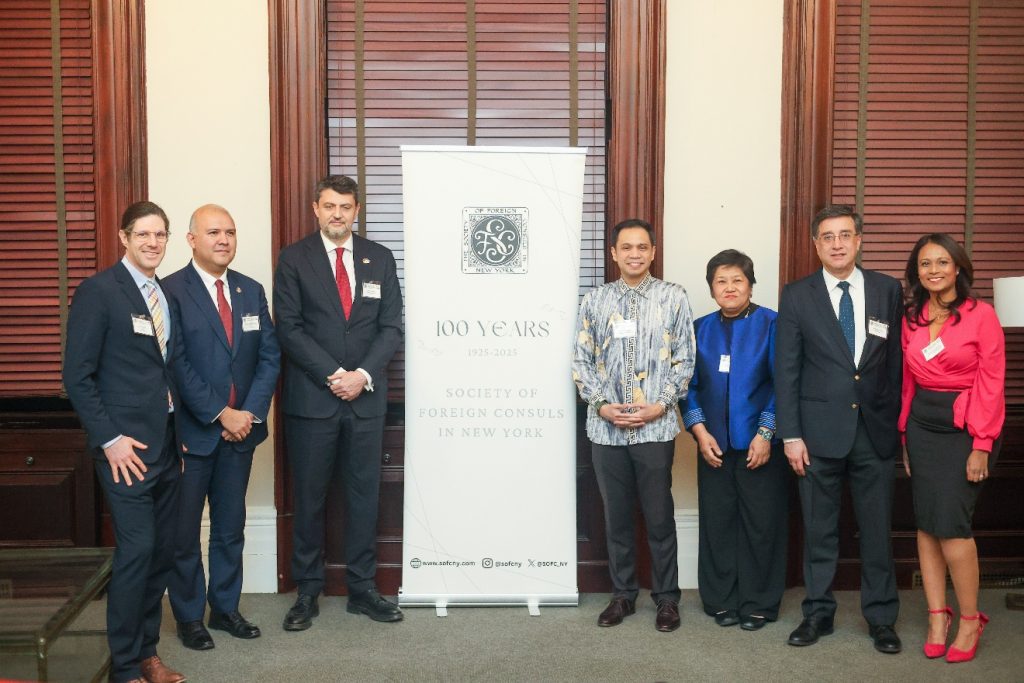
Founded in 1925, the SoFC “represents the world’s largest consular corps comprising Consulates, Consulates General, and Honorary Consulates based in New York City.” Working closely with the U.S. State Department’s Office of Foreign Missions and the NYC Mayor’s Office for International Affairs, the SoFC safeguards the interests of the consular corps in New York City and fosters cultural and economic ties with the United States of America. In 2025, the SoFC celebrated its one-hundredth anniversary and organized a series of events throughout the year to commemorate this milestone.
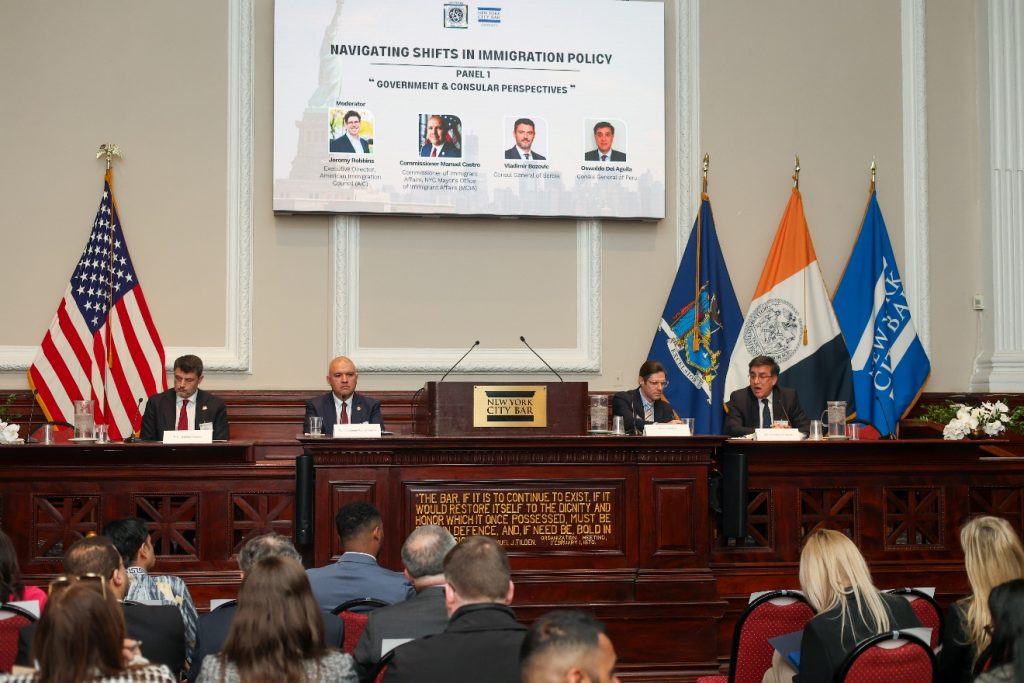
From left to right: AIC Executive Director Jeremy Robbins, Commissioner Manuel Castro of NYC’s MOIA, Consul General of Serbia Vladimir Božović, then Consul General of Malaysia and SoFC President Amir Farid Abu Hasan, Consul General of Thailand Somjai Taphaopong, Consul General of Peru Oswaldo Del Aguila, and Christina Chelliah, Corporate Counsel at TransPerfect and ABA BLS Fellow (Class of 2024–26). Photo courtesy of Christina Chelliah.
This first‑of‑its‑kind partnership emerged from a coffee meeting in early 2025 between the author—a current ABA Business Law Section Fellow (Class of 2024–2026)—and Amir Farid Abu Hasan, president of the Society of Foreign Consuls and then consul general of Malaysia. Organized as part of the SoFC centennial celebrations, the program created a formal platform for engagement between the SoFC and leaders in the legal profession.
Navigating Changing Policies in Times of Uncertainty
This invite-only event drew more than 130 attendees, including consuls general and consular representatives from thirty-four countries, lawyers in leadership positions from eighteen bar associations, legal experts, policymakers, and city representatives.
The first panel, moderated by Jeremy Robbins, executive director of the American Immigration Council (“AIC”), highlighted government and consular perspectives. Panelists included Commissioner Manuel Castro from the NYC Mayor’s Office of Immigrant Affairs (“MOIA”), Consul General of Serbia Vladimir Božović, and Consul General of Peru Oswaldo del Aguila. Commissioner Castro recounted his own journey as an immigrant in United States and emphasized the resources his office provides. The consuls general provided insights regarding the challenges faced by their respective diaspora populations and the support systems in place to deliver assistance. Robbins facilitated an excellent discussion between the panelists and spoke to the resources currently provided by the AIC as well as MOIA. This was beneficial information to the consuls general in attendance, as these resources will be helpful in dispensing assistance to the members of their respective diasporas who are facing immigration-related issues, which include visa renewal processes, removal proceedings, etc.
Consul General of Peru Oswaldo Del Aguila speaking during the event’s first panel session, “Government and Consular Perspectives.” Photo credit: Christina Chelliah.
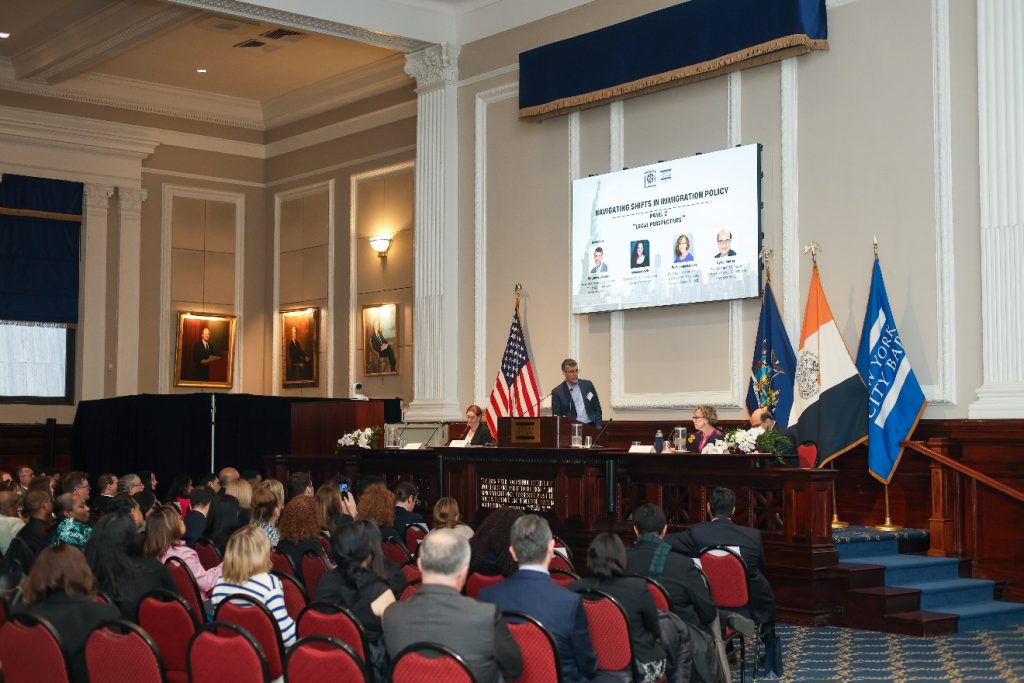
The second panel, moderated by Benjamin Johnson, Executive Director of the American Immigration Lawyers Association (“AILA”), examined legal frameworks surrounding the issues raised in the first panel session and the shifting landscape of federal immigration laws. The lineup of panelists included renowned immigration law practitioners: Cyrus Mehta of Cyrus D. Mehta & Associates, PLLC; Rebekah Wolf, director of the Immigration Justice Campaign; and Professor Lenni Benson from New York Law School. One key takeaway from the second panel was that, beyond the right to legal representation, immigrants have the legal right to contact their consulate if detained by the authorities. Wolf explained that the only free call a detainee gets is to their consulate, which shows that consulates often have greater access to detainees, as they cannot be denied their right to call their consulate. In the event a detainee has no legal representation, or cannot afford to call a lawyer, then at the very least they get to make a call to their consulate.
Building a Bridge Between Diplomacy and Law
What began as a casual idea over coffee took on a life of its own and culminated in a first-of-its-kind event highlighting the intersectionality between diplomacy and law. Amir and I led planning efforts, leveraging our networks to organize a program that offered critical insights into the evolving landscape of immigration policy and provided the opportunity for future collaboration between legal experts, diplomatic representatives, and community leaders.
AILA Executive Director Benjamin Johnson moderated the second panel session, “Legal Perspectives.” Photo credit: Christina Chelliah.
In his opening remarks, New York City Bar President Muhammad Faridi said, “We recognize the vital role played by consulates in navigating these complex immigration issues alongside the legal profession. In these uncertain times, collaboration between our communities is more important than ever, so we can better serve and protect the rights and dignity of immigrants in New York.” He added, “Tonight’s gathering forms a powerful collaboration between the Society of Foreign Consuls and the New York City Bar Association—a partnership that reflects our shared commitment to justice, inclusivity, dialogue, and the dignity of immigrant communities.”
SoFC President Amir Farid Abu Hasan echoed the importance of consular support in his speech. “As diplomats, we are not here to question the decisions of the federal government,” he stated. “Rather, we seek to understand the legal and policy ramifications of new immigration rulings so we can better advise and serve our communities. Immigration issues are complicated—and this forum brings together two vital professions, diplomats and legal experts, to build bridges and share knowledge.”
Importance of Collective Action Through Bar Associations
In times like this, it is rare to build bridges between diplomacy and law, but this program was an example of the benefits of doing so. My vision for creating a space where leaders could connect across communities led me to draw on my own professional network to invite affinity bar association leaders to this event to meet foreign diplomats in the City of New York. It is uncommon to curate a specific guest list for an event such as this, but I wanted to invite not just lawyers, but lawyers who hold leadership roles in bar associations, given the topic of the panel discussion and the work that is already being done by these bar associations.
Christina Chelliah delivering closing remarks at the “Navigating Shifts in Immigration Policy” program at the New York City Bar Association. Photo courtesy of Christina Chelliah.
Reflecting on my own path, in my closing remarks I spoke about my immigrant journey and the challenges I faced integrating into the legal profession as a foreign-trained attorney. In the closing remarks, I said, “As an immigrant myself and a foreign-trained attorney who completed both my formal and legal education outside the United States, bar associations were a refuge for me. They helped me find my footing in the legal profession after I was admitted to practice in New York. To all the lawyers here tonight—what you do shapes the fabric of our collective communities. Your dedication doesn’t go unnoticed, and you are truly making a difference! It is my hope that tonight’s event serves as a unique opportunity for leaders in the legal profession to build meaningful connections with the consulates, where diverse perspectives can be leveraged in fostering future collaboration in support of both your communities and your diaspora.”
I am grateful to have played a unique role in facilitating this partnership between the New York City Bar Association and the Society of Foreign Consuls. Programs like these help us to uplift one another and our communities, and they also advance the tenets of ABA Goal III in promoting full and equal participation in the legal profession by minorities.
Over the past several years, a growing number of jurisdictions have moved from preliminary guidance to fully developed regulatory regimes for digital assets.[1] While no two frameworks are identical, many reflect shared structural features—such as asset taxonomies, licensing requirements, stablecoin-specific regimes, market integrity provisions, streamlined supervision, and enforcement mechanisms. These frameworks demonstrate how governments are adapting legal infrastructure or creating new frameworks to address the emergence of blockchain-based financial technologies and digital asset trading.
Bermuda was an early mover, establishing the Digital Asset Business Act in 2018 to govern licensing, compliance, and oversight of digital asset businesses. Singapore implemented a two-tier licensing regime through its Payment Services Act and is advancing a regulatory framework specifically for stablecoins. Switzerland applies its existing financial market laws to digital assets using a modular, classification-based approach developed by the Swiss Financial Market Supervisory Authority. Dubai introduced a bespoke framework within the Dubai International Financial Centre, combining token recognition rules with oversight of trading, custody, and issuance. The European Union adopted the Markets in Crypto-Assets Regulation to harmonize digital asset rules across all twenty-seven member states.
Other jurisdictions beyond the scope of this article have also developed, or are actively developing, digital asset regulatory frameworks. Even among jurisdictions with established regimes, rules continue to evolve in response to technological developments, market growth, and regulatory implementation experience.
This article examines high-level structural themes in digital asset regulation across five selected jurisdictions: Bermuda, Singapore, Switzerland, Dubai, and the European Union. It focuses on how key regulatory components such as those mentioned above are implemented in these regions. These jurisdictional analyses form the basis for identifying broader high-level structural themes in digital asset regulation and exploring their intersection with efforts to modernize financial infrastructure.
The comparative themes that emerge—such as setting forth a clear taxonomy, developing stablecoin-specific regimes, and providing for robust market integrity provisions—suggest some structural commonalities in how jurisdictions are approaching digital asset regulation. At the same time, jurisdictional differences in treatment of taxonomies, scope and specifics of regulatory frameworks, supervision, implementation, and enforcement reveal how existing legal frameworks, regulatory stances, and market priorities may shape regulatory choices. Finally, the paper discusses how these regulatory structures increasingly intersect with efforts to modernize core financial infrastructure, particularly through blockchain-based clearing and settlement systems.
The Global Landscape: Selected Jurisdictions
The sections that follow provide a jurisdiction-by-jurisdiction overview of five selected frameworks. Each description focuses on how core regulatory components are structured and implemented within the local legal and institutional context.
Bermuda (2018): An Early Mover
Overview.Bermuda set the standard for early digital asset regulation when it introduced the Digital Asset Business Act (“DABA”) in 2018,[2] one of the world’s first licensing regimes for digital asset businesses. The framework includes cybersecurity requirements, consumer protection measures, and financial crime prevention provisions while allowing for regulatory adaptation as the sector evolves. The framework is designed to evolve with market developments, ensuring Bermuda remains a competitive jurisdiction for financial technology. It has been continuously updated to change alongside the dynamic sector.[3]
Taxonomy. Under DABA, a “digital asset” is any binary-format entity with usage rights and a digital representation of value that is used as a medium of exchange, unit of account, or store of value.[4] It excludes legal tender, whether or not the entity is denominated as such. DABA establishes a detailed licensing regime for entities involved in digital asset trading, with license classes categorized into established businesses, those in regulatory sandboxes, and those in trial operations. Additionally, entities must ensure cybersecurity protections, regular audits, and transparent consumer disclosures on redemption rights and fees. Operating without the necessary license can incur fines of up to US$250,000 and/or imprisonment for up to five years, with penalties for noncompliance reaching as high as US$10 million.
Stablecoin regime. Stablecoins are covered under DABA and defined as digital assets pegged 1:1 to a global currency like the U.S. dollar or another asset, ensuring greater stability than other digital assets such as utility tokens. In November 2024, the Bermuda Monetary Authority (“BMA”) followed up with a guidance note specifically addressing this category of single-currency pegged stablecoins.[5] The guidance establishes governance arrangements for issuers, due diligence processes to identify market makers, asset-backing requirements, and provisions for regular audits and stress testing.
Market regulation. DABA enforces market misconduct regulations against fraud, money laundering, and terrorist financing and references an international cooperation policy released by the BMA that ensures digital assets are circulated in coherence with global standards. Additionally, DABA emphasizes that Bermuda offers an attractive environment for digital asset businesses. The jurisdiction imposes no taxes on digital assets, income, capital gains, or transactions, and companies can apply for an undertaking from the minister of finance, ensuring future tax exemptions if new tax laws are introduced.
Notable provisions. The BMA conducts annual industry consultations to evaluate digital asset industry developments and assess whether regulatory refinements are needed. Additionally, the BMA is building a regulatory framework for digital identity, aimed at promoting the use of digital credentials that could securely store personally identifiable information and streamline customers’ onboarding with multiple service providers. Finally, Bermuda has memorandums of understanding (“MOUs”) in place with other jurisdictions, which facilitates cooperation across jurisdictions and clarifies their effective supervision. One such MOU was signed with the Wyoming Division of Banking in February 2021.[6]
Summary. By establishing one of the world’s first crypto licensing regimes and continuing to refine it for new contexts, Bermuda aims to leverage its forward-thinking business ecosystem to attract the fast-developing digital asset industry.
Singapore (2019, 2023): A Model for Regulatory Stability
Overview. Singapore has taken a proactive approach to regulating digital assets, ensuring that innovation can thrive within a transparent and well-supervised financial system. Singapore regulates digital assets under its Payment Services Act (“PSA”) and is introducing a stablecoin regulatory framework that imposes reserve requirements and operational standards for issuers. The PSA of 2019[7] established a licensing framework for digital payment token (“DPT”) businesses, providing for regulatory certainty and consumer protection overseen by the Monetary Authority of Singapore (“MAS”). In 2023, Singapore strengthened its oversight with a stablecoin regulatory framework,[8] setting specific requirements for stablecoin issuers to maintain financial stability and investor confidence.
Taxonomy. Under the PSA, digital payment token is defined as a digital representation of value that is not denominated in or pegged to any currency but is widely accepted as a medium of exchange. Bitcoin, for example, falls under this classification. Businesses conducting DPT services must obtain a standard payment institution license or a major payment institution license (“MPIL”), with the latter required if monthly payment transactions exceed S$3 million over a calendar year.[9] MPIL firms must have a business entity domiciled in Singapore, meet a minimum base capital requirement of S$250,000, and adhere to specific board requirements.
Stablecoin regime. To prevent regulatory arbitrage, MAS clarified key distinctions between e-money and stablecoins. MAS states that while e-money represents a digital form of currency that retains its monetary value, stablecoins—particularly single-currency stablecoins (“SCSs”)—can fluctuate in value when traded on exchanges. Consequently, MAS classifies stablecoins as DPTs rather than e-money, ensuring that they fall under the appropriate regulatory framework.
Singapore’s soon-to-be-implemented Stablecoin Regulatory Framework of 2023 requires issuers to back their tokens with reserves that meet strict composition, valuation, custody, and audit standards. Issuers must maintain minimum base capital and liquid assets to mitigate insolvency risks and ensure an orderly wind-down process if needed. Redemption rights are also enforced, requiring issuers to return the par value of stablecoins within five business days upon request. Additionally, issuers must provide transparent disclosures about value stabilization mechanisms, investor rights, and audit results for reserve assets.
Summary. Singapore’s risk-based approach to digital asset regulation has created an environment that fosters digital innovation while providing protection for consumers and its financial system. This approach has solidified its status as a leader in digital asset regulation, attracting firms seeking clarity and a well-structured regulatory framework.
Switzerland (2020): A Modular, Principles-Based Approach
Overview. Switzerland relies on amendments to existing legal documents and guidance from the Swiss Financial Market Supervisory Authority (“FINMA”) to provide legal certainty for distributed ledger technology (“DLT”). Switzerland regulates digital assets through a modular framework that applies general financial market laws alongside specific guidance and licensing regimes issued by FINMA. Rather than enacting a single comprehensive digital asset statute, Switzerland relies on a combination of existing legislation (such as the Financial Market Infrastructure Act (“FMIA”), the Swiss Banking Act, and the Anti–Money Laundering Act (“AMLA”)) and sector-specific guidance and classifications to determine regulatory treatment.
Taxonomy. FINMA classifies digital assets into three main categories—payment tokens, utility tokens, and asset tokens—with the understanding that hybrid forms may also arise. Payment tokens are intended to function as a means of exchange and do not confer claims on the issuer. Utility tokens provide access to a digital application or service based on blockchain infrastructure. Asset tokens represent legal claims, such as debt or equity interests, and function similarly to traditional securities or financial instruments. This taxonomy governs whether a digital asset is subject to banking, securities, or collective investment scheme regulations and guides the application of licensing and conduct obligations.
Stablecoin regime. Switzerland has not enacted specific legislation governing stablecoins. Instead, FINMA provides supervisory guidance on how existing financial laws apply. In July 2024, FINMA published updated guidance outlining the treatment of stablecoin projects under Swiss law. The guidance notes that various stablecoin issuers in Switzerland use default guarantees from banks. As a result, they do not require a banking license under article 5, paragraph 3, letter f, of the Swiss Banking Ordinance but must be affiliated with a self-regulatory organization as a financial intermediary under the AMLA.
This exemption, however, introduces risks for both stablecoin holders and the banks providing the guarantees. Stablecoin holders do not benefit from the depositor protections that apply to banking clients under article 37a of the Banking Act. Banks providing default guarantees face potential legal and reputational exposure, especially in cases of issuer insolvency or noncompliance with AMLA obligations. FINMA has outlined minimum requirements for default guarantees, including full coverage of public deposits, enforceability in bankruptcy, and rapid execution in the event of default. The regulator has also flagged increased risks in the areas of money laundering, terrorist financing, and sanctions circumvention, emphasizing that stablecoin issuers are subject to full AMLA compliance, including identity verification and beneficial ownership disclosure.
Services and markets regulation. Switzerland has implemented a licensing category for DLT trading systems under the FMIA, enabling fully regulated venues to trade tokenized securities. The DLT Act amended several pieces of Swiss legislation to clarify the legal treatment of tokenized shares, bonds, and uncertificated register securities. These updates provide legal certainty for the issuance and transfer of DLT-based assets.
Notable provisions. Separately, Switzerland introduced a fintech license designed for firms that engage in limited banking activities—such as accepting deposits up to CHF 100 million—without conducting traditional lending or investment services. Institutions operating under this license are not subject to capital adequacy or liquidity requirements but must maintain minimum capital, meet AMLA obligations, and establish compliance and risk-management frameworks. The fintech license provides a regulatory on-ramp for firms engaged in custody, exchange, or payment services involving digital assets.
Summary. Switzerland applies existing financial market laws to digital assets through a modular framework, relying on guidance from FINMA and the application of core statutes. The legal classification of tokens, the availability of exemptions through bank guarantees, and the introduction of the fintech license together create a structured approach to regulation. While comprehensive stablecoin legislation is not in place, regulatory guidance continues to shape market expectations and define compliance requirements.
Dubai (2022, 2024): Building a Global Innovation Powerhouse
Overview. The Dubai International Financial Centre (“DIFC”), a financial free zone in Dubai, established a regulatory framework for digital assets within the DIFC jurisdiction, covering licensing, financial crime prevention, custody, and exchange operations.[10] Dubai has emerged as a leading jurisdiction for digital asset regulation, providing businesses with regulatory clarity and a structured licensing regime through the Dubai Financial Services Authority (“DFSA”).[11] In 2021, the DFSA introduced its investment token regulatory regime, establishing a limited regime for security and derivative tokens for firms operating in the DIFC. Subsequently, the scope of the regime was broadened to include crypto tokens. In 2024,[12] the DFSA amended this framework with additional money laundering and financial crime protections, consumer protection, technology governance, custody, and exchange operations rules, further cementing its position as a global hub for digital asset innovation.[13]
Taxonomy. The DFSA framework defines tokens as cryptographically secured digital representations of value, rights, or obligations, including crypto tokens, which function as a medium of exchange, payment, or investment. The framework also sets token recognition criteria, assessing transparency, governance, liquidity, volatility, and risk-mitigation strategies to address cybersecurity, financial crime, and market abuse risks. Only DFSA-recognized tokens may be used within the DIFC, ensuring oversight and risk management.
Stablecoin regime. The framework also establishes strict criteria for single-fiat-backed stablecoins, requiring them to maintain price stability, be fully reserved, and undergo independent audits, with reserves held in segregated accounts at regulated financial institutions. To enhance market integrity, issuers must publicly disclose reserve holdings monthly and designate a responsible party for investor protection.
Services and markets regulation. The framework also regulates key financial services related to crypto tokens, including investment advisory, asset management, and custody services, dealing in crypto tokens as principal or agent, and operating a multilateral trading facility.
Summary. The DIFC continues to attract global digital asset firms seeking a stable, innovation-friendly jurisdiction by providing regulatory certainty and a sophisticated compliance framework.
European Union (2023): A Unified Approach
Overview. In 2023, the European Union (“EU”) enacted the Markets in Crypto-Assets Regulation (“MiCA”), establishing a comprehensive regulatory framework for digital assets across its twenty-seven member states.[14] By providing legal certainty and harmonized oversight, MiCA aims to reduce market fragmentation, foster innovation, and enhance investor protection to make the European Union one of the most structured regulatory environments for crypto assets.
Taxonomy. MiCA distinguishes three types of crypto assets: e-money tokens, which are crypto assets that stabilize their value in relation to a single official currency; asset-referenced tokens, which are crypto assets that stabilize their value in relation to other assets or baskets of assets; and crypto assets other than e-money tokens or asset-referenced tokens.
MiCA also distinguishes utility tokens (crypto assets that are only intended to provide access to a good or a service supplied by its issuer) for certain select purposes, and excludes from their scope crypto assets that are unique and not fungible with other crypto assets, including digital art and collectibles (so-called non-fungible tokens, or NFTs). MiCA also excludes crypto assets that are already subject to certain existing EU regulatory frameworks (e.g., financial instruments), with the aim of avoiding duplicative regulatory burdens.
The regulation introduces clear transparency and disclosure requirements for those issuing or publicly offering crypto assets or seeking their admission on trading platforms. It also sets authorization and supervisory standards for crypto asset service providers and issuers of asset-referenced tokens and e-money tokens, ensuring that they operate within a structured and compliant framework. Additionally, the framework introduces robust investor protection measures, safeguarding asset holders and customers of digital asset businesses.
Stablecoin regime (e-money tokens). Issuers of e-money tokens that offer them to the public or seek trading platform admission must be authorized as a credit institution or e-money institution and comply with strict issuance and redemption rules. They are required to publish a white paper and marketing materials on their website, assuming liability for loss caused by any information that is not complete, fair, or clear, or that is misleading. Tokens must be issued at par value upon receipt of funds and are redeemable at any time at par value upon request. To safeguard customer funds, issuers of e-money tokens that are e-money institutions must deposit reserves with a credit institution (but can invest up to 30 percent of reserves in secure, low-risk assets denominated in the same currency as the e-money token). Notably, however, this requirement does not apply to issuers that are credit institutions. Additionally, both credit institutions and e-money institutions issuing e-money tokens must establish recovery and redemption plans to ensure stability in the event of operational distress.
Services and markets regulation. To promote financial stability and consumer confidence, MiCA establishes strict governance and operational requirements, mandating that issuers and service providers maintain sound business practices. To prevent market abuse, MiCA also includes provisions against insider trading, unlawful disclosure of information, and crypto market manipulation, with the aim of reinforcing trust in the sector.
Summary. MiCA offers a multijurisdictional digital asset regulation model that is integrated at a regional level and coordinated across countries. Its broad coverage is intended to provide an attractive environment for businesses seeking regulatory clarity and market access and cement the European Union’s status as one of the world’s most extensive frontiers on digital asset innovation.
Comparative Themes in Global Digital Asset Regulation
At the highest level, a well-structured regulatory framework must ensure consumer protection, market integrity, and financial stability while fostering responsible innovation.[15]
Clear Digital Asset Taxonomies and Licensing Requirements
The foundational element of an effective digital asset regulatory framework is a clear and coherent taxonomy. Many jurisdictions have defined digital assets by type—payment tokens, utility tokens, asset-referenced tokens, or e-money tokens—to clarify legal treatment and regulatory scope. Jurisdictions such as Bermuda,[16] Singapore,[17] Switzerland,[18] Dubai,[19] and the European Union[20] have each provided explicit classifications for digital assets, enabling businesses and investors to understand precisely the legal status and regulatory treatment of various digital asset types. This clarity ensures that only appropriately licensed digital assets circulate within these markets, supporting consumer protection and market integrity.
However, it is important to recognize that while these international jurisdictions have clear taxonomies, their individual frameworks vary significantly in scope, structure, and regulatory approach. For instance, most maintain separate regulatory frameworks specifically for stablecoins, though not all adopt the same policies. Some explicitly prohibit algorithmic stablecoins due to stability concerns, while others permit them under particular conditions. Similarly, privacy tokens are prohibited in certain jurisdictions but allowed in others. Furthermore, several regulatory regimes distinguish asset-referenced tokens—which maintain stability by referencing external assets—from stablecoins pegged directly to single-fiat currencies, acknowledging important functional differences among these digital assets.
A straightforward and legally enshrined taxonomy is essential to enable global businesses to seamlessly operate and innovate. While digital assets exhibit significant diversity, simplifying the taxonomy at the highest level allows regulatory agencies to craft targeted rules that effectively address different categories and their associated risks, while also providing sufficient flexibility to accommodate future technological innovation and new business models as they emerge.
By clearly defining digital asset classifications through law, a jurisdiction can proactively eliminate ambiguity, reduce the risk of reverting to regulation by enforcement, and provide greater certainty for market participants. Ultimately, this approach can foster a more stable environment, encourage responsible innovation, and support the launch and growth of future digital asset businesses.
Stablecoin-Specific Rules
Stablecoin regulations are also a critical pillar of a well-structured digital asset framework, ensuring financial stability, consumer protection, and market integrity. Leading jurisdictions such as Singapore, Dubai, and the European Union have implemented licensing requirements for stablecoin issuers, ensuring that only regulated entities can operate in their markets. To align with global standards and reinforce trust in digital asset markets, jurisdictions should require stablecoin issuers to be licensed by the appropriate regulatory authority before conducting business.
In addition to licensing, a robust regulatory framework should mandate 100 percent reserve backing by highly liquid assets to ensure stablecoin redemption and financial resilience. Singapore’s soon-to-be-implemented Stablecoin Regulatory Framework of 2023 requires redemption at par value within five business days,[21] while the European Union’s MiCA e-money token rules grant a permanent right of redemption to strengthen consumer protections.[22] Both frameworks impose strict reserve requirements and rigorous transparency standards to safeguard financial stability.
The DIFC has also taken steps to enhance its stablecoin oversight. While the DFSA previously required fiat-backed crypto tokens to maintain 80 percent of reserves in cash,[23] this rule was recently updated. The new framework now mandates that reserves (a) be held in highly liquid, low-risk cash assets that are expected to maintain their value even under stress and (b) undergo daily valuation to ensure ongoing stability.[24] Although the updated framework does not specify a fixed percentage for reserve holdings, its requirements effectively mandate that 100 percent of reserves be held in highly liquid, low-risk cash assets to ensure stability and resilience.
While Bermuda does not have a specific framework for stablecoins, it recognizes their growing importance.[25] In May 2024, Bermuda introduced a draft, “Guidance on Digital Asset Business Single Currency Pegged Stablecoins (SCPS),” signaling a move toward establishing a structured framework. The proposed guidance outlines requirements for governance, risk management, market-making due diligence, backing assets, attestations, and disclosures, aiming to ensure that stablecoin issuers operate with financial integrity and transparency.[26] These adjustments are intended to reinforce the resilience of stablecoins while maintaining regulatory flexibility.
Prohibition on Algorithmic Stablecoins
Algorithmic stablecoins lack asset backing and depend on self-regulating algorithms to maintain their value—an approach that has proven highly unstable. As I observed in my 2023 paper, A Comprehensive Approach to Crypto Regulation, an on-blockchain algorithm that facilitates changes in supply and demand between a so-called stablecoin and another cryptocurrency is not actually stable and is ripe for abuse.[27] The collapse of TerraUSD (UST) in May 2022 wiped out billions in market value, exposing the risks of unbacked stablecoins. The fallout raised serious concerns about volatility, systemic risk, and potential fraud, prompting regulators worldwide to restrict or ban algorithmic stablecoins to protect financial stability.
Notably, algorithmic tokens are effectively banned in the European Union since they do not maintain explicit reserves tied to traditional assets and therefore do not fall within the categories of permitted crypto assets.[28] Both algorithmic tokens and privacy tokens are banned in the DIFC.[29] In Singapore, MAS has stated that “MAS views stablecoins which are algorithmically-pegged, unbacked, or backed by other cryptocurrencies to be more susceptible to volatility in value. Correspondingly, such stablecoins will continue to be treated as DPTs.”[30] In practice, this classification may make it nearly impossible for an algorithmic stablecoin to meet Singapore’s stringent DPT licensing requirements, effectively preventing their issuance and use under the regulated framework.
Market Integrity and Anti–Money Laundering Controls
A comprehensive regulatory framework must include clear, enforceable rules for digital asset service providers, such as exchanges, broker-dealers, and trading systems. Some jurisdictions have established strict licensing, conduct, and prudential requirements to ensure market integrity. Singapore’s PSA, Dubai’s DFSA framework, and the European Union’s MiCA all impose robust obligations on service providers, requiring them to act honestly and fairly, maintain transparent fee structures, implement strong compliance programs, and safeguard client assets. These measures are not optional—they are essential to maintaining trust, preventing financial crime, and ensuring orderly markets.
All digital asset service providers should be subject to licensing and supervision, with strong governance and operational resilience requirements. They must prevent market abuse, manage conflicts of interest, and establish clear protocols for customer asset protection. Service providers should also be required to implement anti–money laundering (“AML”) controls, ensure separation of client and firm assets, and develop wind-down plans to mitigate systemic risk. Without these safeguards, digital asset markets will remain vulnerable to fraud, misconduct, and instability, putting investors and financial stability at risk.
Regulatory Clarity and Streamlined Supervision
A single, unified financial regulator may not be feasible in all countries, but it has afforded some jurisdictions a significant competitive edge in digital asset oversight. In Bermuda, the Bermuda Monetary Authority (“BMA”) serves as the primary regulator for digital asset businesses under DABA, overseeing licensing, supervision, and compliance.[31] Singapore’s PSA framework benefits from the efficiency of having a single financial regulator, the Monetary Authority of Singapore (“MAS”), which oversees banking, securities, payments, and digital assets under a comprehensive framework. Supervision of digital assets in Switzerland is conducted by the Financial Market Supervisory Authority (“FINMA”), which applies a technology-neutral, risk-based approach under existing financial market laws.[32] In the DIFC, the Dubai Financial Services Authority (“DFSA”) handles rules and supervision.[33] Under MiCA, the European Securities and Markets Authority (“ESMA”) leads regulation and supervision unless the crypto asset is determined to be “significant,” in which case the European Central Bank regulates.[34] A single, streamlined approach provides clarity for digital asset businesses, making it easier for firms to obtain licenses, comply with regulations, and operate confidently in a predictable environment.
For those jurisdictions with multiple financial regulators, it may be prudent to consolidate financial regulation under a single authority or at least streamline and clarify the existing regulatory framework. Essential components of this process include legal identification of a primary regulator for each type of digital asset business, undertaking interagency coordination, and avoiding conflicting actions.
Innovation Sandboxes and On-Ramps
Aligning regulation with innovation is critical to fostering growth, ensuring market integrity, and maintaining global competitiveness. Jurisdictions that provide regulatory clarity while supporting emerging technologies attract investment and establish themselves as industry leaders. Dubai exemplifies this approach, combining clear regulations, banking access, and innovation support.
For example, the DIFC enables controlled experimentation through its “Innovation Testing Licence.” The DIFC Innovation Licence is a commercial license with a subsidized fee structure open to technology and innovation firms interested in developing or testing new, novel, or innovative products. The license is subsidized for a period of two to five years at a rate of US$1,500 per annum and gives access to coworking space and discounted visas.[35]
The DIFC Innovation Hub, which hosts more than 1,000 blockchain and tech startups, further accelerates growth, providing access to funding from venture capitalists, family offices, and institutional capital; running accelerator programs; offering business education; and training aspiring lawyers through the DIFC Academy.[36] In its own words, “the DIFC is developing a trailblazing blockchain environment for companies at the cutting edge of innovation.”[37]
Beyond policy, Dubai backs innovation with significant financial investment: “In 2024, Dubai ranked 7th globally for FDI [(‘foreign direct investment’)] in technology, with an inflow of over $1 billion, according to the Financial Times.”[38] Dubai is also investing directly in blockchain applications. One notable example is DubaiPay,[39] a blockchain-powered platform that has streamlined government payments and saved an estimated 5.5 million hours of paperwork annually.[40] Dubai also benefits from its low tax environment for Free Zone Persons and its business-friendly policies, which have attracted significant FDI into its tech sector.[41]
Pairing regulation with innovation also means proactively supporting initiatives to incorporate blockchain and digital asset technologies directly into financial infrastructure, particularly in critical functions such as clearing and settlement. My detailed analysis on this issue is set forth in the last main section of this article.
Enforcement and Deterrence Mechanisms
Jurisdictions worldwide are building deterrence and preserving regulatory integrity through strict enforcement mechanisms that impose significant penalties for noncompliance. Bermuda’s DABA prescribes fines of up to US$10 million and imprisonment of up to five years for regulatory breaches.[42] In Switzerland, FINMA can withdraw the authorization of individuals and legal entities that no longer meet the authorization requirements or that have committed serious violations of supervisory law. Moreover, companies that fail to meet authorization requirements are liquidated.[43] Singapore’s PSA mandates fines and imprisonment of up to three years for violations of digital asset licensing requirements.[44] In Dubai, the DFSA imposes fines, public censures,[45] and, for AML violations, up to ten years’ imprisonment.[46] The European Union’s MiCA framework takes a different but strict approach, explicitly requiring exchanges to delist noncompliant tokens, effectively barring them from EU markets. In 2024, the European Union mandated the delisting of unregulated stablecoins, with a Q1 2025 enforcement deadline.[47] While these enforcement approaches vary, they share common objectives: deterring misconduct, ensuring accountability, and reinforcing confidence in financial services.
In sum, jurisdictions should mandate strong and unyielding enforcement to preserve the integrity of their legal frameworks, create robust deterrents against bad actors and illicit activity, and protect consumers and the financial system from illegal operations. Doing so will also clearly define compliance obligations and consequences for violations.
Ongoing Industry Engagement and Cross-Border Cooperation
Ongoing industry engagement and cross-border cooperation are essential to maintaining an adaptive and credible regulatory framework.
Regulators should regularly consult with both digital asset firms and traditional financial institutions to monitor market developments, identify emerging risks, and determine whether new rules—or modifications to existing ones—are warranted. Bermuda provides a model for this approach: the BMA conducts annual consultations with industry participants to assess evolving practices and evaluate whether regulatory refinements are needed.[48]
Cross-border cooperation is also critical for enabling seamless international business activity—so firms can operate efficiently across jurisdictions. To support this, Bermuda has established MOUs with other regulatory authorities that enhance supervisory coordination. These agreements facilitate regulatory cooperation, improve supervisory clarity, and support consistent oversight across borders.[49]
Modernizing Global Financial Infrastructure: Central Clearing with Digital Assets
The impact of digital asset and blockchain technologies depends on their ability to enhance the financial system, improve efficiency, and meet the needs of consumers and institutions. As blockchain-based solutions evolve, so does their role in global finance, with significant advancements in payments, clearing, and settlement. One of the most notable developments is the integration of blockchain into wholesale payments infrastructure—an area where global competitors are making rapid progress.
An example of this integration can be found in Fnality, a blockchain-based wholesale payments firm backed by Lloyds Banking Group, Santander, and UBS. Utilizing an omnibus account at the Bank of England, Fnality successfully completed the world’s first live transactions using digital representations of central bank funds in December 2023. This milestone marks a significant step toward integrating blockchain into both mainstream financial infrastructure and tokenized markets.[50] By enabling real-time wholesale payments backed by central bank money, Fnality aims to reduce cost and accelerate settlement times for financial markets, offering a more secure and efficient alternative to traditional clearing systems.
The rise of Fnality presents a strategic consideration for global financial-sector leadership. A successful shift toward central clearing through blockchain technology could reduce risk and increase efficiencies associated with trading, clearing, and settlement.
Some jurisdictions continue to explore ways to modernize financial infrastructure by supporting research and the application of blockchain- and digital asset–based clearing and settlement solutions. At least two hypothetical models exist:
Enhanced CCP Model. Central counterparties (“CCPs”) remain the hub of clearing, with USD-backed stablecoins or other digital assets facilitating margin posting and settlement. The core clearing structure—novation, margining, waterfall, and default fund—remains intact, but stablecoin wallets replace legacy payment rails. This would drive efficiency, cut costs, and improve settlement speed while preserving the CCP’s role in mutualizing counterparty risk.
Decentralized Settlement Model. Traders and institutions settle trades directly using USD-backed stablecoins or other digital assets on blockchain. Smart contracts or DLT could enable atomic clearing and real-time settlement without a CCP. Participants maintain the ledger and enforce rules, reducing reliance on systemically important financial institutions. However, this approach shifts risk and represents a far more disruptive transformation.
Developments in blockchain-based clearing and settlement are increasingly being considered within the broader context of digital asset regulation. As jurisdictions formalize oversight frameworks, many are also beginning to assess how these technologies may support future financial infrastructure. While implementation varies, the incorporation of digital assets into market plumbing reflects a shared interest in modernizing systems to meet evolving needs. These infrastructure applications form an adjacent, and often complementary, dimension to the regulatory themes discussed throughout this article.
Conclusion: Structural Convergence and Jurisdictional Variation
Across jurisdictions, regulatory frameworks for digital assets are increasingly defined by a set of common structural components. Asset taxonomies, stablecoin-specific regimes, market integrity provisions, streamlined supervision, and enforcement mechanisms are recurring features in the legal and institutional design of digital asset oversight.
While these components reflect a measure of convergence, their implementation remains jurisdiction-specific. Each framework reflects the legal architecture, market priorities, and supervisory traditions of the country or region in which it operates. Differences in scope, terminology, and regulatory authority continue to shape the regulatory landscape.
As the market matures, regulatory regimes are likely to remain dynamic. Ongoing refinements, jurisdictional coordination, and engagement with market participants will play an important role in shaping how digital assets are governed and integrated into the broader financial system.
The author would like to thank Allyson Ye and Ian Fox for their assistance with this article.
Digital assets are digitally native representations of value or rights that are transferred and stored using blockchain or similar technology. ↑
“[D]igital asset” means anything that exists in binary format and comes with the right to use it and includes a digital representation of value that— (a) is used as a medium of exchange, unit of account, or store of value and is not legal tender, whether or not denominated in legal tender; (b) is intended to represent assets such as debt or equity in the promoter; (c) is otherwise intended to represent any assets or rights associated with such assets; or (d) is intended to provide access to an application or service or product by means of distributed ledger technology[.] ↑
Press Release, Monetary Auth. of Sing., MAS Finalises Stablecoin Regulatory Framework (Aug. 15, 2023). Implementation of the stablecoin regulatory framework has not yet taken place but is expected soon. ↑
The S$3 million test revolves around monthly payment transactions that relate to fiat currency. ↑
This article only discusses the DIFC. While other jurisdictions within the United Arab Emirates (“UAE”) are also very important, they are not covered in this discussion. ↑
There are other regulators in addition to the DFSA that operate within the UAE, each with its own mandate and regulatory perimeter. ↑
Anti–money laundering compliance and cybersecurity are also essential components of a well-regulated digital asset ecosystem. Ensuring that financial crimes are prevented and that digital infrastructure remains secure is critical to market integrity and consumer protection. While these issues are of paramount importance, they fall beyond the scope of this article, which focuses on regulatory clarity, consumer protection, market structure, and financial stability. ↑
“‘Algorithmic Token’ means a Crypto Token which uses, or purports to use, an algorithm to increase or decrease the supply of CryptoTokens in order to stabilise its price or reduce volatility in its price.” Id. at 3A.1.1(a).
“‘Privacy Token’ means a Crypto Token where the Crypto Token or the DLT or other similar technology used for the Crypto Token has any feature or features that are used, or intended to be used, to hide, anonymise, obscure or prevent the tracing of any of the information referred to in (c)(i) to (vi) [which relates to privacy devices].” Id. at 3A.1.1(d).
“Recognised Crypto Token” includes recognized fiat crypto tokens, for which financial services can be carried on in the DIFC subject to regulatory requirements. Id. at 3A.1.1(e).
Unrecognized crypto tokens are those for which financial services cannot be carried out in the DIFC until recognized by the DFSA. Id.
Prohibited tokens are privacy tokens and algorithmic tokens, which are prohibited in the DIFC. Id.
MiCA, supra note 14. MiCA’s taxonomy includes the following:
“‘[C]rypto-asset’ means a digital representation of a value or of a right that is able to be transferred and stored electronically using distributed ledge technology or similar technology.” Id. art. 3(5).
“‘[A]sset-referenced token’ means a type of crypto-asset that is not an electronic money token and that purports to maintain a stable value by referencing another value or right or a combination thereof, including one or more official currencies.” Id. art. 3(6).
“‘[E]lectronic money token’ or ‘e-money token’ means a type of crypto-asset that purports to maintain a stable value by referencing the value of one official currency.” Id. art. 3(7).
“‘[U]tility token’ means a type of crypto-asset that is only intended to provide access to a good or service supplied by its issuer.” Id. art. 3(9). ↑
Press Release, Monetary Auth. of Sing., supra note 8. Implementation of the stablecoin regulatory framework has not yet taken place but is expected soon. ↑
The DFSA defines fiat crypto tokens as those tokens that are typically pegged to a fiat currency and backed by reserve assets denominated in the peg currency. Dubai Fin. Servs. Auth., Consultation Paper No. 153: Updates on the Regulation of Crypto Tokens, at pt. II(iv)(20)–(24) (Jan. 4, 2023) (“Fiat Crypto Token recognition criteria”). ↑
Id. In addition to the standard recognition criteria for all crypto tokens set out in the DFSA Rulebook’s General Module 3A.3.4, where the DFSA looks at, for example, the regulatory status, transparency, market depth, technological resilience, and other risks related to a crypto token, the DFSA added additional criteria for fiat crypto tokens. ↑
Monetary Auth. of Sing., Consultation Paper: Proposed Regulatory Approach for Stablecoin-Related Activities, at para. 3.5 (Oct. 2022) (“A wide range of stablecoins currently exist, varying in terms of their asset pegging, as well as the mechanism that upholds the stability of the stablecoins’ value against the pegged asset(s). MAS intends to focus its regulatory regime on: Single-currency pegged stablecoins (SCS)—As compared to other types of stablecoins (such as those pegged to a basket of currencies or other assets such as commodities), SCS has a stronger use case for payment and settlement. Non-SCS will continue to be subject to the existing DPT regime under the PS Act. MAS views such stablecoins as being less stable in nominal value and should be treated differently from SCS. In addition, even among SCS, there is variation in the stabilisation mechanism. MAS views stablecoins, which are algorithmically pegged, unbacked, or backed by other cryptocurrencies, to be more susceptible to volatility in value. Correspondingly, such stablecoins will also continue to be treated as DPTs.”). ↑
Where asset-referenced and e-money tokens are labeled as “significant,” the European Banking Authority takes over the supervisory role. MiCA, supra note 14, at 103. ↑
DABA, supra note 2, pt. 5(39)(1), at 31 (“Disciplinary Measures”); DABA, supra note 2, pt. 2(10)(3), at 13 (“Licensing”). Notably, Bermuda’s statute explicitly references imprisonment in multiple sections, reinforcing the seriousness of noncompliance. See, e.g., DABA, supra note 2, pt. 2. 10(3)(a)–(b), at 13; pt. 4(37)(5)(b), at 30; pt. 5(43)(9)(a)–(b), at 33; pt. 6(51)(5)(a)–(b), at 37. In addition to financial and criminal penalties, Bermuda also authorizes public censures, prohibitions, and injunctions against violators, ensuring strong deterrence. DABA, supra note 2, pt. 5, at 31–34 (“Disciplinary Measures”). ↑
Federal Act on the Swiss Financial Market Supervisory Authority (Financial Market Supervision Act, FINMASA) art. 37, para. 3; see alsoWithdrawal of Authorisation, Liquidation, and Bankruptcy, FINMA (last visited June 23, 2025). ↑
PSA, supra note 7, pt. 2(5)(3)(a) (“Licensing of Payment Service Providers”). ↑
Canadian M&A entered 2025 under pressure, tariffs on the horizon, inflation still biting, and the lowest deal count in two decades. Yet by mid-year, value had surged. Dealmakers describe a selective but busy market driven by a handful of large energy and infrastructure transactions.
M&A deal value in Canada increased sharply in the first half of 2025, reaching approximately CA$113.7 billion (a nearly 70 percent year-over-year increase). However, overall transaction volume remained flat at roughly 511 deals, reflecting a market focused on fewer, larger, and more strategic transactions.
Market confidence improved after a cautious first quarter. Dynamics early in the year were shaped by inflation, uncertainty surrounding foreign investment, and valuation friction. By late spring, these pressures eased, unlocking a series of new and previously delayed transactions.
This mix of concentrated value and cautious execution is shaping how buyers and sellers approach the rest of the year. Here’s where momentum is building for H2 2025, and the conditions that will separate winners from the pack.
Sector Trends
Energy was a leading sector by value in H1 2025, driven by both traditional and transition-focused assets. While traditional oil and gas consolidation continued, there was a notable shift toward infrastructure-aligned and transition-facing energy assets, such as storage, logistics, and grid-scale platforms. The sector attracted ongoing foreign investment due to predictable, long-term returns and stable regulatory regimes, though transactions in this sector can carry heavier regulatory requirements, Indigenous engagement, and approval risk allocation in the purchase agreement.
Technology remained the most active sector by volume, with transactions focused mainly on mid-market software-as-a-service (“SaaS”) and digital infrastructure companies. SaaS and digital infrastructure companies provide attractive opportunities to U.S. sponsors and corporates seeking steady revenue and scalable models. A limited IPO window reinforced private transactions as the preferred exit.
Mining M&A was subdued early in the year. Q2 saw larger transactions by deal size but fewer deals. Other sectors, including healthcare and logistics, saw continued interest in platform assets with high-margin, regulated, or repeatable revenue profiles.
Private Equity: Process, Structures, and Exits
Private-equity (“PE”) activity in H1 2025 mirrored the overall market pattern, with higher dollar volumes but fewer transactions. Sponsor-led buyouts totaled CA$18.1 billion, up 65 percent year-over-year, although the number of deals shrank substantially. While some firms paused new acquisitions early in the year, dealmakers report increased mid-market opportunities in a less competitive environment than the low-cost-capital years of 2021–2022.
With public markets subdued and limited IPO activity, some general partners prioritized sponsor-to-sponsor transactions and strategic exits for scaled assets. Continuation vehicles and secondaries provided flexibility in sectors where capital interest persisted, though fund-level liquidity constraints continued to slow exit timelines.
Deal activity was concentrated on transactions with clear integration pathways and durable EBITDA profiles. Fewer full auction processes were seen; many transactions occurred through bilateral outreach or preemptive approaches, especially where the buyer and seller were aligned.
Private credit played a key role in supporting private equity activity. Sponsors utilized unitranche, holding company, and hybrid capital structures to navigate tighter lending markets. In transactions for companies valued under CA$500 million, the ability to access and commit capital quickly often determined which bidder succeeded. Sellers prioritized buyers who could close with speed and certainty, making capital readiness a true differentiator.
Cross-Border Activity
Cross-border M&A accounted for close to 50 percent of Canadian deal activity in H1 2025. Inbound deal flow softened in Q1 due to trade-related tension and political developments abroad, but by Q2, buyer confidence largely returned, particularly in sectors offering long-term asset profiles.
Cross-border activity in H1 2025 reflected a more selective environment. Inbound deals from the United States fell below 100, with 97 transactions worth CA$24.8 billion. Trade-policy uncertainty, particularly proposed U.S. tariffs, has prompted Canadian counterparties to explore structures such as earnouts, spin-offs, and targeted divestitures to navigate cross-border execution risk.
Outbound activity increased, as Canadian funds and strategics sought acquisitions in the U.S. and Europe, motivated by valuation alignment and diversification. Some acquirers acted to build behind the tariff wall, anticipating long-term changes in trade and industrial policy. Foreign investment review remained a critical diligence factor, but proactive engagement and structural planning kept most cross-border processes on track.
Transaction Conditions and Process Dynamics
Market conditions for completing transactions improved in Q2. Valuation gaps narrowed across several sectors as interest rate expectations stabilized and capital availability became clearer. Transaction timelines remained tight, but deal teams operated with greater certainty than in 2023.
Private credit continued to support deal activity. With traditional lending still selective, sponsors and strategics turned to net asset value (“NAV”) credit facilities, multilender syndicates, and holdco debt to close transactions on tight timelines. Success often depended on the speed of the due diligence process and the availability of committed capital.
Limited auctions, preemptive outreach, and insider-led processes were common. Prepared sellers—with clean financials, ready diligence materials, and structural flexibility—were best positioned to transact.
Outlook for H2 2025
Canadian M&A is entering the second half of 2025 with strong momentum. Political headwinds have eased, interest rates are stable, and buyer-seller expectations are more closely aligned. For well-prepared participants, market conditions remain favorable.
Mining and critical minerals are expected to be more active as regulatory clarity improves and federal permitting frameworks mature. Technology and business services should continue to drive volume, with private equity and cross-border strategics focused on platform roll-ups and carve-outs.
Liquidity pressures will persist for private equity, but M&A remains the primary exit route. Secondary transactions, strategic divestitures, and sponsor-to-sponsor deals are expected to comprise the bulk of PE-led sell-side activity in H2.
Infrastructure and transition-aligned energy will remain central for buyers seeking long-duration assets and stable cost profiles. Early regulatory planning and capital certainty will be essential for success in cross-border deals.
Conclusion
As Canadian M&A enters the second half of 2025, the market is defined by competition for quality assets and a premium on speed, preparation, and certainty. Buyers who were deliberate and ready to transact were rewarded in H1.
The true competitive advantage will likely go to deal teams that are prepared to move quickly and manage complex cross-border diligence.
With the signing of the Guiding and Establishing National Innovation for U.S. Stablecoins Act, or the “GENIUS Act,” into law, the United States has officially established a first-of-its-kind regulatory framework for “payment stablecoins” and the entities that issue them.
The law introduces a clear gatekeeping model: Only entities recognized as “permitted payment stablecoin issuers” and qualifying foreign issuers may issue payment stablecoins in the United States once the law takes effect, which will be no later than January 2027. This change brings both clarity and constraints, particularly for nonbank companies looking to enter the space.
For companies formulating or evaluating their stablecoin strategy, the GENIUS Act presents an important decision point: how to enter the market compliantly, at what scale, and under which regulatory regime.
GENIUS Act Background
The GENIUS Act is a tailored measure aimed at regulating a specific slice of the digital asset market. The provisions of the GENIUS Act apply only to “payment stablecoins,” which are digital assets that meet the following criteria:
used or designed for use in payments or settlement;
where the issuer is obligated to convert, redeem, or repurchase the stablecoin for a fixed amount of monetary value; and
where the issuer represents that the stablecoin will maintain, or creates the reasonable expectation that it will maintain, a stable value relative to a fixed amount of monetary value.
The GENIUS Act permits payment stablecoins to be issued in the United States only by “permitted payment stablecoin issuers.” This ability to issue payment stablecoins also comes with restrictions and obligations:
Under the GENIUS Act, a permitted payment stablecoin issuer may engage only in the following activities: (i) issuing payment stablecoins; (ii) redeeming payment stablecoins; (iii) managing related services, such as purchasing, selling, holding reserve assets, or providing custodial services for reserve assets; and (iv) providing custodial services for payment stablecoins, required reserves, or private keys of stablecoins.
The core GENIUS Act standards include requirements for a permitted stablecoin issuer to: (i) fully back payment stablecoins with reserves consisting of specified assets that are highly liquid, such as U.S. currency, funds held as demand deposits, and Treasuries; (ii) publicly disclose redemption policies; and (iii) publish the composition of reserves on a monthly basis.
Payment Stablecoin Issuance Paths
The following table outlines the three forward-looking payment stablecoin issuance paths available to nonbank companies under the GENIUS Act, each allowing issuers to remain outside the maximalist regulatory regime that applies to commercial banks.
Path 1: Take the Federal-Qualified Path as a National Trust Bank Create a subsidiary that obtains a national trust bank charter from the Office of the Comptroller of the Currency (“OCC”) and, as an uninsured depository institution, applies for approval with the OCC to become a “federal qualified nonbank payment stablecoin issuer.”
Path 2: Take the Federal-Qualified Path for Nonbank Companies Create a subsidiary that is a nonbank company and applies for approval with the OCC to become a “federal qualified nonbank payment stablecoin issuer.”
Path 3:Take the State-Qualified Path Create a subsidiary that could be a nonbank company and applies for approval with a state regulator to become a “state qualified payment stablecoin issuer.”[1]
Path 1
Federal-Qualified Path for National Trust Banks
Path 2
Federal-Qualified Path for Nonbank Companies
Path 3
State-Qualified Path
Regulator
OCC
OCC
State (Federal Reserve and OCC backstop enforcement authority)
Time to market
Moderate to long—chartering process is rigorous
Moderate—statutory 120-day outer boundary for OCC review
Uncertain and variable—depends on the state’s approval process
Permissible activities
Limited to fiduciary and other related activities, and core GENIUS Act limitations
Core GENIUS Act limitations
Core GENIUS Act limitations
Preemption
Broad preemption as a national bank
Preemption of state licensure or other authorization requirements
Possible preemption of host state licensure or other authorization requirements
Compliance burden
Core GENIUS Act standards; OCC prudential supervision and regulatory requirements for capital, liquidity, corporate governance, and sound risk management; parent company must provide financial support
Core GENIUS Act standards; regulatory requirements for capital, liquidity, and risk management that are yet to be issued by federal regulators
Core GENIUS Act standards; regulatory requirements for capital, liquidity, and risk management that are yet to be issued by state regulators and may vary across states
Scalability
High—no issuance cap; ideal for national/global scale
High—no issuance cap; ideal for national/global scale
Limited—capped at $10 billion in consolidated outstanding issuance
Fed master account access
Federal Reserve has statutory authority
No Federal Reserve statutory authority
No new Federal Reserve statutory authority
Bottom line
Best for companies seeking strong regulatory credibility or engaged in complex financial operations
Best for scaled fintech companies or platforms seeking to stay out of the bank regulatory perimeter while operating nationally
Best for start-ups or entrants seeking to test stablecoin issuance and comfortable operating within geographic and scale limitations
The GENIUS Act specifies that payment stablecoins meeting its terms are excluded from the definition of a “security” under the federal securities laws and “commodity” under the Commodity Exchange Act, effectively removing them from regulation by the Securities and Exchange Commission (“SEC”) and Commodity Futures Trading Commission (“CFTC”). This does not apply, however, to digital assets that are not payment stablecoins, such as those that pay yield or interest solely in connection with holding or using the stablecoin.[2]
While the GENIUS Act provides a foundational framework, many key details—particularly with respect to regulatory implementation, state-federal coordination, and foreign stablecoin issuer eligibility to access the U.S. market—remain to be clarified. Prospective payment stablecoin issuers should plan with flexibility and monitor developments closely.
The state’s regulatory regime must be certified as “substantially similar” to the federal regulatory framework under the GENIUS Act by the Stablecoin Certification Review Committee, which is to be chaired by the secretary of the Treasury and includes the chair of the Federal Reserve Board and the chair of the Federal Deposit Insurance Corporation as members. ↑
The federal banking agencies, SEC, and CFTC are tasked with issuing a study of non-payment stablecoins. Congress is separately considering proposed legislation that would apply to certain other types of digital assets. ↑
Companies of all sizes, and especially e-commerce companies, have been hit by waves of demand letters and lawsuits over the past decade alleging that websites and (increasingly) mobile applications are inaccessible to individuals with disabilities. Most of these cases tend to result in early settlements and few go to trial because businesses tend to have limited affirmative defenses and the cost of litigating typically far outweighs the cost of settlement.
While digital accessibility litigation continues to proliferate, the U.S. Department of Justice (“DOJ”) has not yet promulgated a clear technical accessibility standard through regulations or regulatory guidance under Title III of the Americans with Disabilities Act (“ADA”), which applies to public accommodations (i.e., businesses that offer goods and services to the public). As a result, many businesses seek to comply with the Web Content Accessibility Guidelines (“WCAG”), which are an international standard that has been referenced in some of the DOJ’s consent decrees, as well as court orders. While companies could apply any technical accessibility standard that meets the “effective communication” requirement of Title III of the ADA, they have expressed a desire for certainty in knowing that the standard they use will meet the DOJ’s expectations, should they need to defend it in litigation. Certainty concerning a technical accessibility standard can only be achieved through the DOJ amending its Title III regulations or issuing regulatory guidance.
This article explains the current regulatory environment, the state of digital accessibility litigation, and potential legislative solutions to the challenges they pose, as well as steps that businesses can take to mitigate the risk of lawsuits.
Background
The ADA, which was enacted in 1990, was the first comprehensive federal civil rights law protecting the rights of individuals with disabilities. The ADA consists of several titles, and the law is enforced by the DOJ and private plaintiffs.[1] Title III applies to “public accommodations,”[2] which generally means businesses that offer products and services to the public. While twelve categories of businesses are specified under both the law and the DOJ’s regulations implementing Title III of the ADA,[3] the term public accommodation is broadly construed.
Title III prohibits public accommodations from discriminating against individuals with disabilities in offering goods and services. Title III also requires public accommodations to ensure effective communications with individuals with disabilities, including providing auxiliary aids and services to them, if needed, in an accessible format and in a timely manner. Accessible electronic and information technologies, such as websites and mobile applications, are examples of auxiliary aids.
The DOJ and Judicial Enforcement of Title III
At the time the ADA was enacted, websites did not widely exist. However, in 1996, the DOJ issued an advisory opinion stating that public accommodations must make their websites accessible to individuals with disabilities in order to provide effective communication in compliance with Title III of the ADA.[4] The DOJ then actively pursued enforcement of Title III against public accommodations, alleging inaccessible websites through litigation resulting in consent orders, and the agency also filed amicus briefs and statements of interest in other cases.
Subsequently, many federal and state courts have interpreted Title III of the ADA, as well as corollary state laws like California’s Unruh Civil Rights Act and New York’s Human Rights Law, to apply to websites. Although there are inconsistencies among judicial decisions concerning whether websites qualify as public accommodations under the ADA and applicable state laws, more federal and state courts than not have sided with plaintiffs in requiring businesses to make their websites accessible. Therefore, as a general matter, companies must make their websites—just like physical spaces—accessible to individuals with disabilities under Title III of the ADA.
Lack of a Uniform Technical Accessibility Standard
However, the DOJ has never established a uniform technical accessibility standard through either regulations or guidance for companies to follow to ensure that websites and other digital assets are accessible to individuals with disabilities, despite efforts by the agency to do so through two advance notices of proposed rulemaking issued during the 2010–2016 era. Nonetheless, the DOJ has undertaken enforcement actions against companies for inaccessible websites under the theory that the company failed to comply with the “effective communication” requirement of Title III of the ADA. In addition, over the past eight to ten years, private litigation alleging that business digital assets are inaccessible has proliferated. Plaintiffs’ attorneys frequently allege violations of both the ADA and corollary state laws, which often permit damages—unlike the ADA, which only permits injunctive relief.
As previously noted, in addition to the DOJ citing the WCAG, an international, voluntary technical standard, in some of its consent orders,[5] court orders and settlements have cited the WCAG standard.[6] As a result, companies have increasingly relied on the WCAG standard to make digital assets accessible. The current WCAG standard is 2.2, and that standard continues to evolve every few years, with WCAG 3.0 on the horizon.[7] Most companies seek to comply with the intermediate conformance criteria AA, known as Level AA, although some companies are still complying with the prior version, WCAG 2.1 AA.
DOJ ADA Guidance and Enforcement Under Different Administrations
The DOJ has sought to enforce website accessibility under Title III of the ADA during Democratic administrations, and the agency was fairly active during the Biden era. Specifically, in 2022, the DOJ issued guidance on making websites accessible.[8] However, the guidance did not contain any technical standard for accessibility, and it did not break any new ground in providing useful guidance for companies. Then, in 2024, the DOJ issued final regulations containing accessibility requirements for websites and mobile applications of state and local governments under Title II of the ADA, which cite WCAG 2.1 AA as the required technical standard.[9] While experts expected that the DOJ likely would use the Title II rulemaking as a model for amending the agency’s Title III regulations to similarly specify WCAG 2.1 AA as the required technical accessibility standard for public accommodations, the Biden administration ran out of time to pursue that initiative.
In the current political environment, we do not expect the DOJ to amend its Title III regulations during the next four years. Furthermore, we do not expect much enforcement activity from the DOJ under Title III since enforcement of civil rights laws, such as the ADA, has been deprioritized by the current administration. Unfortunately, the lack of enforcement by the DOJ will continue to perpetuate and increase private litigation risk for businesses.
Litigation Risk
Of the top one million home pages on the internet, 95 percent have accessibility barriers that interfere with the ability of people with disabilities to use them, according to a 2025 report by WebAIM.[10] These barriers have spawned a flood of litigation under Title III of the ADA since 2016, with nearly 2,500 federal lawsuits being filed across the United States in 2024, according to law firm Seyfarth Shaw.[11] Based on the pace of filings this year, 2025 appears likely to top that number by nearly 20 percent, with 2,019 lawsuits already filed during the first half of 2025, according to UsableNet.[12] Most cases are filed in New York and Florida, where plaintiffs can receive damages. California, where damages are also available, saw fewer federal lawsuits in 2024. But federal lawsuits were also filed in Illinois, Minnesota, and Pennsylvania. Plaintiffs also are filing more frequently in state courts, rather than federal courts, because state laws often permit damages, unlike the ADA, which only permits injunctive relief. In addition to websites, more cases are challenging the inaccessibility of mobile applications.
The main legal issue arising in litigation is whether online-only businesses without a physical “place of public accommodation” (i.e., a brick-and-mortar location) are covered by Title III of the ADA. Only the U.S. Court of Appeals for the Ninth Circuit has directly addressed the issue, finding that businesses’ websites are covered if they have a “nexus” with a physical place. But other circuits have foreshadowed their approaches, with the U.S. Court of Appeals for the First, Second, and Seventh Circuits indicating that Title III may cover the websites of online-only businesses, and the U.S. Court of Appeals for the Third and Sixth Circuits indicating that Title III only covers the websites of businesses with a nexus to a physical place.
There has been some question about which technical accessibility standard meets the “effective communication” obligation under Title III of the ADA. Courts, the DOJ, and other federal agencies have variously applied the WCAG 2.0 or 2.1 AA standard. As previously noted, in 2024, the DOJ released new regulations under Title II of the ADA, which require state and local governments to ensure that their websites comply with WCAG 2.1 AA. Courts in Title III cases may apply the same standard to business websites.
While most accessibility cases begin with a demand letter, some plaintiffs choose to go straight to court by filing a complaint. Some cases are styled as class actions, including nationwide class actions, which may be subject to the U.S. Supreme Court’s recent decision in Trump v. CASA casting doubt on the ability of lower courts to issue nationwide injunctions.[13] The vast majority of cases result in settlements, often with the company agreeing to make its website and mobile application accessible within a certain period of time and paying the plaintiff’s attorney fees and damages.
Because businesses with inaccessible websites have few defenses and paying a relatively small amount to a plaintiff is much less costly than paying to defend the lawsuit (and potentially the plaintiff’s lawyers if the business loses), very few cases go to trial. The one defense that has been successful in a few cases is the assertion that the plaintiff does not have standing to challenge the inaccessibility of the website because they are ineligible to access the business, cannot demonstrate that the alleged barriers actually interfered with their use of the site, or cannot show that they intend to visit the website in the future.
Potential Federal Legislative Solutions
Over the past eight years, members of Congress have introduced multiple bills to address how businesses can fix accessibility barriers under Title III of the ADA without immediately being sued.
Notice and Opportunity to Cure Legislation
Several of the bills have created procedural steps for plaintiffs, such as providing notice to a business of the alleged accessibility issues and allowing time for the business to remediate those deficiencies before litigation can proceed, as a means of providing a “safe harbor” for businesses from litigation. This “notice and opportunity to cure” legislative model has been framed by bill sponsors and advocates as a potential way to encourage efficient and timely resolution by businesses of accessibility barriers while minimizing lawsuits. On the other hand, disability rights organizations have raised concerns that delaying enforcement could result in prolonged barriers for people with disabilities. However, bills containing the “notice and opportunity to cure” approach have not gained sufficient bipartisan support to proceed to a floor vote in previous sessions of Congress.
The Latest Federal Legislation: A National Digital Accessibility Standard
On May 14, 2025, Representative Pete Sessions (R-TX) introduced H.R. 3417, the Websites and Software Applications Accessibility Act of 2025, bipartisan legislation that seeks to establish uniform federal accessibility standards for websites and software applications.[14] Supported by the National Federation of the Blind and other disability rights advocacy organizations, this bill aims to clarify digital accessibility standards for a wide range of entities, including employers, public accommodations, and commercial providers. Key features of the bill include:
affirming that digital spaces, whether or not tied to physical locations, are covered under Title III of the ADA;
directing the DOJ and the Equal Employment Opportunity Commission to develop specific, enforceable accessibility standards for websites and mobile applications (each federal agency must issue proposed rules within twelve months and final rules in twenty-four months; those federal agencies must then update the rules every three years to reflect evolving technology); and
creating a framework for supporting small businesses through technical assistance and grant opportunities.
The primary emphasis of H.R. 3417 is on setting clear, enforceable standards to improve digital access for individuals with disabilities. The bill does not include provisions for a “notice and opportunity to cure” process or similar business-focused litigation protections, but instead permits individuals with disabilities to continue to file lawsuits against companies with inaccessible digital assets. While the introduction of H.R. 3417, if enacted, would mark a significant step toward national digital accessibility standards, the rulemaking process takes time, and it does not contain a safe harbor from litigation for businesses in the interim.
The Path Forward
Digital accessibility is widely recognized as a civil rights issue, and the evolving legislative landscape reflects ongoing efforts to balance accessibility, provide clarity concerning technical accessibility requirements, and ensure compliance with Title III of the ADA.
Regardless of the outcome for H.R. 3417 or other federal legislation, prioritizing inclusive digital design and following recognized standards such as WCAG remain best practices for businesses seeking to provide equitable digital experiences and reduce legal risk.
Best Practices for Digital Accessibility Risk Management
Despite the increasing risk of litigation, there are many steps that businesses can—and should—take now to make their websites and mobile applications fully accessible to individuals with disabilities, as well as to mitigate the risk of receiving a demand letter or lawsuit. Best practices to mitigate accessibility legal risks include the following:
Ensure that digital assets are accessible through inclusive design and remediation. Businesses should build new websites or mobile applications by integrating appropriate programming code into the site/application that conforms with WCAG 2.2 AA to ensure accessibility. For existing websites and mobile applications, businesses should ensure that such digital assets are fully accessible to individuals with disabilities by hiring a qualified website accessibility consulting company to conduct an assessment. Reputable accessibility consultants use a three-prong approach consisting of an automated scan, review of programming code, and user testing by individuals with disabilities. If accessibility deficiencies are found, then they should be remediated to conform to the WCAG 2.2 AA standard. After digital assets are remediated, a monitoring routine should be implemented to ensure that accessibility is maintained—typically through the purchase of monitoring software.
Develop an ADA risk management program. A comprehensive ADA risk management program is necessary for effectively managing Title III compliance risks and can serve as an affirmative defense if a company is sued. Key elements of an ADA risk management program to consider implementing include the following:
Post an accessibility statement on digital assets underscoring the business’s commitment to accessibility and providing appropriate contact information (e.g., 800 number and email address) where individuals with disabilities can seek assistance with technical barriers.
Develop and implement a digital assets compliance policy.
Appoint an accessibility coordinator to oversee digital asset accessibility compliance efforts across the business.
Establish a cross-functional committee, led by the accessibility coordinator, to coordinate accessibility efforts across the business. Accessibility committee members should include legal, compliance, marketing, product, and technology staff, at a minimum.
Ensure that employees receive appropriate training:
Provide technical training to developer staff to ensure that they understand how to properly code to ensure accessibility and remediate accessibility issues when identified.
Provide substantive compliance training on Title III of the ADA to legal and compliance, marketing, product, and technology staff.
Train customer service agents to identify key terms and promptly respond to individuals with disabilities’ requests for technical assistance when encountering barriers on websites or mobile applications.
Develop and implement procedures to ensure consistency in customer service processes for individuals with disabilities and provide warm handoffs to technical staff who can assist with any digital barriers that such individuals may encounter.
As a side note, we do not recommend using a widget or overlay to achieve compliance with Title III of the ADA. Widgets and overlays have become popular in recent years as a “quick fix” because they create an alternative, seemingly accessible version of a website and are relatively inexpensive. In our view, these tools do not comply with the letter or spirit of Title III of the ADA because they create a “separate but equal” experience for individuals with disabilities. Moreover, these tools do not correct code-level accessibility deficiencies and often create barriers with screen readers used by the blind. As a result, approximately 25 percent of lawsuits in 2024 were brought against companies that used widgets and overlays.[15] Therefore, these types of tools often fall short of delivering true digital accessibility.[16] Simply put, there is no “silver bullet” to avoid doing the hard work of evaluating the accessibility of websites and mobile applications, remediating any deficiencies, and then maintaining accessible digital assets to achieve compliance with Title III of the ADA and corollary state laws.
Doing the Right Thing—Legally and for Business Growth
While it is important for companies that offer goods and services to the public to comply with accessibility requirements under Title III of the ADA and reduce legal risk, it is even more important for businesses to do the right thing for individuals with disabilities by making digital assets fully accessible to them. Plus, it makes good business sense. According to the U.S. Centers for Disease Control and Prevention, 28.7 percent of adults, or more than one in four, in the United States have some type of disability.[17] That translates to approximately 70 million adults who have disabilities. Therefore, when digital assets are inaccessible, over one-quarter of U.S. consumers, who could be potential customers, are excluded from access to a business’s goods and services.
This article is related to a CLE program that took place during the ABA Business Law Section’s 2025 Spring Meeting. To learn more about this topic, listen to a recording of the program, free for members.
42 U.S.C. § 12101 et seq. Other titles of the ADA include Title I, which prohibits discrimination in employment and is enforced by the Equal Employment Opportunity Commission. Title II applies to state and local government entities, and it protects qualified individuals with disabilities from discrimination on the basis of disability in services, programs, and activities provided by state and local governments. ↑
Payan v. L.A. Cmty. Coll. Dist., No. 2:17-cv-01697-SVW-SK (C.D. Cal. Feb. 29, 2024), ECF No. 613 (order regarding final injunction) (citing WCAG 2.1 Level AA); Andrews v. Blick Art Materials, LLC, 286 F. Supp. 3d 365 (E.D.N.Y. 2017) (citing WCAG 2.0 Level AA); Gil v. Winn-Dixie Stores, Inc., 257 F. Supp. 3d 1340 (S.D. Fla. 2017) (citing WCAG 2.0) (vacated on other grounds). ↑
The first public working draft of WCAG 3.0 was released on January 21, 2021. According to the Worldwide Web Consortium (“W3C”), which promulgates the WCAG standards, WCAG 3.0 remains in working draft form, and a release date has not yet been set. Therefore, W3C’s issuance of WCAG 3.0 is likely still several years away. ↑
Nondiscrimination on the Basis of Disability; Accessibility of Web Information and Services of State and Local Government Entities, 89 Fed. Reg. 31,320 (June 24, 2024) (U.S. Dep’t of Just. Final Rule). ↑
Jason Taylor, Usablenet, 2025 Midyear Digital Accessibility Lawsuit Report (July 9, 2025). The report covers all cases filed across the eleven federal circuit courts under Title III of the ADA, as well as cases filed in key state courts, including California, Florida, and New York. ↑
H.R. 3417 is cosponsored by Representatives Steny Hoyer (D-MD), Darren Soto (D-FL), Randy Weber Sr. (R-TX), Shri Thanedar (D-MI), and Greg Landsman (D-OH). ↑
Knobbe Martens 2040 Main St., 14th Floor Irvine, CA 92614 [email protected]
§ I. Patent Cases
LKQ Corp. v. GM Global Tech. Ops. LLC, 102 F.4th 1280 (Fed. Cir. 2024)
Facts: This case addresses the standard for determining the obviousness for design patents.
LKQ Corporation challenged the validity of GM Global Technology Operations LLC’s design patent for a vehicle part, asserting that the patent was obvious under 35 U.S.C. § 103. The Patent Trial and Appeal Board (PTAB) upheld the patent’s validity, applying the Rosen-Durling test, which requires using a primary reference that is “basically the same” as the claimed design to establish obviousness as the start of the obviousness analysis. LKQ appealed, arguing that the Rosen-Durling test was incompatible with the Supreme Court’s flexible approach to obviousness set forth in KSR Int’l Co. v. Teleflex Inc., 550 U.S. 398 (2007).
Held: Sitting en banc, the Federal Circuit overruled the Rosen-Durling test and adopted “a more flexible” approach for assessing design patent obviousness.
Reasoning: The Federal Circuit concluded that the Rosen-Durling test was at odds with 35 U.S.C. § 103’s “broad and flexible standard” and the Supreme Court’s precedent in KSR and Graham that provide “a more flexible approach” when determining obviousness. The court noted that the Rosen-Durling framework imposed unnecessary constraints by requiring a primary reference that is “basically the same” as the claimed design, potentially overlooking the broader context of the prior art.
The Federal Circuit determined that the framework for assessing obviousness in utility patents, as articulated in Graham v. John Deere Co., 383 U.S. 1 (1966), was equally applicable to design patents. The Federal Circuit then provided guidance for applying the Graham factors to design patents.
First, one “consider[s] the ‘scope and content of the prior art’ within the knowledge of an ordinary designer in the field of the design.” The Federal Circuit affirmed that for design patents, as for utility patents, a “reference qualifies as prior art for an obviousness determination only when it is analogous to the claimed invention.” However, the court declined to “delineate the full and precise contours of the analogous art test for design patents.” The court stated that “[p]rior art designs for the same field of endeavor as the article of manufacture will be analogous,” but did “not foreclose that other art could also be analogous.”
Second, one “determin[es] the differences between the prior art designs and the design claim at issue.” The Federal Circuit’s approach “casts aside a threshold ‘similarity’ requirement.” Instead, one “compare[s] the visual appearance of the claimed design with prior art designs . . . from the perspective of an ordinary designer in the field of the article of manufacture.”
Third, one determines “the level of ordinary skill in the pertinent art.” Fourth, as with utility patents, secondary considerations of non-obviousness, such as commercial success, industry praise, and copying, should also be evaluated.
The Federal Circuit reaffirmed that the obviousness analysis for design patents “focuses on the visual impression of the claimed design as a whole and not on selected individual features.” The court stated that “[t]he primary and secondary references need not be ‘so related’ such that features in one would suggest application of those features in the other, but they must both be analogous art to the patented design.” Finally, the court explained that “the motivation to combine these references need not come from the references themselves.”
Brumfield v. IBG LLC, 97 F.4th 854 (Fed. Cir. 2024)
Facts: This case addresses the potential for recovering damages based on foreign sales in U.S. patent infringement cases.
Brumfield sued IBG LLC for patent infringement related to software user interfaces used in commodity trading. At trial, Brumfield’s expert testified that royalties from IBG’s foreign sales were included in the damages calculation because these sales were a direct result of IBG’s domestic infringing activities. The district court excluded this testimony, agreeing with IBG that foreign sales were beyond the scope of recoverable damages under U.S. patent law. Brumfield appealed to the Federal Circuit.
Held: The Federal Circuit held that damages for foreign sales were not recoverable in this case because Brumfield had not identified a sufficient causal link to domestic infringement.
Reasoning: The Federal Circuit relied heavily on the Supreme Court’s reasoning in WesternGeco LLC v. ION Geophysical Corp., 585 U.S. 407 (2018), which allowed the recovery of lost profits for foreign sales stemming from domestic acts of infringement under 35 U.S.C. § 271(f)(2). Although WesternGeco specifically addressed lost profits and a statutory provision targeting components supplied abroad, the Federal Circuit found the case instructive for reasonable royalty damages for infringement under § 271(a). The Federal Circuit emphasized that the territoriality principle of U.S. patent law does not categorically preclude consideration of foreign sales if those sales are tied to domestic infringing activity.
The court explained that the patentee can show entitlement to damages for foreign conduct when the patentee establishes a “causal” connection between the foreign conduct and domestic infringement. To increase reasonable-royalty damages based on foreign, non-infringing conduct, the patentee must, at a minimum, show why that “foreign conduct increases the value of the domestic infringement itself.”
To attempt to establish such a causal connection between the foreign conduct and domestic infringement, Brumfield argued that IBG’s foreign sales of the accused software were directly enabled by allegedly infringing acts of designing, testing, and developing software in the U.S. However, the Federal Circuit found that the relevant patent claims were not directed to software. Rather, the claims were directed to the tangible computer readable medium (such as a flash drive) to which the software is encoded. Therefore, the Federal Circuit found that IBG’s designing, testing, and developing software in the U.S. were not acts of infringement, and, thus, were legally insufficient to establish the necessary causal connection to support damages calculations based on foreign conduct. Thus, the Federal Circuit affirmed the district court’s exclusion of IBG’s foreign sales from a calculation of damages.
EcoFactor, Inc. v. Google LLC, 104 F.4th 243 (Fed. Cir. 2024)
Facts: This case concerns the reliability and admissibility of expert testimony regarding patent damages. It is an important case to watch, as the Federal Circuit recently granted Google’s petition for rehearing en banc and vacated the panel decision, meaning that the full Federal Circuit will rehear the case and possibly reach a different result or use different reasoning than the panel decision discussed below.
Patent owner EcoFactor sued Google for patent infringement over Google’s smart thermostat products. At trial, the jury found that Google infringed and awarded EcoFactor damages.
EcoFactor’s damages expert, Mr. Kennedy, used a standard hypothetical negotiation approach for calculating reasonable royalty damages, where he analyzed the effect of three license agreements EcoFactor previously entered into with third-party smart thermostat manufacturers. Each of those prior agreements stated that the licensee would pay EcoFactor a lump sum amount “based on what EcoFactor believes is a reasonable royalty calculation of [$X] per-unit.” (The amount of the per-unit royalty is redacted from the opinion because it is confidential business information under a protective order.)
Google moved for a new trial on damages, arguing that Kennedy’s damages opinion should have been excluded from trial for being speculative and unreliable. The district court denied the motion. Google appealed to the Federal Circuit.
Held: Prior license agreements containing a lump sum payment “based on” a royalty rate may provide evidence of a reasonable royalty rate.
Reasoning: The Federal Circuit panel—affirming the district court’s decision to deny Google’s motion for a new damages trial—explained that while all damages approximations involve some degree of uncertainty, the admissibility inquiry centers on whether the methodology employed is reliable.
Google first argued that Kennedy’s proposed royalty rate was “plucked . . . out of nowhere.” The Federal Circuit panel disagreed, finding that Kennedy adequately based his proposed royalty rate on (1) the three existing license agreements and (2) the testimony of EcoFactor’s CEO that the lump sum in each of those three license agreements had been calculated using the $X royalty rate.
Google also argued that Kennedy’s damages testimony should have been excluded because the three licenses were not comparable to the hypothetically negotiated agreement between Google and EcoFactor. According to Google, the three license agreements were for EcoFactor’s entire patent portfolio, whereas EcoFactor asserted only one patent against Google. However, the Federal Circuit panel found that Kennedy accounted for such differences. Kennedy acknowledged at trial that Google would argue that the three license agreements included EcoFactor’s entire patent portfolio, and thus the $X royalty rate should be decreased. But Kennedy then explained another factor would have put upward pressure on the hypothetically negotiated rate. Specifically, while each of the three license agreements were settlements whose royalty rate reflected a risk that EcoFactor’s patents would be found not infringed or invalid, the hypothetical negotiation assumes that the asserted patent was infringed and valid. The Federal Circuit panel explained that the precise degree of comparability was a factual issue left for the jury—not a question of admissibility.
Dissent: Judge Prost dissented in part, specifically dissenting from the decision to affirm the district court’s denial of Google’s motion for a new trial. Judge Prost reasoned that the $X royalty rate rests on EcoFactor’s “self-serving” recitals in the three prior license agreements, Kennedy’s analysis is unreliable, and the $X royalty rate has no basis in the record and includes the value of unasserted patents.
Contour IP Holding LLC v. GoPro, Inc., 113 F.4th 1373 (Fed. Cir. 2024)
Facts: The Supreme Court has held that abstract ideas, natural laws, and phenomena of nature are ineligible for patenting under 35 U.S.C. § 101. This case applies the Supreme Court’s test in Alice Corp. Pty. v. CLS Bank Int’l, 573 U.S. 208 (2014) to determine whether the patent claims at issue recite merely a patent-ineligible abstract idea.
Contour sued GoPro, accusing several of GoPro’s point-of-view (“POV”) digital video cameras of infringing Contour’s patents. The asserted patents disclose a hands-free, POV video camera “configured for remote image acquisition control and viewing.” The patent specification explains that often in sports applications, such as skiing, a POV camera is “mounted in a location that does not permit the user to easily see the camera.” In these instances, the user is unable to review what is being recorded in real time or adjust recording settings, such as light level and audio settings. To address these problems, the patents describe implementing wireless technology in the POV camera that allows the camera to send real time information to a remote device, such as a cell phone. From this remote device, the user can see what is being recorded by the camera and make real time adjustments to the recording settings.
The patent specifications describe an example of the asserted claims called the “dual recording” embodiment. In that example, the patents disclose that the camera is configured to generate video recordings “in two formats, high quality and low quality, in which the lower quality file is streamed” to the remote device. This system achieves real time playback on the remote device without exceeding wireless connection bandwidth, while the higher quality version of the recording is saved on the camera for later viewing.
GoPro argued on summary judgment that the asserted claims were patent ineligible under Section 101 because they claim an abstract idea. The district court agreed with GoPro. In the first step of the Alice test, the court found that the representative claim was directed to the abstract idea of “creating and transmitting video (at two different resolutions) and adjusting the videos’ settings remotely.” In the second step, the court concluded that the claim recited only functional, results-oriented language with no indication that the physical components behave in any way other than their basic, generic tasks. Contour appealed to the Federal Circuit.
Held: Contour’s claims are patent eligible under Section 101 because the patent specification describes improving technology through specific technological means and the claims reflect that improvement.
Reasoning: Applying step one of the Alice test, the Federal Circuit characterized the scope of the asserted claims as “an improved POV camera.” The Federal Circuit explained that the asserted claims “require specific, technological means—parallel data stream recording with the low-quality recording wirelessly transferred to a remote device—that in turn provide a technological improvement to the real time viewing capabilities of a POV camera’s recordings on a remote device.”
The Federal Circuit explained that the district court’s Alice analysis “characterizes the claims at an impermissibly high level of generality.” This “generalized articulation” of the claims “all but ensured the incorrect conclusion that the claims were drawn to an abstract idea.” For example, the Federal Circuit rejected GoPro’s argument that Contour’s claims “are simply directed to the abstract idea of wireless network communication.” Instead, the claims enable the claimed POV camera to “operate differently than it otherwise could.”
The Federal Circuit also rejected GoPro’s argument that the claims “simply employ known or conventional components that existed in the prior art at the time of the invention.” Rather, the “dual embodiment” claimed by Contour was not “a long-known or fundamental practice supporting patent ineligibility.”
Because it concluded at Alice step one that the claims “are directed to a technological solution to a technological problem,” the Federal Circuit found that the claims are patent-eligible without needing to proceed to the second step of the Alice test.
Allergan USA, Inc. v. MSN Labs. Private Ltd., 111 F.4th 1358 (Fed. Cir. 2024)
Background: Patent applicants can file patent applications that have the same specification as, and claim priority to the filing date of, an earlier patent application. An earlier application to which a later application claims priority is called a parent and the later application is called a child. In prior cases, the courts developed a legal doctrine called “obviousness-type double patenting” to restrict patent applicants from extending their patent protection by obtaining obvious variants of patent claims in different patents with different expiration dates. Patent term adjustment extends the expiration date of a patent under certain circumstances when examination of the patent was delayed.
Facts: This case concerns whether obviousness-type double patenting can invalidate a first-filed, first-issued patent that expires earlier than a child patent due to patent term adjustment.
In 2019, Sun Pharmaceutical Industries (Sun) submitted an Abbreviated New Drug Application (ANDA) seeking FDA approval to market and sell a generic version of Viberzi®. Allergan then sued Sun, alleging that the filing of Sun’s ANDA directly infringed one of Allergan’s patents, which had over 1,000 days added to its expiration date because of patent term adjustment. While the litigation was pending, the Patent Office issued new patents that were continuation patent applications of the issued patent (child patents). Sun argued that the later-expiring parent patent was invalid for obviousness-type double patenting over the child patents. The district court found the parent patent invalid for obviousness-type double patenting. The district court concluded that the later expiration date from the patent term adjustment led to an unjust extension of patent term, violating the principles of obviousness-type double patenting. Allergan appealed.
Held: A first-filed, first-issued, later-expiring patent claim cannot be invalidated for obvious-type double patenting based on a later-filed, later-issued, earlier-expiring child patent when the patents share a common priority date.
Reasoning: The Federal Circuit explained that the purpose of obviousness-type double patenting is to prevent patentees from obtaining a second patent on a patentably indistinct invention to effectively extend the life of a first patent to that subject matter. The court further explained that the parent patent, in this case, is undoubtedly the first patent, whether measured by filing date or issuance date. Thus, the patent-term-adjusted term of the parent patent does not implicate obviousness-type double patenting because the parent patent is not a “second, later expiring patent for the same invention.”
The Federal Circuit noted the parent patent defined the initial scope of exclusivity for the invention, and the child patents derived from the same original application but were filed later. The Federal Circuit explained that the parent patent cannot be invalidated by the child patents merely because the parent patent had a longer term due to patent term adjustment. Invalidating earlier-filed patents in this scenario would undermine the purpose of patent term adjustment, which is to compensate for delays in patent prosecution, and would create an unjust scenario where a patent owner would lose the benefit of a duly awarded extension.
The Federal Circuit distinguished a prior case that held that a later-issued but earlier-expiring patent can qualify as an obviousness-type double patenting reference to invalidate an earlier-issued but later-expiring patent. The Federal Circuit explained that the case focused on issuance dates, not filing dates. In the earlier case, the challenged claims of the asserted patent were filed after, claimed a later priority date than, and expired after the reference claims, which resulted in an unwarranted extension of patent term for an invention that had already been the subject of an earlier-filed, earlier-expiring claim. In contrast, Allergan’s asserted claim was filed before, shared a priority date with, and issued before the reference claims of the patents asserted for obviousness-type double patenting. Thus, because Allergan’s asserted patent was the first patent in its family to be filed and to issue, it did not extend any period of exclusivity on the claimed subject matter.
Accordingly, the Federal Circuit reversed the district court’s finding of obviousness-type double patenting.
Facts: This case relates to the printed matter doctrine, under which a patent claim limitation is not afforded patentable weight when it claims the contents of information.
Ingenico filed petitions for inter partes review at the patent office challenging the validity of many claims in three of IOENGINE’s patents. Ingenico argued that several claim limitations requiring “encrypted communications” and “program code” were entitled to no patentable weight under the printed matter doctrine. The Board agreed with Ingenico, finding that these limitations were subject to the printed matter doctrine because they claimed the content of information being communicated. The Board relied on this finding to determine that claims reciting these limitations were anticipated by prior art. IOENGINE appealed.
Held: Claim limitations requiring encrypted communications or download of program code are not subject to the printed matter doctrine because they are directed to the act of communication itself, not the content of the communication.
Reasoning: The Federal Circuit applied a two-step test for whether the claim limitations at issue should be accorded patentable weight under the printed matter doctrine. The first step is determining whether a claim limitation is directed to printed matter. If the first step is not satisfied, the inquiry ends there. Only if the first step is satisfied should a court proceed to step two and consider whether the printed matter should nevertheless be afforded patentable weight.
The Federal Circuit first looked to whether the limitation reciting the “transmission of encrypted communications” claimed printed matter. The printed matter doctrine is implicated when a limitation “claims the content of information.” The Federal Circuit explained the “fact there is a communication itself is not content; content is what the communication actually says.” The Federal Circuit further explained that the form of communication, such as whether the communication is encrypted, is not content. The Federal Circuit concluded that the “transmission of encrypted communications” limitations did not claim the content of the communication, and, thus, were not directed to printed matter.
The Federal Circuit then analyzed the limitations reciting the download of “program code.” Similarly, the Federal Circuit reasoned these limitations claimed the act of communication itself, not the content of what is communicated in the program code. Thus, the “program code” limitations were not directed to printed matter.
Because the limitations reciting “encrypted communications” and “program code” were not “claimed . . . for the content they communicate, they are not printed matter.” Accordingly, the Federal Circuit did not need to proceed to the second step. Because Ingenico’s only ground of invalidity relied on their printed-matter argument, the Court reversed the Board’s invalidity determination as to the claims at issue.
Facts: This case contrasts a 35 U.S.C. § 102(b)(2)(B) public disclosureby the inventor, which prevents some later disclosures of the same subject matter from being treated as prior art to invalidate a patent claim, from a 35 U.S.C. § 102(a)(1) public use, which generally is prior art.
Kaijet petitioned for inter partes review challenging claims of a patent owned by Sanho on grounds that the claims were obvious. Each obviousness combination included a U.S. patent application publication known as Kuo, which had an effective filing date before the Sanho patent.
Before the effective filing date of the Kuo reference, the inventor of the challenged patent had offered to sell a “HyperDrive” device to Sanho’s owner. Shortly thereafter, an agreement was reached to sell 15,000 HyperDrive devices to Sanho, but no sale was completed before the Kuo reference’s effective filing date. Sanho argued that, because the HyperDrive device embodied the invention of the challenged patent, it should qualify as a disclosure by the inventor under Section 102(b)(2)(B) thereby disqualifying the Kuo reference as prior art. The Board disagreed, holding that the sale was not a Section 102(b)(2)(B) public disclosure. Accordingly, the Board found all challenged claims invalid as obvious. Sanho appealed to the Federal Circuit.
Held: An invention is not “publicly disclosed” under 35 U.S.C. § 102(b)(2)(B) by the inventor’s private sale, even though a third party’s private sale may constitute an invalidating “public use” under 35 U.S.C. § 102(a)(1).
Reasoning: The Federal Circuit explained that placing a device that embodies an invention on sale does not necessarily publicly disclose the invention under Section 102(b)(2)(B). First, the Federal Circuit looked to the language of the relevant statute. The court reasoned that the distinct use of “disclosed” in one section and “publicly disclosed” in another “suggests that Congress intended the phrases to have different meanings” and that the narrower term, “publicly disclosed” should encompass a “narrower subset of ‘disclosures.’”
Second, the Federal Circuit looked to the purpose of the exception provided in Section 102(b)(2)(B). The court explained the purpose of this section is to protect an inventor “who discloses his invention to the public before filing a patent application” by making it available to the public. The exception is not intended to protect an inventor who, to the contrary, keeps the invention private. Sanho’s proposed interpretation that a private sale falls within this exception runs contrary to the “purposes of the statutory scheme” and is inconsistent with reading the statute “as a whole.”
The Federal Circuit then briefly turned to the legislative history which further supported that “‘public disclosure’ requires that the invention be made available to the public.”
Lastly, the Federal Circuit addressed Sanho’s argument that “‘publicly disclosed’ incorporates earlier judicial interpretation of the word ‘public’ in the context of invalidating ‘public use.’” The court reasoned that no evidence supports that Congress intended such an interpretation. Moreover, the distinct terms “publicly disclosed” and “public use” are found in distinct sections that “serve fundamentally different purposes.” Thus, although public disclosure could result from public use, the two are not equivalent.
Applying its reasoning to the facts of this case, the Court held that the sale of HyperDrive devices “did not ‘publicly disclose’ the relevant subject matter.” Rather, the sale constituted only a private sale to Sanho and “there was no teaching of the features of the invention to others beyond Sanho.” Therefore, the Federal Circuit affirmed the Board’s finding that Kuo is prior art and that the challenged claims would have been obvious.
§ II. Copyright Cases
Warner Chappell Music, Inc. v. Nealy, 601 U.S. 366 (2024)
Facts: This case resolves a circuit split regarding time limitations on monetary recovery for copyright infringement claims under the Copyright Act.
In 2018, plaintiff and copyright holder Nealy sued Warner Chappell for copyright infringement, claiming infringing activity dated back to 2008—ten years before he sued.
The Copyright Act’s statute of limitations provides that a copyright owner must bring an infringement claim within three years of its accrual. See 17 U.S.C. § 507(b). Thus, to show that his claims were timely, Nealy invoked the “discovery rule,” under which a claim accrues when the plaintiff discovers, or with due diligence, should have discovered, the infringing activity.
In the District Court, Warner Chappell accepted that the discovery rule governed the timeliness issue but argued that Nealy could only recover damages for infringing acts occurring in the last three years. The District Court agreed with Warner Chappell, relying on a Second Circuit case limiting monetary relief to three years prior to filing. The Eleventh Circuit reversed, rejecting the notion of a three-year damages bar on a timely claim.
Held: In a 6–3 decision, the Supreme Court held that the Copyright Act entitles a copyright owner to obtain monetary relief for any timely infringement claim, regardless of when the infringement occurred. For purposes of its decision, the Court assumed the discovery rule applied because Warner Chappell had not challenged the rule’s applicability. The majority declined to decide whether the discovery rule applies to copyright infringement claims generally.
Reasoning: The majority first analyzed the text of the Copyright Act. Finding that the Act’s remedial sections do not provide a time limit on monetary recovery, the majority held that a copyright owner possessing a timely claim is entitled to damages, no matter when the infringement occurred.
The majority next distinguished the Supreme Court’s earlier decision in Petrella v. Metro-Goldwyn-Mayer, Inc., 572 U.S. 663 (2014), which stated that the Copyright Act’s statute of limitations allows plaintiffs “to gain retrospective relief running only three years back from” the filing of suit. Id. at 672. However, in Petrella, the plaintiff had long known of the defendant’s infringement, and, thus, could not have relied on the discovery rule. Thus, the plaintiff in Petrella could not recover for infringements occurring more than three years prior because her claims were untimely, rather than due to a statutory bar.
Dissent: Justice Gorsuch dissented, joined by Justices Thomas and Alito. The dissent criticized the majority for “sidestep[ping] the logically antecedent question” of whether application of the discovery rule is proper. The dissent reasoned that traditionally, discovery rules were only applicable in cases of fraud or concealment, and thus should not be applied to run-of-the-mill copyright cases.
Philpot v. Independent Journal Review, 92 F.4th 252 (4th Cir. 2024); Griner v. King, 104 F.4th 1 (8th Cir. 2024); Hachette Book Grp., Inc. v. Internet Archive, 115 F.4th 163 (2d Cir. 2024); Keck v. Mix Creative Learning Ctr., LLC, 116 F.4th 448 (5th Cir. 2024)
Facts: In these cases, four different circuit courts apply the Supreme Court’s 2023 decision in Andy Warhol Foundation for the Visual Arts, Inc. v. Goldsmith, 598 U.S. 508 (2023) regarding transformative use, a component of fair use.
The plaintiffs in each case are copyright holders suing for unauthorized use of their copyrighted works. In Philpot, a photographer sued a news website for using his photograph of a famous musician in an online article. In Griner, the owner of an internet meme template photograph sued a former congressman’s campaign committee for posting a version of the meme on a campaign website and social media. In Hachette, book publishers sued a nonprofit digital library, challenging the library’s practice of scanning print copies of publishers’ books to create digital copies and lending those digital copies to users. In Keck, an artist sued an art studio for using his artworks in art kits for children.
Held: In Philpot, Griner, and Hachette, the courts held that defendants’ uses were not transformative and were not fair uses. In Keck, the Fifth Circuit held that the studio’s use was transformative in nature and constituted fair use.
Reasoning: Each of the circuit courts examined whether defendants’ use of the copyrighted work was “transformative” in light of Warhol.
In Philpot, the Fourth Circuit likened defendant IJR’s use of a photo of famous musician Ted Nugent to the magazine’s use of Orange Prince in Warhol. Referring to the Supreme Court’s reasoning that “[a] typical use of a celebrity photograph is to accompany stories about the celebrity,” the Fourth Circuit noted that IJR had less of a case for “transformative use” than in Warhol because unlike the orange drubbing in Warhol, IJR did not alter the Nugent photo beyond cropping the negative space.
In Griner, the Eight Circuit found that the campaign committee’s use of the “Success Kid” meme photograph was a commercial use without a further purpose, different character, or compelling justification. The court rejected the campaign committee’s stated justification—that creating and disseminating a meme on social media is a common occurrence—as non-compelling, especially in light of the commercial nature of the use.
In Hachette, the Second Circuit found that the defendant’s practice of digitizing print copies of books to lend was not transformative, because the underlying purpose of making the works available was still the same. The court found that the “digital copies do not provide criticism, commentary, or information about the originals,” or “add something new, with a further purpose or different character.”
In contrast, in Keck, the Fifth Circuit found that defendant Mix Creative’s use of an artist’s dog-theme artworks was transformative. The court rejected Keck’s framing of the issue as “the online, e-commerce sales of Keck’s entire works.” Instead, the court found that Mix Creative used the artworks for an educational purpose that was significantly different than the original, decorative purpose of Keck’s works. Mix Creative’s kits included not just prints of the artworks, but also lesson plans, PowerPoint slides, and materials for students to create their own art, inspired by Keck’s. Thus, Mix Creative used the art for what it and the additional materials could teach students, rather than for its inherent expressive value.
In each case, the party that won on the “transformative use” factor won on the overarching issue of fair use.
§ III. Trademark Cases
Vidal v. Elster, 602 U.S. 286 (2024)
Facts: This case concerns the protections of the First Amendment and the registrability of a trademark in contravention of section 2(c) of the Lanham Act.
Applicant Elster sought to register TRUMP TOO SMALL for use on shirts and hats. Elster indicated that this mark stemmed from an exchange between Donald Trump and Senator Marco Rubio during the 2016 presidential primary debate and aims to “convey[] that some features of President Trump and his policies are diminutive.” The Examining Attorney refused the application on two grounds: under Section 2(c) of the Lanham Act which prohibits registration of a mark that “comprises a name . . . identifying a particular living individual” without the individual’s “written consent”; and Section 2(a) of the Lanham Act, which bars registration of trademarks that “falsely suggest a connection with persons, living or dead.” Elster appealed the refusal, asserting that the mark was political commentary, so refusal infringed on his First Amendment rights as content-based discrimination.
The Trademark Trial and Appeal Board (“Board”) affirmed the Examining Attorney’s refusal solely on Section 2(c). The Board noted the government’s compelling interest to protect the named individual’s rights of privacy and publicity. Elster appealed.
The Federal Circuit overturned the Board’s decision, holding that the refusal to register Elster’s TRUMP TOO SMALL mark under Section 2(c) violated the First Amendment, in that such a refusal restricted the expression of criticism of a public official in the mark’s content.
The United States petitioned the Supreme Court to hear the case, and the Supreme Court granted certiorari on June 5, 2023.
Held: The Supreme Court held unanimously that the USPTO did not violate the First Amendment when it refused registration to the TRUMP TOO SMALL mark because prohibiting the registration of a trademark which contains a living person’s name, without their consent, is not a viewpoint-based regulation.
Reasoning: While content-based regulation of speech is generally presumed to be unconstitutional, the Court had not previously decided whether heightened scrutiny would extend to a content-based but viewpoint-neutral restriction such as a trademark registration. Writing the principal opinion, Justice Thomas noted that the “names clause has deep roots in our legal tradition” and that the decision sought to uphold the tradition of preventing trademark applicants, through the trademark register, from effectively precluding individuals from using their own names in commerce.
The separate opinions, amidst the unanimous decision, showed less deference to historical tradition. Justice Kavanaugh and Chief Justice Roberts joined most of Thomas’s opinion, but Kavanaugh specified that both considered the viable possibility of “a viewpoint-neutral, content-based trademark restriction” being found constitutional “even absent such historical pedigree.”
Justice Barrett, joined in large part by Justices Jackson, Kagan, and Sotomayor, stressed the misguided nature of relying on history and tradition as the major context for the decision, posing that any free speech restrictions within the trademark registration system should be permissible if such restrictions “are reasonable in light of the trademark system’s purpose of facilitating source identification.”
Justice Sotomayor found that the names clause is permissible and constitutional because it merely places reasonable conditions on additional government benefits, which are conferred through a trademark registration, based on the content of the speech. Sotomayor noted that the USPTO’s refusal to register Elster’s mark did not prevent Elster from communicating his message or restrict his mode of expression, it only prevented him from “registering a mark asserting exclusive rights in another person’s name without their written consent.”
Crocs v. Effervescent, 119 F.4th 1 (Fed. Cir. 2024)
Facts: This case concerns whether claiming that an unpatented product feature is “patented,” “proprietary,” or “exclusive” violates Section 43(a)(1)(B) of the Lanham Act, which primarily involves protections against false advertising.
Crocs sued U.S.A. Dawgs, Inc. and several other competitor shoe distributors (collectively, “Dawgs”) for patent infringement. Dawgs filed a counterclaim against Crocs alleging false advertising violations of Section 43(a) of the Lanham Act. The counterclaim alleged that Crocs advertised its footwear products as being made of a “patented,” “proprietary,” and “exclusive” material called “Croslite” without possessing a patent directed to that material. Dawgs alleged that Crocs’ statements deceived consumers into believing that competitor footwear products were made of inferior material compared to Crocs’ products. Crocs moved for summary judgement that Dawgs’ counterclaim was legally barred, and the district court granted Crocs’ motion. The district court concluded that the terms “patented,” “proprietary,” and “exclusive” were claims of inventorship or authorship and not claims regarding the nature, characteristics, or qualities of products as required by Section 43(a)(1)(B) of the Lanham Act. Dawgs appealed.
Held: A party may violate Section 43(a)(1)(B) of the Lanham Act when it falsely claims that it possesses a patent on a product feature and advertises that product feature in a manner than causes consumers to be misled about the nature, characteristics, or qualities of its product.
Reasoning: The Federal Circuit distinguished Supreme Court and Federal Circuit case law that held that mere claims of authorship (such as claiming to be the creator of a product) or inventorship (such as claiming a product is “innovative”) do not violate Section 43(a)(1)(B). The Federal Circuit explained that a claim that a product feature is “patented” is not solely an expression of innovation, and, thus, authorship. The Federal Circuit further explained that Crocs’ promotional materials included statements that its purportedly patented features had numerous tangible benefits found in all of Crocs’ shoe products. Further, Dawgs alleged that Crocs’ statements referring to the advantages of its purportedly patented features caused “consumers to believe that Crocs’ molded footwear is made of a material that is different than any other footwear,” and, thus, deceived “consumers into believing that all other molded footwear . . . is made of inferior material compared to Crocs’ molded footwear.”
Accordingly, the Federal Circuit found that Dawgs had “timely presented a theory under Section 43(a)(1)(B) of the Lanham Act linking Crocs’ alleged misrepresentations in commercial advertisements to the nature, characteristics, or qualities of Crocs’ shoes.” Thus finding that the district court erred in granting summary judgment against Dawgs’ Lanham Act counterclaim, the Federal Circuit reversed and remanded for further proceedings.
On July 24, the Department of Justice (“DOJ”) and Federal Trade Commission (“FTC”) held the second of three listening sessions focused on competition in the pharmaceutical marketplace.
FTC Chair Andrew Ferguson began the session by noting the agency’s aggressive approach to combating anticompetitive practices related to pharmaceuticals. Specifically, he pointed to FTC warning letters sent to pharmaceutical companies disputing the propriety of more than two hundred patent listings in the Orange Book of the Food and Drug Administration (“FDA”). He also made clear that the agency plans to complete its 6(b) study of pharmacy benefit managers (“PBMs”), which should inform potential legislative and future enforcement actions aimed at combating anticompetitive conduct in the prescription drug markets. Finally, Chair Ferguson stated that incumbent PBMs and manufacturers appear to use government laws and regulations designed to promote competition and reduce costs to shield themselves from competition, resulting in higher costs for consumers.
The two panels then discussed various structural issues affecting competition, including increased consolidation, lack of transparency, and overlapping regulatory structures.
Panel 1: “Benefit and Formulary Practices and Regulations that Harm Drug Competition”
The first panel discussed business relationships among pharmaceutical manufacturers, PBMs, group purchasing organizations (“GPOs”), and health care payors.
Many panelists voiced concerns about the lack of transparency in PBM pricing and negotiations, noting how PBMs may be incentivized to favor products with higher list prices and higher rebates. One panelist discussed PBMs’ use of offshore GPOs, contending that the GPOs do not comply with industry standards. Another panelist suggested that pharmacy reimbursements should be tied to acquisition costs. The panelists generally encouraged increased transparency at all levels of the supply chain, especially at the PBM level, and favored pass-through pricing models.
The session also addressed growing vertical consolidation in the pharmaceutical supply chain, with a focus on the vertical integration of PBMs with insurers, administrative services organizations, and GPOs. In recent years, all three of the largest PBMs have integrated with major health care insurers, administrative services providers, and pharmacies. Some panelists expressed concern that vertically integrated healthcare entities may disadvantage industry rivals by steering business to their integrated PBMs and pharmacies through exclusive contracting. They suggested that such steering should subject vertically integrated entities to antitrust scrutiny. Further, panelists expressed concerns that GPOs “engage in predatory practices” by overcharging and underpaying generic manufacturers.
Panel 2: “Improper Orange Book Listings and Other Regulatory Abuse by Pharmaceutical Companies to Impede Competition”
The second panel focused on the Hatch-Waxman regulatory scheme and how pharmaceutical manufacturers may exploit a complex regulatory system to delay or deter competition. One panelist focused on improper Orange Book listings, a hot topic in recent litigation and a focus of the FTC. She explained how improperly listed patents can harm competition by subjecting generic companies to an automatic thirty-month stay of regulatory approval.
The panelists also discussed so-called “patent thickets”—dense groups of overlapping patents used to cover a single product—especially in the biologic space. While one panelist argued that patents are no more prevalent in life sciences than in other industries, another highlighted that those other industries are distinguishable because of cross-licensing, and focused on the expense and delay that arise when a brand enforces multiple nearly identical patents for the same product. That panelist highlighted current legislation that would allow brands to assert only one patent per terminally disclaimed group.
Some panelists also asserted that branded drug manufacturers improperly use citizen petitions to the FDA to attempt to delay or deter generic competition. They expressed that, while citizen petitions can constitute constitutionally protected speech, and may be appropriate to raise legitimate safety concerns, sham petitioning can delay generic competition and usurp FDA time that would otherwise be devoted to helping generic products reach the market.
Throughout the session, panelists reflected on the many overlapping regulatory schemes and responsible agencies that govern pharmaceutical patenting, approval, and competition, and how manufacturers may be able to exploit areas of overlap due to knowledge gaps among agencies. They noted that, given the wealth of specialized agency knowledge in this field, overlapping regulatory schemes may be a strength—so long as the various agencies understand each other’s work and form strong inter-agency lines of communication.
Focus on Biologics
Participants across both panels were generally united on one issue: the need to reform the regulatory process and educate patients and providers to promote the use of biosimilars and interchangeable biosimilars as alternatives to expensive brand biologics. The panelists generally opined that the distinction between biosimilars and interchangeable biosimilars is unnecessary or counterintuitive. They called for a single regulatory pathway for biosimilars that would allow approved biosimilars to be automatically substituted by pharmacies, without prescriber intervention. Further, panelists emphasized the need to educate patients and prescribers about the safety and efficacy of biosimilars.
Connect with a global network of over 30,000 business law professionals