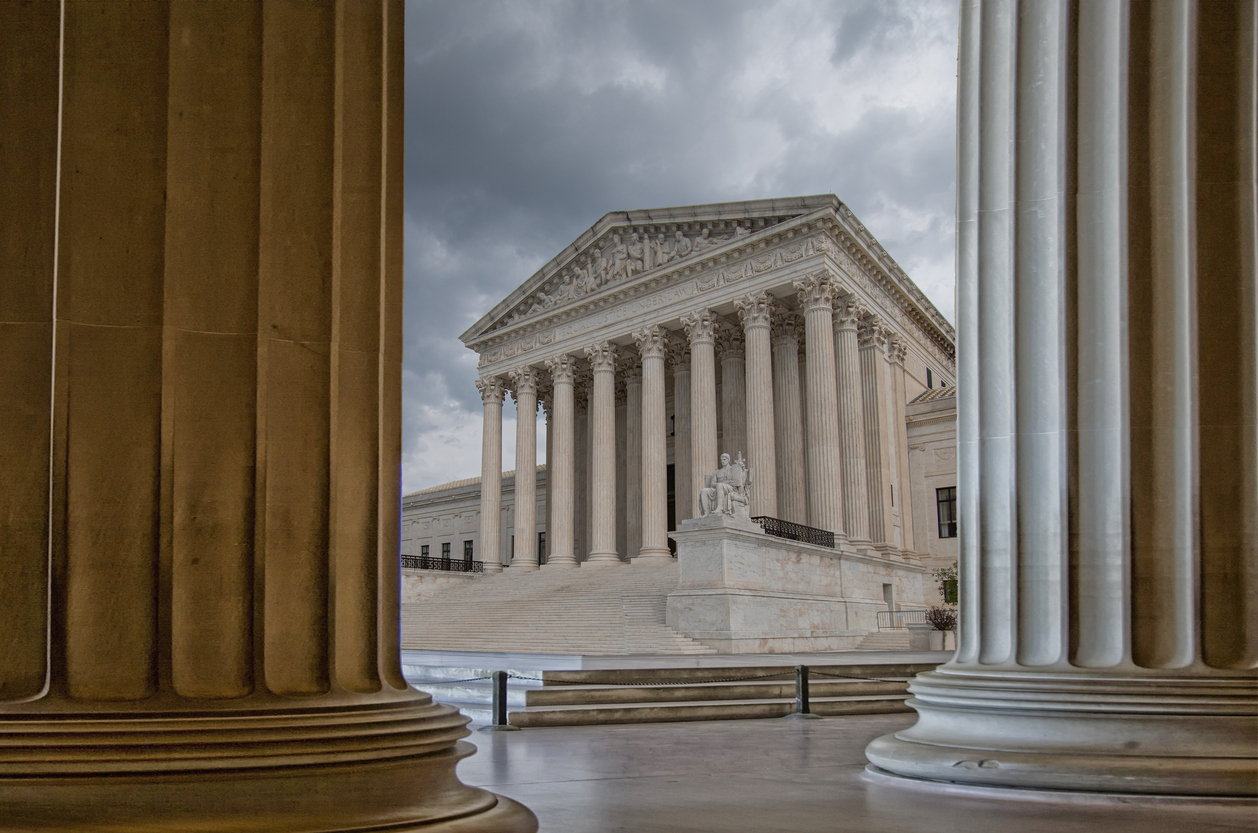


Who, Me? Your Path to Serving as a Federal Judicial Law Clerk

Some people just seem to know instinctively where the career pathways can be found in the legal profession, and how to travel them successfully. But I did not, and it’s possible that you may not either. If that sounds familiar, and if you have ever wondered about whether a clerkship for a federal judge might be for you, then please keep reading so that I can share some personal reflections and practical tips on the who, what, when, where, why, and how of becoming and serving as a law clerk to a federal judge.

First, let me provide some context. I am a federal judge and sit in the United States Bankruptcy Court for the Eastern District of New York, in Brooklyn, NY. Our court is a unit of the federal district court, and like all bankruptcy courts, we handle all of the bankruptcy cases that are filed in the district, from the biggest corporate Chapter 11 case to the individual case of the person who is just trying to get a fresh start in a Chapter 7 or 13 case. All bankruptcy cases are federal, and all bankruptcy issues come to our court.

I generally have three law clerks, with some serving in two-year term law clerk positions and others serving in one-year temporary law clerk positions. In the past, I have also had a career law clerk from time to time; this is a phrase we use in the federal system for someone who stays with a judge from year to year. I also hire two to three term law clerks each year. I typically hire at least one of those law clerks in the fall, to begin one year later, in the following fall. I may hire one or two more law clerks depending on the caseload and the level of available funding. Sometimes those additional positions are partially paid, sometimes those positions are fully paid, and sometimes those law clerks work as volunteers with stipends from their law schools, or, if they are at a firm, with the expectation of receiving a public service bonus when they finish.

So, with that background, let’s dive into the who, what, when, where, why, and how of serving as a law clerk to a federal judge.

Who should consider applying to be a law clerk to a federal judge?

Let’s start with who might consider seeking a federal judicial clerkship. Too often, it may seem that these positions are for someone else—someone with better grades, law review experience, connections with faculty, things like that. But there are as many paths to these positions as there are federal judges, and even within a particular judge’s chambers, most judges consider a broad range of criteria in assessing clerkship applicants.

So, if you are drawn to the idea of working full-time in the federal judiciary, in a judge’s chambers, with the opportunity to do the work of the justice system on a daily basis, then you—yes, you—should consider applying to be a law clerk to a federal judge.

What does a law clerk to a federal judge do?

Every chambers is different, but still, there are some common themes in the work of a law clerk to a federal judge. My law clerks help me with absolutely all of the work of chambers, including researching motions, drafting bench memos, attending court hearings, and drafting orders and decisions. For me, court hearings and the work that comes before and after them, including bench memos and preparing orders, are a big part of what we do. I could have thirty or more matters on a given day’s calendar, and I will decide most of these from the bench. A law clerk helps me to prepare for each and every one of these matters and assists with drafting the order after the matter is decided, based on our review of the record, our knowledge of the case—including the bigger picture, and the arguments we hear that day.

In the bankruptcy world, we spend a good deal of time in the courtroom, and we tend to see our cases in the courtroom much more frequently than in civil litigation in the district court. Whether the matter is a very complex summary judgment motion in a $500 million adversary proceeding or a motion to dismiss brought by a debtor in their own Chapter 7 bankruptcy case, a bench memo of some sort is prepared.

One of my law clerks always accompanies me in the courtroom while I am on the bench—this can be very helpful when an unexpected question comes up. And sometimes during a hearing, it is helpful to have the law clerk’s perspective and judgment on how to decide a matter or manage a situation. This can be some of the most interesting work done by the law clerk, and it can be a very special learning experience as well. You learn so much from spending dozens of hours in a courtroom, seeing how the legal system can work when it works at its best, and appreciating the role of the lawyers and the court in making that happen. As the law clerk observing proceedings, you appreciate how lawyers can do their work very well indeed, and you also see situations where you will realize that you could do a better job. No matter what, it is our job to treat people with the utmost respect and make them feel, win or lose, that they have never been treated better. And of course, every case is our most important case.

We also try to think about how we can make the system work as well as possible. In this respect, my law clerks help me with work we do in connection with pro bono organizations that provide lawyers and support for people who can’t afford counsel. I teach a seminar at one of the New York area law schools, and sometimes I look to my law clerks for teaching ideas since they are a lot closer to the law school experience than I am. My clerks also help me prepare for my work with judges from other countries; from time to time they have assisted me with hosting delegations from Europe, South America, the Middle East, and China. They work with our interns, who come from U.S. law schools and universities, and also from law schools outside the United States. The clerks learn how to supervise and mentor our interns, and they discover that they are ready to be mentors, even just one year out of law school. And finally, my law clerks assist with every other thing that needs to be done in chambers, whatever it may be. They help me get through a long day, brainstorming with everyone in my chambers on how to get our work done. There is simply nothing that I do as a judge that my law clerks don’t help me with.

I often hold settlement conferences in my own cases, and occasionally, I serve as a mediator in cases that are referred to me by my judicial colleagues. Sometimes my law clerks will assist with that work as well. I like the clerks to have that experience because this type of problem-solving in dispute resolution is a significant part of what lawyers do, and more and more, a significant part of what judges should do. Indeed, every spring, my law clerks attend a week-long commercial mediation training program offered by the New York State Bar Association. When the clerks return from that training, they have gained new skills in seeing a dispute from the perspective of each of the parties, identifying both positions and interests, and managing a case in a way that permits, and even promotes, the parties reaching a resolution. So on a typical day, they might spend some time in court, some time in chambers, some time with the interns, and some time with me.

What does this look like from the law clerk’s perspective? I hope that for my law clerks, a typical day is a day where they know that they are going to make a difference. They will likely spend some time in the courtroom, prepare files, talk through issues, interact with interns, help solve an unexpected case issue, and coordinate with me and our extraordinary courtroom deputy, who serves as the chambers interface with the bar. We all prepare as best we can, and we all must be prepared for the unexpected as well.

When does it make sense to pursue an application to be a law clerk to a federal judge?

Many law students think about pursuing a clerkship directly after law school, and that can make a lot of sense. After all, clerking can be a very logical and natural transition from legal education to law practice. Law schools provide support for clerkship applicants, and professors who may serve as mentors, recommenders, and coaches may be just down the hall.

Others may plan to apply for clerkships after a few years of private practice—and indeed, many judges specifically seek out applicants with that kind of practical professional experience. To be sure, it can be challenging to interrupt your practice path for what may seem like a detour. But your experience in practice may well make you a stronger applicant, and a more effective law clerk, too.

The fact is, there is no wrong time to pursue an application to be a law clerk to a federal judge. And if you apply for the year directly following law school and are not successful, you can apply again—and again after that, if it makes sense to do so. The experience that you gain as a law clerk, and even the experience that you gain as an applicant, will help you sharpen your thinking about the law and the justice system and your goals and aspirations in the legal profession. To paraphrase a well-known proverb, while it may seem like the best time to apply for a federal judicial clerkship was last year, or last month, or yesterday, the second-best time is . . . now.

Where should I consider applying for clerkships?

One of the most engaging and least appreciated aspects of serving as a law clerk to a federal judge is that you can do it just about anywhere—from a major metropolis to some national parks. Judges generally do not expect you to be admitted to the bar of the state in which they sit. It can be very helpful if you are familiar with the local legal community—but again, judges do not expect that you will be. You may well choose to seek a clerkship in the city in which you plan to practice. At the same time, a clerkship gives you an opportunity to immerse yourself in a part of the country that is brand-new to you. It may make sense to apply for clerkships in the locale where your law school is located, or where many of its alumni practice. But many other candidates will likely be doing the same thing, so if you seek to distinguish yourself, you should consider whom you would like to work for, and where you might want to live. It’s helpful to be prepared to explain why a particular court and locale appeal to you, including in your cover letter. This is especially so if you do not otherwise have a particular connection to the city or region.

So, think big! Think broad! Be willing to think outside the box! If you are excited about the opportunity to work in that judge’s chambers and live in that community, then you should not hesitate to apply for that position.

Why should I consider applying to be a law clerk to a federal judge?

When I started my clerkship with a district judge, he looked down at me, a full foot and half shorter than he was, and said, “You now have the second-best job a lawyer can have. You are a law clerk to a federal judge.” He then patted himself on the chest and said, “I have the best job. I am a federal judge.” In a nutshell, if you like it, you will love it; it truly is one of the best jobs you can have in the law. You will learn and discover things from your clerkship that will assist you for the rest of your career. I still discover things I learned as a law clerk in the mid-1980s that inform me, inspire me, and make me want to skip on the way to work and sing on the way home. Being a part of the federal courts is truly a privilege, the best kind of public service, and a great job, too.

On a practical level, as a law clerk, you will learn how to synthesize information quickly and get to the point—and that is an invaluable skill for a practicing lawyer. At the same time, you will learn not to leap to conclusions but to assess a file and form a judgment quickly, carefully, and confidently so that you are able to defend it when questioned. If you work for a judge who is in the courtroom a lot, you will see fabulous lawyering and you will learn from watching that. You will also see, hopefully not too often, lawyers who will make you think, “I can do this better than they can do it—right now.” Knowing how to be comfortable when you walk into a courthouse or courtroom is a wonderful skill, and the earlier in your career that you can learn it, the better. You will read great briefs and not so great ones. And you will learn through experience that many people do not always give a final read-through to the documents that they file—and hopefully, you will never make that mistake yourself!

And you will form a lifelong relationship with your judge, who will be your mentor, supporter, cheerleader, reference, and sounding board for life. We like to say in our chambers that “chambers is forever,” and as a law clerk, you become a part of a chambers family. You will have the benefit of that chambers experience and those relationships for your entire professional life. As just one example, I recently had the opportunity to administer the oath of office as a New York State Court of Claims judge to one of my former law clerks, who is now serving as a judge. I can’t think of a more special moment to share with a former law clerk than to see her become a judge herself, and I could not have been more proud of her.

Of course, you will also learn a good deal of substantive law, in more areas than you can imagine. In this court in particular, you will get smart about deals, and you will get smart about litigation. You will identify problem-solving as a big part of being a lawyer, which will forever make your clients grateful. And you will have a lot of fun.

Another reason to consider a clerkship is that it may well open doors for you, in the near term and down the road, too. Again, looking to my own law clerks as examples, many have gone on to practice in law firms, from the largest global “big law” firms to boutique specialty firms, and everything in between. Several have gone on to do other clerkships with other federal courts, and in the state court as well, including the Commercial Division of the New York Supreme Court in Manhattan, one of the preeminent business courts in the country. Several of my former law clerks have gone into public interest work and public service. One was the first bankruptcy court law clerk to be selected to be a Supreme Court Fellow. At least one is a journalist. And as noted, one former law clerk is now a judge, and I suspect that others will follow.

How do I apply to be a law clerk to a federal judge?

Our hiring process begins with the “OSCAR System,” the web-based resource that the federal courts use for the electronic submission of clerkship applications to federal judges. Many—perhaps most—federal judges use this system to receive applications. If you have identified a particular judge to whom you would like to apply and do not see the judge listed on OSCAR, it may make sense to contact chambers to determine whether the judge is currently considering applications and how they would like to receive them.

In my hiring process, we rely on OSCAR and also occasionally receive applications by mail, both electronic and paper. We encourage everyone to apply via OSCAR, and ask for applicants to submit a cover letter, a résumé, college and law school transcripts, a writing sample, and references. We receive many applications for each position, review them carefully, and call a small number of individuals in for interviews.

An interview is generally a very important part of the clerkship hiring process. You should expect to interview with the judge and also with the judge’s current team of law clerks, and each of these interviews matters. In my chambers, when you interview to be my law clerk, it’s a half-day, in-person enterprise. And everyone in chambers is involved. You will interview with me of course, and also with each of the current law clerks. References can be very important, as the judge will rely on them to get a better sense of the applicant from people who have taught or worked with them for a period of time. Deciding who to hire as my law clerks is probably the single most important decision I make every year because they are my chambers team and we depend on each other enormously.

What do federal judges look for in their law clerks? There are some common denominators. Academic performance and consistency are important, of course. But law school grades are not the only thing that matters. Like many judges, I look for trends in an applicant’s academic performance, as well as how well the applicant has done. If you are getting B’s and C’s, rather than A’s and B’s, it is going to be difficult to be considered seriously for a law clerk position. But you may have a great opportunity to serve as an intern for a federal judge, and that may then lead to other opportunities.

Course selection is also something to consider, and some law school courses may prove to be especially helpful to an aspiring law clerk. One is civil procedure, as well as any advanced procedure classes that may be offered. Federal courts and federal jurisdiction are also important subjects and may help to demonstrate your interest in courts and court processes. And in light of the problem-solving nature of trial courts, including district and bankruptcy courts, a negotiation or mediation course may provide helpful perspective as well. Most important, especially in the second and third year, is to take the classes you love, that you are excited about, that challenge you to do your best and most critical thinking and writing, and that remind you of all the reasons you wanted to be a lawyer. In the end, any class that helps you learn to write, research, think, and exercise judgment as a functioning, articulate professional is helpful.

Speaking for myself, I want to meet and consider the people who have done more than just do very well in undergraduate and law school, and the people who have done things in addition to just going to school, whether before or after their law school education. In terms of experience, I have hired law clerks directly from law school, I have hired law clerks who are completing clerkships with other judges, and I have hired law clerks who have practiced for several years.

As I consider applications, I try to get a sense of the person’s life story and why they are interested in serving as a law clerk. From their cover letters, résumés, recommendations, courses, and law school activities, I try to get a sense of whether this is someone who will love the work of our court, being a part of our chambers, and feeling that public service is truly important. I look for applicants who like the idea of going to work every day and making a difference in the justice system, in the work of companies large and small, and in the lives of ordinary people who are trying to get a second chance at life. If I get a sense that the law clerk prospect is someone who will love that, and who is interested in the position for all of those reasons, that is probably someone I will want to meet and interview.

Finally, don’t rule out applications to courts outside the federal system. In many of the state courts, including in New York, there are court attorneys who work from year to year supporting the judges in their chambers. These are very interesting career positions and sometimes are a pathway to the state court bench. Similarly, in some federal courts of appeal, there are staff attorney law clerks who work with the entire court.

There are also other roles within the court system for attorneys. For example, we have a pro se attorney who works several hours a day with an “open door” office for pro se access; our court’s pro se attorney was one of the first in the country and has become a model for other courts. Court administration, including the clerk of court, chief deputy, and district and circuit executive’s offices, can also provide a very interesting public service career path.

* * *

Finally, here are some parting thoughts for anyone who is considering applying for a federal judicial clerkship, or any other dream position in the legal profession—because serving as a law clerk, or as a judge someday down the road, is truly a dream job.

First, do not let anyone tell you that you cannot do it. Put another way, don’t reject yourself! Be sure to do as well as you can in law school, because your grades matter. Remember to tell your story, to share what excites you, and remember too why you went to law school. Studying is important, of course—but is not the only important thing. Try to stay involved with all of the things that you love to do in your community.

Next, don’t worry if you aren’t perfect—no one is. I have had wonderful law clerks who were on law review, and I have had wonderful clerks who were not on law review. I have had wonderful law clerks who had perfect GPAs from their first semester of law school, and I have had wonderful law clerks whose transcripts told me that the first semester was hard for them, but they figured it out, and excelled in the end.

In addition, be open to relocating to a different part of the country. You will parachute into that legal community in a very engaging way, and you will be part of the federal court. You will immediately get to know the bar. You will be a part of the chambers community, which is like a little family. And who knows, maybe you will live there for the rest of your professional career!

Be open to possibilities. I was among the least likely bankruptcy court judge applicants you can imagine—I had no experience in bankruptcy court and had never practiced bankruptcy law—but something about this “second-chance” court seemed very special to me, and I was lucky enough to be appointed.

And finally, always have faith in yourself. Here’s one more story to illustrate that. I still remember one late evening many years ago—decades ago, actually!—I was applying for scholarships to help pay for college. One seemed especially unlikely, and I was on the verge of abandoning the application. But my mother quietly said, “They have to pick someone, and it might as well be you!” Figuring that I had nothing to lose, I applied for that unlikely scholarship —and I got it.

So, if you think that a federal judicial clerkship is for you, apply! The judge has to pick someone, and it might as well be you!


This article is related to a CLE program that took place during the ABA Business Law Section’s 2026 Spring Meeting. To learn more about this topic, listen to a recording of the program, free for members.


Changes to NMLS Individual Disclosure Questions Take Effect

Effective April 18, 2026, the Nationwide Multistate Licensing System (“NMLS”) implemented changes to the Individual (MU2 and MU4) Disclosure Questions along with definitional updates that also apply to Company (MU1) and Branch (MU3) Disclosure Questions that will impact existing licensees (“Update”). The Update requires disclosure question updates for individuals identified as control persons, branch managers, licensed Mortgage Loan Originators, and qualifying individuals who have MU2 profiles associated with a company’s license. The NMLS Glossary of terms was also updated to amend existing definitions and incorporate new definitions.

The NMLS is the system of record for non-depository, financial services licensing or registration for participating state or territorial governmental agencies, including the District of Columbia and U.S. Territories of Puerto Rico, the U.S. Virgin Islands, and Guam. In these jurisdictions, NMLS is the official system through which companies and individuals apply for, amend, renew and surrender license authorities managed through NMLS. These agencies require companies seeking licensure maintained through the NMLS, the individuals designated as control persons, branch managers, licensed Mortgage Loan Originators, and qualified individuals of such companies to answer Disclosure Questions pertaining to various topics, including criminal, civil, and regulatory items that may impact licensure, and make updates to maintain the accuracy of these answers on the NMLS.

The Update requires individuals with associated MU2/MU4 profiles to review their existing information compared to the new Disclosure Questions and the updated terms in the Glossary. For example, the existing term “financial services-related” is no longer applicable in the Individual (MU2/MU4) context, and a new term, “financial services,” was added to the MU2/MU4. However, the term “financial services-related” still applies in the Company (MU1) Disclosure Question context. Terms such as “found,” “order,” and “governmental entity” are equally applicable between the Company (MU1) and Individual (MU2/MU4) Disclosure Questions.

While the Update largely reformats and clarifies existing questions, this is not entirely the case, and the changes may in some instances implicate new disclosures. It is important to note in this regard that the revised questions are retroactive and that the scoping of some questions has been narrowed. If revisions are required due to the changes, the commentary describing the changes recommends not adding a new explanation, but rather updating the existing fields in the Explanation section of the Disclosure Questions where applicable. If there is any change in an existing response, the explanation should be updated accordingly. It is our understanding that any previously uploaded documents and associated explanations will be available to be “matched” to “yes” answers for the new disclosure questions.

The NMLS materials regarding the Update indicate an August 31, 2026, deadline for compliance, which is likely realistic for individual Mortgage Loan Originators or other individuals associated with companies that are not often making updates in the NMLS. However, the updates may be more time sensitive from the Company licensing perspective if a company has upcoming filings, given that the licensed entity will not be able to make any filings of any kind in the system until the Disclosure Questions for all individuals associated with the Company-level record are updated. The procedural consequence of the update requirements is that the updates essentially halt the licensee’s ability to respond to regulator inquiries via the NMLS or submit new license filings until all associated individuals have updated and attested to their individual filings.

The Conference of State Bank Supervisors has published materials on NMLS to assist with this process.

The Digital Services Act and Transatlantic Intellectual Property Enforcement: What U.S. Companies Need to Know

U.S. lawyers advising clients that interact with the European digital market are increasingly encountering the regulatory structure created by the European Union Digital Services Act. The statute does not impose a single set of obligations on every company that sells products or offers services connected to Europe. Instead, it regulates defined categories of intermediary services and assigns duties according to the role a company plays within the digital ecosystem.

Some U.S. companies operate hosting services, online platforms, or online marketplaces and therefore carry direct responsibilities under the Act, while others participate as merchants, advertisers, or rights holders using systems operated by third parties. Understanding this distinction at the outset allows counsel to determine whether the client is a direct duty holder, an indirectly affected commercial participant, or a rights holder seeking enforcement, and it frames how notice procedures, documentation practices, and regulatory oversight will shape intellectual property disputes within the European digital environment.

The European Union Digital Services Act has changed the environment in which online intellectual property disputes occur. For many years lawyers treated online enforcement largely as a private exchange between rights holders and online platforms through notice practice. The Digital Services Act places those same disputes inside a regulatory system that examines how intermediary service providers operate, how decisions are documented, and whether moderation procedures follow defined standards.[1] For U.S. lawyers advising clients that interact with the European digital market, the practical question is not simply whether a company does business in Europe. The starting point is determining whether the client falls within the categories of intermediary services regulated by the statute.

The Digital Services Act applies to defined actors rather than to companies in general. Under Article 3, intermediary services are services that transmit, store, or provide access to information supplied by users, including hosting services, online platforms, and online marketplaces.[2] However, many U.S. businesses interact with the European market without becoming direct duty holders under the Act. In practice, lawyers usually encounter three different client positions. Some clients operate online platforms or hosting services and therefore carry direct statutory obligations. Other clients sell products, advertise, or conduct business through online platforms operated by others. A third group consists of rights holders seeking to remove infringing material or counterfeit listings. Distinguishing among these positions is essential because the legal responsibilities and risk exposure differ significantly.

Clients that operate intermediary services face the most direct regulatory exposure. Their obligations depend on the type of intermediary service they provide and, for the largest services, whether they are designated as “very large online platforms” or “very large online search engines”;[3] in this regard, for instance, the systemic risk governance, mitigation measures, and auditing expectations created by the statute apply specifically to those very large services. For other intermediary service providers, the focus is narrower and centers on procedural compliance, transparency, and cooperation with authorities, but these requirements still affect day-to-day operations.

From a practical enforcement standpoint, one of the most important provisions for lawyers advising both hosting providers (including online platforms) and rights holders is the notice and action procedure. Article 16 establishes the elements that a notice must contain to be treated as sufficiently precise and substantiated.[4] The notice must, inter alia, identify the specific content in question, explain why the material is alleged to be unlawful, and provide contact information for the complaining party. In practice this means that intellectual property complaints sent into the European system must be drafted carefully. Incomplete or vague notices may not trigger the same online platform obligations that lawyers often assume exist under earlier notice-based systems. For this reason, Article 16 provides a direct obligation upon providers of hosting services (including online platforms) to maintain an accessible, user-friendly electronic mechanism designed to facilitate the submission of such sufficiently precise and adequately substantiated notices.

A simple example illustrates how the process operates. A trademark owner identifies a counterfeit product listing on an online marketplace and submits a notice, through the platform’s notice mechanism, identifying the listing, the protected mark, and the reasons why the product is alleged to be illegal. If the notice satisfies Article 16, the online platform evaluates the content and decides whether to remove or restrict it. If the online platform takes such kind of action, the Digital Services Act requires the decision to be explained.

In particular, Article 17 requires a clear and specific statement of reasons when, inter alia, content is removed or restricted.[5] For lawyers advising online platforms, this means moderation decisions should not exist only inside internal dashboards or automated filters. The statement of reason must be capable of explanation and shall at least contain the content required by Article 17(3), including, where the decision is based on the alleged incompatibility of the information with the provider’s terms and conditions, a reference to the relevant contractual ground and an explanation of why the information is considered incompatible with it. This requirement also affects litigation strategy because the record created by the platform may become part of later disputes.

The Act also lays down additional obligations for online platforms, including, inter alia, the requirement under Article 20 to maintain internal complaint handling systems. Article 20 gives users the ability to challenge moderation decisions.[6] As a result, a takedown request may begin a structured review process rather than ending the matter. Lawyers representing rights holders should expect that users may contest removal decisions, while lawyers representing online platforms should ensure that review systems are consistent, documented, and aligned with the requirements of Article 20.

For marketplace operators, the Act lays down additional obligations that are of immediate relevance for intellectual property enforcement. Article 30 introduces trader traceability obligations for online marketplaces.[7] Platforms must, inter alia, collect, retain, and verify identifying information about business sellers. This requirement directly affects how marketplaces onboard merchants and maintain records. From an enforcement perspective it also assists in identifying repeat infringers and tracking sellers engaged in counterfeit activity. Lawyers advising brand owners frequently view this provision as one of the most operationally significant aspects of the statute.

The Digital Services Act also connects intermediary service providers’ governance with European fundamental rights principles. For instance, Article 14 requires intermediary service providers to describe moderation policies in their terms and conditions and to apply restrictions diligently, objectively, and proportionately, with due regard to the rights and legitimate interests of all parties involved, including fundamental rights, such as the freedom of expression, freedom and pluralism of the media, and other fundamental rights and freedoms as enshrined in the Charter of Fundamental Rights of the European Union.[8] This provision creates risk not only when enforcement activity appears inconsistent with the intermediary service provider’s terms and conditions, but also where those rules (or their application in a particular case) are difficult to defend as diligent, objective, proportionate, and compatible with the rights and legitimate interests of the parties involved, including fundamental rights. For example, a removal decision may be difficult to defend if it cannot be tied to the platform’s published terms and conditions, or if those rules (or their applications) are inconsistent with the Act’s legal framework.

Public enforcement is coordinated through national Digital Services Coordinators and the European Commission. These authorities supervise compliance, may require intermediary service providers to supply information about their systems and decisions, and can impose enforcement measures and penalties where violations occur.[9] Lawyers should therefore view intermediary service providers’ governance not only as an internal compliance function but also as a system that public authorities may examine. Thus, intellectual property disputes can trigger broader questions about whether the intermediary service provider’s processes comply with the statute.

U.S. intermediary service providers that are not established in the European Union but offer services to users in the European Union must also address the legal representative requirement in Article 13. Non-European providers must designate a representative within the Union who can receive communications from regulators and coordinate compliance matters.[10] This requirement effectively connects foreign service providers to the European enforcement framework by ensuring an EU-based point of contact, even when their headquarters remain outside the Union.

For practicing lawyers, several practical steps follow from these provisions. Clients operating hosting services should review their notice intake procedures and the way moderation decisions are documented and explained—and, when operating as online platforms, their complaint-handling systems—to ensure they reflect the statutory framework. Online marketplace operators should also confirm that seller verification and recordkeeping systems meet the trader traceability rules. Rights holders should prepare enforcement notices that clearly identify infringing content and provide adequate reasoning. Businesses using third-party platforms should also understand how platform compliance systems may affect listings, account actions, and dispute resolution.

The larger lesson is straightforward. The Digital Services Act has not eliminated traditional intellectual property enforcement strategies, but it has placed them inside a governance structure that public authorities can review. Lawyers advising U.S. companies that interact with the European digital market should focus on how their clients fit within the statute, how intermediary service providers’ processes operate in practice, and whether those processes can withstand regulatory scrutiny.

Conclusion

The Digital Services Act places online intellectual property enforcement inside a defined governance structure rather than leaving it as a private exchange between rights holders and intermediary service providers. In particular, hosting providers must assess legally sufficient notices and explain moderation decisions, online platforms must also maintain internal review systems, and online marketplaces must verify the identity of commercial sellers. Public authorities in the European Union may request information about these processes and evaluate whether intermediary service providers apply their rules consistently and proportionately.

For U.S. lawyers, the central task is determining where a client fits within the statutory framework and advising from that position. This may involve building compliant procedures for intermediary service providers, preparing precise enforcement notices, or advising businesses that depend on third-party platforms. When that role-based analysis is done well, the Digital Services Act becomes a workable structure for managing cross-border intellectual property enforcement with greater clarity and predictability.


  1. Regulation EU 2022/2065 of the European Parliament and of the Council of 19 October 2022 on a Single Market for Digital Services and Amending Directive 2000/31/EC (Digital Services Act), 2022 O.J. (L 277) 1. This regulation establishes the legal framework governing intermediary services operating in the European Union and introduces transparency, accountability, and procedural obligations for digital service providers.

  2. Id. art. 3. Article 3 provides the statutory definitions used throughout the regulation, including intermediary services, hosting services, and online platforms. These definitions determine whether a service falls within the categories regulated by the Digital Services Act.

  3. Id. art. 33. Article 33 authorizes the designation of very large online platforms and very large online search engines based on the number of active recipients of the service in the European Union. See also id. arts. 34 through 43, which establish the additional obligations imposed on those designated services, including systemic risk assessment, mitigation measures, independent audits, and enhanced transparency requirements.

  4. Id. art. 16. Article 16 establishes the notice and action mechanism for hosting services (including online platforms) and sets out the elements required for a notice to be considered sufficiently precise and adequately substantiated, including identification of the specific information alleged to be illegal and an explanation of the reasons why the notifier alleges that information to be illegal.

  5. Id. art. 17. Article 17 requires hosting and online platforms to provide a statement of reasons whenever they restrict access to or remove information supplied by a recipient of the service, including an explanation of the decision and the legal or policy grounds relied upon.

  6. Id. art. 20. Article 20 requires online platforms to maintain an internal complaint handling system through which users may challenge content moderation decisions and obtain review within the platform’s procedures.

  7. Id. art. 30. Article 30 establishes traceability obligations for traders using online marketplaces and requires marketplaces to collect, verify, and retain identifying information concerning business sellers before allowing them to offer goods or services through the platform.

  8. Id. art. 14. Article 14 requires providers of intermediary services to include information in their terms and conditions regarding content moderation policies, procedures, and tools, and to apply those restrictions in a diligent, objective, and proportionate manner with due regard for the rights and legitimate interests of all parties involved.

  9. Id. arts. 49–51, 56. These provisions establish the supervisory and enforcement structure of the Digital Services Act, including the designation and authority of Digital Services Coordinators in each Member State, investigative and information-gathering powers, coordination among national authorities, and the supervisory role of the European Commission with respect to certain services.

  10. Id. art. 13. Article 13 requires providers of intermediary services that are established outside the European Union but offer services within the Union to designate a legal representative in the European Union who may be addressed by competent authorities and who facilitates regulatory communication and compliance.

The FTC’s Latest Actions Aimed at Worker Noncompetes

Since withdrawing its proposed rule broadly banning noncompetes in September 2025, the Federal Trade Commission (“FTC”) has made clear that it will instead bring to bear its enforcement resources against what it deems anticompetitive worker noncompete agreements. The FTC’s latest related enforcement action, announced on April 15 via press release, is against the pest-control company Rollins, which allegedly employs more than 18,000 U.S.-based workers. Simultaneously, the agency announced that it had issued letters to thirteen additional pest-control companies warning them that its review of noncompetes in the pest-control industry “suggests they are not reasonably necessary to promote any procompetitive aims,” and that the FTC suspects the pest-control industry of using anticompetitive noncompetes. The letters instruct recipients to undertake a comprehensive review of their employment agreements, including any restrictive covenants.

The noncompetes at issue in the Rollins action allegedly prohibit employees from working in the pest-control industry for two years following the conclusion of their employment, usually within a seventy-five-mile radius from the location at which the employee worked. Additionally, the FTC claims that the company generally did not give employees any incremental consideration, whether in the form of additional compensation or any other benefit.

The Rollins action is similar to the FTC’s 2025 complaint and consent decree against a large pet cremation company. In both cases, the agency defines noncompetes as contract terms that, following the conclusion of employment with one employer, restrict the worker’s freedom to accept employment with competing businesses, to start a competing business, or otherwise to compete with the former employer post-employment. Both actions allege that the employers required virtually all of their personnel to agree to noncompetes, including low-skilled and low-wage employees, without individualized consideration of roles.

Both complaints allege that the challenged restrictive covenants are anticompetitive because they alter the bargaining position between employees and their employers and negatively impact the employees. Specifically, the FTC charged that employees bound by noncompete agreements are in a worse position to negotiate better terms of employment in the industry at issue (pet cremation or pest-control) due to the noncompete agreements’ denying them access to job opportunities and restricting their mobility. Further, the agency contends that noncompete agreements likely cause lower wages and salaries, reduced benefits, less favorable working conditions, and personal hardship to employees.

In 2025, the FTC issued similar warning letters to health care employers. Also in 2025, the agency challenged the blanket use of no-hire provisions in agreements with customers of a building services company. Although these no-hire provisions were not identical to the worker noncompetes challenged in the pest-control and pet cremation industries, they shared many of the same characteristics: they too allegedly applied to workers regardless of skill or wage level, and they were viewed by the FTC as reducing mobility, lowering wages and benefits, and creating less favorable working conditions and personal hardship for employees. In all three cases, the agency also claimed that the restrictions harmed competition in the market for the employers’ products or services by directly or indirectly impeding the entry and expansion of competing businesses.

The Rollins action and warning letters are also consistent with the FTC’s message from its January 2026 public workshop titled “Moving Forward: Protecting Workers from Anticompetitive Noncompete Agreements.” The workshop outlined the FTC’s approach to enforcement following its abandonment of the noncompete ban and broad rulemaking. The program included remarks by the FTC’s two current commissioners confirming that the agency intends to aggressively enforce antitrust violations posed by noncompete agreements even after the vacatur of its broad Non-Compete Clause Rule. However, the FTC’s future enforcement will be on a case-by-case basis, as opposed to a broad ban.

Chairman Andrew N. Ferguson framed the FTC’s strategy as using “the tools Congress actually gave us,” namely bringing individual enforcement cases. He emphasized that the agency would not step back from this charge, stating that the “days of unreflective, unjustified, and anticompetitive noncompete agreements are over.” Ferguson noted that Congress could, alternatively, choose to ban noncompetes outright. Commissioner Mark R. Meador added that noncompetes are especially likely to raise competitive concerns when they extend beyond one to two years after employment, reach geographic areas beyond the employer’s market, or restrict workers from engaging in unrelated lines of business.

The FTC’s 2025 warning letters to health care staffing companies, 2026 warning letters to pest-control firms, consent decrees, and workshop all confirm that the FTC’s retreat from its attempted nationwide ban does not signal an end to federal scrutiny of noncompete agreements. The agency continues to encourage workers and others to anonymously report potentially anticompetitive restrictions on employee movement.

The agency has explained that it will consider (a) whether purported procompetitive justifications are legitimate and (b) whether less restrictive alternative measures can incentivize any associated procompetitive investments. Employers must also consider the evolving landscape of state laws governing the use and scope of worker noncompetes, including recent Virginia and Maryland legislation.

For workers, the FTC’s sustained enforcement activity confirms that noncompete agreements—particularly those imposed on low-wage or low-skilled employees without individualized justification or additional compensation—are vulnerable to challenge. Workers subject to such agreements are encouraged to report potentially anticompetitive restrictions to the FTC and to consult counsel regarding the enforceability of any covenants restricting their post-employment mobility.

For employers, the central message is that the FTC will continue to bring individual enforcement actions, and employers should review existing noncompete and related restrictive covenant templates to ensure they satisfy existing state and federal guidance. The FTC’s latest enforcement action serves to again remind employers that they must not only be vigilant in monitoring the patchwork of rapidly evolving state and local noncompete laws, but must also stay alert to the FTC’s focus on policing the use of noncompetes within particular industries. If the applicable states’ laws permit the use of noncompetes, employers that cannot demonstrate legitimate, narrowly tailored procompetitive justifications for their noncompetes face exposure—both from the FTC and from employees who may seek relief under applicable law.

How to Effectively Oppose a Petition for Certiorari in the U.S. Supreme Court: A Practitioner’s Guide

For its recipient, a certiorari petition can be an anticlimax. After years of successful litigation, you and your client deserve a break but do not get one. Ninety-odd days after you celebrated a hard-fought victory in the federal court of appeals or state supreme court, you receive an impressively printed petition for writ of certiorari to the U.S. Supreme Court. After reporting on the petition to your client, who hoped to have heard the last of the case, you reassemble your appellate team and ponder what to do.

The odds are in your favor. The Supreme Court denies the vast majority of requests for review: 1,305 of the 1,369 so-called paid (i.e., nonindigent) certiorari petitions or appeals acted on during the Court’s 2024 term were turned down. An even higher proportion of the 2,652 in forma pauperis (“IFP”) cases were unsuccessful.[1] In fact, during the tenure of Chief Justice Roberts, the number of cases set for argument in the Supreme Court has trended downward, from ninety in the 2005 term to sixty-nine in the 2023 term.[2] Many of the cases accepted for argument, moreover, are those in which the federal government has sought or supported review; or they involve constitutional, civil rights, or criminal matters. Few are civil business cases like yours.[3]

So, the odds are with you. But that almost increases the pressure. Your client will not be happy if lightning strikes. It will not want to incur the expense of another round of briefing and oral argument just to put at risk a favorable judgment. And what is worse than a lawyer who fumbles a virtual sure thing?

What should you do to maximize the chance that no four justices—enough to grant certiorari—see yours as that rare case deserving the Court’s plenary attention?

Start with what the other side must do—that is, with what you want to prevent. A petitioner for certiorari bears a heavy burden to persuade the Court to select its case for review out of the many thousands of petitions filed. Understanding the nature of that burden is crucial to writing a successful brief urging denial of certiorari (called a “brief in opposition”).

The major peculiarity of petitioning for certiorari is that the merits of a case are not the main thing. They are not a reliable indicator of whether the Court will grant the writ. True, in the cases it hears, the Court often determines that the judgment below was incorrect. The Court reversed or vacated (at least in part) forty-four (75 percent) of the fifty-nine cases reviewed on writ of certiorari and decided with a full opinion during the 2024 term.[4] But, at the petition stage, there is no straightforward relationship between the merits and whatever review will be granted. The reason for this—and it is an awkward concept for many lawyers—is that the Supreme Court does not regard its principal job to be the correction of errors.

What Is Not Certworthy?

Instead of seeking merely to correct erroneous decisions, the Court is looking, Chief Justice Roberts has said, for “conflicting decisions on the same law that have to be fixed.”[5] The best candidates for review thus “take[] a view of the law at odds with those expressed by other federal courts of appeals” on a “vitally important” issue.[6] Selecting these inevitably takes some measure of discretion. Indeed, Justice Harlan thought “the question whether a case is ‘certworthy’” to be “more a matter of ‘feel’ than of precisely ascertainable rules.”[7]

Intuition plays a role, but it is a patterned kind of intuition: most cases in which certiorari is granted fall into one of three well-established categories (discussed at length and in all their variations in the Supreme Court practitioner’s bible, Supreme Court Practice by Stephen M. Shapiro et al.[8]). These categories are (1) cases raising an important federal law question over which a conflict has developed among the federal circuit or state supreme courts, (2) cases in which the lower court reached a decision in conflict with governing Supreme Court precedent, and (3) cases squarely presenting an important issue of federal law with significant practical consequences.[9]

Therefore, although the correctness of the judgment below is certainly of some importance—even where there is a clear circuit conflict, the justices may prefer to take a case to reverse rather than affirm—it is rarely controlling. A petitioner for certiorari—your opponent—must thus do more than show the Court that the decision below was wrong. An effective petition for certiorari must also demonstrate that one or more of the established factors making for “certworthiness” are present. As a corollary, the job of the brief in opposition is to show not only that the decision below was correct, but (more important) either that certworthiness factors are absent or (if some are present) that the case is not worth the Court’s attention.

When Is It Beneficial to Waive the Brief in Opposition?

To talk about the content of a brief in opposition, however, is to get ahead of the game. The first question to ask after studying the petition is whether the Court will really need any further persuasion to deny certiorari—or whether the petitioner has already done that job for you. In short, do you need to file anything at all?

It remains true today, as Justice Harlan complained seven decades ago, that “a great many petitions for certiorari reflect a fundamental misconception as to the role of the Supreme Court” and stand no chance of being granted.[10] Some petitions from state courts fail to identify any federal issue, even though they bristle with a multiplicity of questions presented (itself a sign of a poor petition). Others argue only that the decision below was wrong, or leave no doubt that the issues raised are of little consequence beyond the particular facts of the case. Petitioners routinely fail to show that the questions presented arise out of a conflict in the courts of appeals or state supreme courts, have previously been settled by the Supreme Court in a way that is contrary to the decision below, or involve issues of general importance that are ripe for Supreme Court review.

About 97 percent of petitions for certiorari “are denied at a preliminary stage, without joint discussion among the Justices, as lacking any reasonable prospect of certiorari review.”[11] As Justice Brennan recalled, about 90 percent of IFP and 60 percent of paid petitions are so “utterly without merit” as to require a “minimum of time and effort” to determine that denial was the proper disposition; he himself often decided that a case was not certworthy by doing nothing more than reading the questions presented.[12]

If you believe that the petition for certiorari in your case will receive this dismissive treatment, compare notes with lawyers who are farther removed from the case and who have had the opportunity to develop a “feel” for certworthiness. Have an experienced Supreme Court practitioner, a past law clerk, or an alum of the Solicitor General’s Office read the opinion below and the petition. If there is general agreement that the petition is obviously meritless, talk to your client about whether the time and expense of preparing and printing a brief in opposition is warranted. No rule requires that the respondent file a brief in opposition (except in capital cases).[13] If the petition in your case is so plainly meritless that the Court will not need the assistance of a brief in opposition, you may wish to waive your response. The solicitor general (“SG”) and state attorneys general often do this.

One way to waive is simply to allow the period for response to elapse without filing a brief. A much more helpful and courteous course, which is required if your client has a parent corporation or if a public company owns at least 10 percent of your client’s stock,[14] is to write a letter to the Clerk of the Supreme Court (“Clerk”) (be sure to serve it on opposing counsel). It should say something such as “Because this case clearly does not warrant review by the Supreme Court, respondent does not intend to respond to the petition for certiorari unless requested to do so by the Court.” Such a letter tells the Clerk that the respondent received service, and it identifies the respondent’s counsel of record.[15] It also must identify all parties not named in the petition, as well as their stock ticker symbols, and include any applicable Rule 29.6 disclosure statement.[16]

The Clerk prefers a respondent to file its waiver letter as soon as possible after receipt of the petition. This is because the Clerk may circulate the petition to the justices immediately after receiving the waiver letter instead of waiting until the time for response expires.[17] This may be an important factor if you want to move rapidly to enforce a judgment in your favor—especially when a Court recess looms. For example, when a petition is filed close to the long summer recess, quickly filing a waiver can reward you with a June denial of certiorari and avoid the long wait until the first October order list.

Waiving response displays the proper disdain for a frivolous petition. And it is not the risk one might imagine: a respondent can be sure of an opportunity to file a brief in opposition if the justices surprisingly do find something of interest in the case. A summary of the Court’s current procedures for handling certiorari petitions shows why, but it also shows that a waiver must be approached with care.

The Court’s Procedures for Addressing Certiorari Petitions

Once a week throughout the year, the Clerk circulates papers to the justices for paid cases in which a brief in opposition or waiver letter has been received or the time for response has expired.[18] There is another weekly circulation of IFP cases. The circulated cases are divided among the law clerks to the seven justices who currently combine their clerks’ efforts at the petition stage into what is called the “cert pool.” A single law clerk from the cert pool is assigned to each case and writes a memorandum, known as a “pool memo,” to guide the justices who participate in this arrangement. The pool memo discusses the certworthiness of the petition and makes a recommendation as to its disposition. (Justices Alito and Gorsuch are the only justices who currently do not participate in the pool. Their clerks read all the petitions themselves.)

The cert pool ensures that each set of certiorari-stage submissions receives more detailed attention than would occur if clerks or justices in every chambers had to read the papers in each of the more than seventy-five cases circulated each week. The pool clerk has time to study cases alleged by petitioners to be in conflict and even to do research independent of the briefs. On the debit side, the pool arrangement means that the most careful attention to the petition (and to your brief in opposition, if you file one) comes from a single law clerk, who will recommend to the justices in the pool whether to grant the writ.

After the pool memos are distributed to participating chambers, clerks annotate the memos, paying special attention to anything in the case that might interest their own justice. The justices then review the annotated memos themselves prior to conference. Pool memos have become an important element in the Court’s review of certiorari petitions. In many cases, the justices begin and end with the annotated memos, never reviewing the petition.[19] The justices are most likely to go beyond the pool memo and read the briefs where the certiorari decision appears close or where the pool memo has recommended a grant.

On the basis of the pool memo, their clerks’ annotations, and (where necessary) their own review of the briefs, the justices decide whether a petition should be discussed and voted on at conference. The chief justice compiles a list of cases he believes should be set for a conference discussion—called the “discuss list”—and circulates it to other members of the Court, any one of whom may add a case to the list. Any case not appearing on the discuss list is “dead listed” for denial without a conference vote. Justice Kagan estimates that just “a few hundred” of the “thousands and thousands” of petitions for certiorari filed each year make it to the discuss list.[20]

What Is the “Discuss List”?

The Court’s current handling of the discuss list has great importance for a respondent considering whether to waive its brief in opposition. At present, the Court does not include any petition on the discuss list until a response has been filed.[21] Thus, if the pool memo writer (or, after reading the pool memo, one of the justices) believes that, despite a waiver of a brief in opposition, the petition should be included on a discuss list for a conference vote, he or she will ask the Clerk to “call for a response.”

A request for a response obviously must be taken seriously. It is not necessarily bad news, however. It does not mean that a grant is imminent, or even that it is under consideration. After all, the origin of the request will usually be some concern of a single law clerk or, less often, a single justice. It may be perfectly clear to most justices that there is nothing to the petition. Even the requester may only want some clarification. In fact, a response sometimes may be sought because the petition is so unclear that the law clerk writing the pool memo simply cannot understand the case. In such circumstances, the Court may need the respondent’s help to identify the issues and determine a proper disposition.

You will know neither the source of the request for a response nor the reason for it. Such a request can therefore be unnerving. If you were careful in deciding to waive a brief in opposition, there is little reason to fear that you have prejudiced your case by waiver itself. Chances are that the Court is looking for clarification rather than weighing a grant.

There is a modest danger in waiving. If you waived a case that was not frivolous, there may be a remote risk of prejudice. The pool memo writer or even some justices may already have developed a bent toward a grant, based on reading the petition alone, that you will now have to counteract. This possibility cautions care in your initial determination whether to waive and counsels filing a brief in opposition when in doubt.

Preparing the Brief in Opposition

If you don’t waive, what does drafting a brief in opposition involve? The brief is limited to 9,000 words and is due thirty days after receipt of the petition or of the Court’s request for a response.[22]

Your brief in opposition should be low-key, befitting the trivial issue the petitioner has tried to foist on the Court. A tone of bemusement, of a patient adult dealing with a confused child, is about right. You will rarely need the full word count (although a long brief showing in nauseating detail why a petition is uncertworthy may sometimes be thought effective to deaden any spark of interest in the case). “A brief in opposition should be stated briefly and in plain terms”[23] and focused on the precise problem at hand. This is not a place for an extended disquisition on the governing legal principles. As E. Barrett Prettyman Jr. has warned, if the justices and their clerks finish reading your brief “more impressed with the importance of the case than they were when they finished the petition,” you have made a mistake.[24]

Take pains to deter any would-be amici. You don’t need their help right now. Their participation at this stage could serve to suggest that the petition raises an issue with broad impact and might thus be self-defeating. Mishandled amicus support for a respondent—the opponent of certiorari—has been shown actually to increase the likelihood of a grant.[25]

The parts that may be included in a brief in opposition are, in order: (1) questions presented, which may either track the petitioner’s formulation or, more usefully, restate the issues for clarity and in less loaded language; (2) a Rule 29.6 statement of a corporate respondent’s parents and public companies owning at least 10 percent of the respondent’s stock, as well as their respective stock ticker symbols; (3) tables of contents and authorities; (4) a formal description of the opinions below; (5) a jurisdictional statement; (6) any statutes or other relevant provisions not set out in the petition; (7) a statement of facts; (8) an argument section, often headed “Reasons for Denying the Petition”; and (9) a formal conclusion requesting denial of the writ. Some of these sections may be omitted if the respondent has nothing to add to the petition.[26]

If you are lucky, you may not need to do more than explain why the Court lacks jurisdiction. There is nothing more to say if there is a decisive jurisdictional defect. In particular, check whether the petition was timely filed; in civil cases, this is a jurisdictional requirement, and no excuses are accepted.[27] An untimely petition is not always caught by the Clerk, who may assume that a petition filed more than ninety days after entry of judgment is proper because a petition for rehearing was filed in the lower court.[28]

Are Any Issues Unreviewable?

Beyond the timeliness of the petition, consider whether the issues presented have become moot. If so (or if the issues later become moot), the Court cannot reach the merits. Indeed, a clear-cut mootness problem might even persuade the Court to bypass other jurisdictional issues that it might otherwise have been inclined to resolve against you.[29]

In a case coming from a state court, examine, too, whether the judgment rests on an independent and adequate state law ground—one over which the Supreme Court lacks jurisdiction. A substantial number of petitions are filed each year that raise only state law issues or seek review of a decision based in the alternative on a state law ground. They can be knocked out quickly.

Win on the Facts

In most cases, more will be required—starting with a factual statement. In rare cases, when you are satisfied with the petitioner’s treatment of the facts, you can omit the statement from the brief in opposition.[30] Even if the petitioner’s statement is faulty, some recommend keeping the brief in opposition short by simply referring the Court to a satisfactory summary of the facts in an opinion below.[31]

Almost always, however, something can be made of the facts. Perhaps they are complex (the Court prefers factually straightforward cases); your statement should convey that. Perhaps the petition is interlocutory and key facts remain unresolved so that the Court’s decision on the merits might not affect the outcome of the litigation. Perhaps you can emphasize facts that distinguish your case from others said to be in conflict. Perhaps a full account of the facts will show that the case is unusual and that the issues are not of general importance. In any event, you almost certainly will want to present the facts to the Court with your own nuances and free of the petitioner’s inevitable slant.

Certainly, if there is any factual misstatement in the petition, correct it in your brief in opposition. If you try to bring the misrepresentation to the Court’s attention at the merits stage, you may find that the point is deemed waived. Rule 15.2 says that “[c]ounsel . . . have an obligation . . . to point out in the brief in opposition, and not later, any perceived misstatement made in the petition.”[32]

Infrequently, facts outside the record may show lack of certworthiness. You may have found statistics that demonstrate the practical insignificance of the question presented. The petitioner may have made statements to the press that contradict its submissions to the Court about the importance of the issue. Refer to these in the argument section of your brief rather than in the statement of facts—but exercise this option with discretion.

Reasons to Deny the Petition

The heart of the brief in opposition is the “Reasons for Denying the Petition” section—the argument. A demonstration that the decision below was absolutely right is one, though subsidiary, reason why the Court may not wish to review the case. The brief in opposition should therefore include a concise defense of the judgment below, either under a separate heading (usually at the end, befitting its secondary status) or possibly incorporated into your explanation that certworthiness is absent. If the opinion below is the work of a respected jurist or strong appellate panel, it doesn’t hurt to remind the Court subtly of its provenance. If you were less fortunate, do not limit yourself to defending the decision below on its own terms. If the lower court’s reasoning is indefensible, argue that the judgment is nevertheless correct on other grounds. Remember also to point out any absurd consequences that would follow from the rule urged by the petitioner.

But, for reasons mentioned before, your focus usually should not be the merits of the underlying decision. A more compelling reason for the Court to deny review is that there is some barrier to reaching the merits at all. The issues raised in the petition may be beside the point because the lower court gave alternate grounds of decision that are sufficient to support its judgment. If so, point that out early in the brief in opposition. If the lower court did not pass on the merits of the question presented because the petitioner did not raise (or failed to preserve) the issue, make that point early too. A crisp procedural defect of this sort is worth pages of argument defending the correctness of the decision below, and you must raise it in the brief in opposition or risk waiving it.[33]

The main job of a brief in opposition is to show that the petition fails to satisfy the criteria for certworthiness. Where possible, directly refute any claim that the questions presented have split the federal circuits or state supreme courts, are issues of great practical importance, or have already been addressed by the Supreme Court and decided contrary to the judgment below.

Are the Conflicts Real?

Frequently, you will be able to show that the petitioner is wrong to say that one or more of these certworthiness criteria are present. For example, petitions for certiorari often contain “dubious” claims about circuit splits that do not actually exist.[34] One study concluded that although about 60 percent of petitions for certiorari allege a split in the courts as to the question presented, the conflict is real in only 6 percent of those cases.[35] Ask whether the alleged conflict is a “square” one—would the other court have decided your case differently? Maybe the different outcomes are attributable to different facts and not legal disagreement. Often, cases alleged to be in conflict are actually distinguishable on the facts or the law. Sometimes only dicta are inconsistent.

Even where there is a square conflict, it must be at a sufficiently authoritative level of the legal system to warrant review. Some petitioners rely on conflicts among federal district court decisions, but the Court very rarely intervenes in such situations because the courts of appeals can iron out inconsistencies.

A claim that the questions presented are “important” enough for Supreme Court review is likewise susceptible to disproof. You can point out in the brief in opposition that the issue has never (or only rarely) arisen in the courts, that the lower courts are consistent in their approach to the question, or that the facts of the case are unusual. Sometimes, by citing past denials of certiorari on precisely the same issue, you can remind the Court that it has previously found the questions presented unworthy of review.

Do not despair if there is a clear split among the circuits or state supreme courts or the petition raises a question of obvious practical importance. Even in such cases, review is discretionary, and it is often denied. In fact, Justice Kavanaugh has complained that the Court is declining review of “the kind of nuts and bolts cases” that garner little public attention but cause confusion in the law.[36] In his view, the Court should decide between seventy and seventy-five cases each term, up from about sixty now.

Is It the Right Time to Decide?

Another method of avoiding certiorari is to suggest that the Court’s intervention would be untimely. Certiorari in your case may seem unnecessary, for example, because a conflict has only recently developed. If so, you can argue that it may still be corrected without the Court’s intervention. Conversely, you might point out that the conflict is old and has proven tolerable.

Other timeliness considerations abound. The Court may decline to review a case in apparent conflict with one of its own decisions if the case seems unlikely to spawn recurring problems or does not provide an occasion to reconsider a particularly dubious decision. The Court often bypasses even federal constitutional or statutory questions of large consequence until they have “percolated” in the lower courts long enough to define the problem and air competing views.[37] Impending legislative attention to an important issue may also lead the Court to take a wait-and-see approach.[38]

Where a petition accurately identifies a conflict or an important issue, you also may want to argue that your particular case is not a good vehicle for settling the problem. In potentially certworthy cases, demonstrate (if you can) that the case is factually or procedurally murky; the Court has a distinct preference for “clean” cases. If the petition mischaracterizes the facts, say so; the Court wants to deal with settled facts, not ongoing factual disputes. Point out ambiguities in the opinions below that may complicate the Court’s job. If the case is an interlocutory appeal, emphasize that fact, and point out that the issue presented may take on a different aspect as the case proceeds in the trial court.[39] Remember, the presumption is against a grant, and the Court is looking for reasons to deny the petition.

Dealing with Amicus Briefs and the Solicitor General

Studies have shown that the filing of amicus briefs in support of a petition increases the likelihood that the petition will be granted.[40] Amicus briefs urging a grant need not be filed at the same time as the petition. Rather, they must “be filed within 30 days after the case is placed on the docket or a response is called for by the Court, whichever is later.”[41] In addition, most amici must provide at least ten days’ notice of their intent to file a brief.[42] This lets you request an extension of time so that you can address amicus briefs in your opposition.[43] Do so, but quickly dispose of amicus arguments so as not to suggest they are important.

Your suit may involve only private parties, but if the issue raised in the petition is of consequence to the federal government and appears potentially certworthy, the Court may postpone action until it has heard from the SG. If three justices vote for this at the conference, the Court will issue an invitation to the SG to file a brief “expressing the views of the United States.” This is quite common, for example, where a plausible petition raises a question about the implementation of a federal program (such as Medicaid) or the interpretation of a statute enforceable by the United States (such as the antitrust laws).

If it serves your interest, it is sometimes possible to forestall a call for the SG’s views by persuading the Court that the government’s position—at least on the merits—already is well-known. To do this, summarize the government’s views in your brief in opposition and include in an appendix any supporting documentation, such as government briefs filed in the lower court or in other cases, government reports, or congressional testimony.[44] Alternatively, you may seek to lodge those materials with the Clerk pursuant to Rule 32.3.

The SG’s view on whether a case merits review carries great weight with the Court.[45] In addition, when drafting an invited certiorari brief, the SG likely will develop a merits position that will persist in any later filings. Therefore, if the Court has issued an invitation, the respondent should work hard to convince the SG that the petition is not certworthy and that the merits favor the respondent. This may be done by letter or sometimes through a meeting with the SG’s staff assigned to the case.

It is equally important to contact the agency with primary responsibility for subject matter of the case (including the responsible division of the Justice Department). The agency’s position will be influential with the SG, and agency staff may produce the first draft of the government’s brief.[46] Think, too, about contacting other government agencies that may support your position with the SG, especially if the primary agency is against you, urging the SG to recommend a grant.

The Court does not always heed the SG’s invited views. If the SG comes down against you, you should file a Rule 15.8 supplemental memorandum responding to the government’s brief. To be of any use, your memorandum usually must be prepared quickly. You should determine from the Clerk when the petition for certiorari will be set for conference and ensure that your supplemental brief arrives in ample time to be circulated to the justices before the conference vote is taken. If you can get your brief on file before the papers in the case are circulated to the justices,[47] so much the better.

GVRs and Holds

Having the petition granted is not the only bad outcome you want to ward off by filing a brief in opposition. Besides the petitions the Court grants to decide on the merits after full briefing, another fifty to one hundred or more cases each term are disposed of summarily on the basis of the submissions at the petition stage. Sometimes the Court will summarily reverse, but, in most of its summary decisions, the Court grants the petition, vacates the judgment below, and then remands the case for reconsideration in light of a recent Supreme Court decision. This disposition is referred to as a “GVR.” A GVR is certainly not equivalent to a reversal on the merits—after remand, the lower courts often adhere to their earlier views—but it does put your judgment at risk and can rekindle the litigation.

If three justices believe that the Court’s resolution of a case awaiting argument or decision may settle (or affect) the issues raised in a petition, their votes suffice to “hold” the petition—delay acting upon it—until that case is decided.[48] If the anticipated decision materially changes the law applied by the lower court in the “held” case, the Court will then dispose of the petition by GVR.[49] A petition may also be held so it can be discussed in conference along with other petitions raising similar issues. If one of the petitions is granted, the others will then be held pending the outcome of the granted case. The Court does not announce that it is holding a petition. But you will know that your case is being held if it is not disposed of on the order list following the conference at which it was considered.

The Court often holds cases and then hands down GVRs; it prefers to let the lower courts determine the impact of any new precedent.[50] For example, it GVR’d no fewer than a dozen cases for reconsideration in light of its reassessment of the deference owed to an administrative agency’s interpretation of the law in Loper Bright Enterprises v. Raimondo.[51]

Sometimes a petition will signal the potential relevance of a pending decision or similarities with other petitions, but you cannot rely upon this. If there are similar cases pending, it is likely that the justices and their clerks will be aware of them, even if the petition in your case has not drawn the connection. The only sure means of tracking down such connections is to search the Court’s docket (which is available on the Court’s website) to identify petitions or cases set for argument that might cause your case to be held. You should deal with the supposed relationship explicitly in your brief in opposition; explain why your case is different from, and cannot conceivably be affected by, the outcome in other pending matters.

If you discover that there are a lot of similar petitions pending in circumstances that suggest one will be granted and the others held, discuss another option with your client. Rather than letting others who may have different interests control the Supreme Court litigation, consider filing a brief urging the Court to hear your case to affirm on the merits.

And, if you nonetheless still want to argue that the petition should be denied, remember that if it is instead held, you can file an amicus brief in the granted case. Opposing certiorari is an unusual process, with its own rules for success. With more than 4,000 petitions filed annually, most litigators will at some point need to master its peculiarities.

* * *

For the respondent, the costs of misunderstanding the Supreme Court’s case selection principles can be high. The good news is that this is one area in which the Supreme Court is not especially secretive. The grounds for a denial of certiorari are well understood. The road map is there. Follow it.


  1. The Supreme Court, 139 Harv. L. Rev. 430, 438 (2025).

  2. See U.S. Supreme Court, U.S. Courts, at tbl.A-1 (Sept. 30, 2006; Sept. 30, 2024).

  3. See Robin S. Conrad, The Roberts Court and the Myth of a Pro-Business Bias, 49 Santa Clara L. Rev. 997, 1001–02 (2009).

  4. The Supreme Court, supra note 1, at 439.

  5. Interview by Lawrence J. Vilardo with John G. Roberts, Chief J., in Buffalo, N.Y. (May 7, 2025).

  6. Apache Stronghold v. United States, 145 S. Ct. 1480, 1480 (2025) (Gorsuch, J., dissenting from the denial of certiorari).

  7. John Marshall Harlan, Manning the Dikes, 13 Rec. N.Y. City Bar Ass’n 541, 549 (1958).

  8. Stephen M. Shapiro et al., Supreme Court Practice §§ 4.3–4.15 (11th ed. 2019).

  9. See Sup. Ct. R. 10.

  10. Harlan, supra note 7, at 549.

  11. Code of Conduct for Justices, Sup. Ct. U.S. 11 cmt. (Nov. 13, 2023).

  12. William J. Brennan, The National Court of Appeals: Another Dissent, 40 U. Chi. L. Rev. 473, 476–78 (1973).

  13. See Sup. Ct. R. 15.1.

  14. See id. r. 15.9.

  15. See id. r. 9.

  16. See id. r. 15.9.

  17. Id. r. 15.5.

  18. See id.; Memorandum from Scott S. Harris, Clerk of the U.S. Sup. Ct., Concerning the Deadlines for Cert Stage Pleadings and the Scheduling of Cases for Conference 3 (Jan. 2023) [hereinafter Harris Memorandum].

  19. See Interview by Steven Pearlstein with Elena Kagan, Assoc. J., at George Mason University (Nov. 18, 2019).

  20. Id.; see also Gregory A. Caldeira & John R. Wright, The Discuss List: Agenda Building in the Supreme Court, 24 L. & Soc. Rev. 807, 808 (1990).

  21. See Harris Memorandum, supra note 18, at 4–5.

  22. Sup. Ct. R. 15, 33.1(g).

  23. Id. r. 15.2.

  24. E. Barrett Prettyman Jr., Opposing Certiorari in the United States Supreme Court, 61 Va. L. Rev. 197, 198 (1975).

  25. Caldeira & Wright, supra note 20, at 824, 828.

  26. Sup. Ct. R. 15.3, 24.2.

  27. See id. r. 13.2.

  28. See id. r. 13.3.

  29. See Acheson Hotels, LLC v. Laufer, 601 U.S. 1 (2023).

  30. See Sup. Ct. R. 24.2.

  31. Stewart A. Baker, A Practical Guide to Certiorari, 33 Cath. U.L. Rev. 611, 627 (1984).

  32. Sup. Ct. R. 15.2.

  33. See id.

  34. Deborah Beim & Kelly Rader, Legal Uniformity in American Courts, 16 J. Empirical Legal Stud. 448, 451–52 (2019); see also Ryan C. Black & Ryan J. Owens, Agenda Setting in the Supreme Court: The Collision of Policy and Jurisprudence, 71 J. Pol. 1062, 1069 (2009).

  35. Caldeira & Wright, supra note 20, at 820.

  36. Maureen Groppe & Serena Lin, Justice Kavanaugh on Why the Supreme Court Should Take More Cases—and Whether He’s a Swiftie, USA Today, May 10, 2024.

  37. See, e.g., McCrory v. Alabama, 144 S. Ct. 2483, 2483 (2024) (mem.) (statement of Sotomayor, J., respecting the denial of certiorari) (voting “to deny this petition” where “claims like [petitioner’s] have yet to percolate sufficiently through the federal courts”).

  38. See generally H. W. Perry Jr., Deciding to Decide: Agenda Setting in the United States Supreme Court 216–70 (1991).

  39. See Shapiro et al., supra note 8, § 4.18.

  40. See Allison Orr Larsen & Neal Devins, The Amicus Machine, 102 Va. L. Rev. 1901, 1936–40 (2016).

  41. Sup. Ct. R. 37.2.

  42. See id.

  43. See Shapiro et al., supra note 8, § 6.40.

  44. See generally id. § 6.24.

  45. See David C. Thompson & Melanie F. Wachtell, An Empirical Analysis of Supreme Court Certiorari Petition Procedures: The Call for Response and the Call for the Views of the Solicitor General, 16 Geo. Mason L. Rev. 237, 276 (2009) (reporting that the Court grants 75 percent of petitions when the SG has filed an amicus brief in support of the petitioner and denies 80 percent of petitions when the SG supports the respondent).

  46. See id. at 288.

  47. Sup. Ct. R. 15.5.

  48. 1 Bennett Boskey, West’s Federal Forms: Supreme Court § 9:1, n.22 (6th ed. 2025).

  49. See Lords Landing Vill. Condo. Council of Unit Owners v. Cont’l Ins. Co., 520 U.S. 893, 896 (1997) (per curiam); see also Flowers v. Mississippi, 136 S. Ct. 2157, 2157–58 (2016) (mem.) (Alito, J., dissenting from the decision to grant, vacate, and remand).

  50. See Wellons v. Hall, 558 U.S. 220, 225–26 (2010) (per curiam).

  51. 603 U.S. 369 (2024).

7th Circuit Holds BIPA Damages Remedy Applies Retroactively

In my article “How Will the Recent Amendments to Illinois’s BIPA Affect the Use of Biometric Data?[1] I reported on the Illinois State Legislature’s changes in Senate Bill 2979 to the Illinois Biometric Information Privacy Act (“BIPA”). The changes were effective on August 2, 2024. One of those changes amended the limits on damages to one recovery per violation per person, regardless of the number of instances of collections of biometric information using the same method.[2] A recent decision of the U.S. Court of Appeals for the Seventh Circuit held that the change in damages applies retroactively to cases pending when the BIPA amendments became effective.

In Clay v. Union Pacific Railroad Co.,[3] the Court of Appeals consolidated three interlocutory appeals posing a common legal question of whether the BIPA amendment effective August 2, 2024, applies retroactively to cases pending when it was enacted. In its analysis, the Court distinguished between legislative amendments that are procedural or substantive, stating, “Crucially, the Supreme Court of Illinois treats remedial changes as procedural, not substantive.”[4] The Court determined that the amendment to the damages section in BIPA (740 ILCS 14/20) was remedial and stated, “Illinois courts have consistently ruled that they ‘can apply retroactively statutory changes to procedural or remedial provisions, whether they are outright repeals or amendments.’ We take this principle as the rule of decision for this case.”[5]

The Court of Appeals held:

Because the amendment to Section 20 of BIPA constitutes a remedial change, Illinois courts would have us apply it to cases pending when it was enacted. A plaintiff who alleges thousands of claims under BIPA Section 15 is only “entitled to, at most, one recovery under” Section 20. We hold that this amendment applies retroactively because it impacts only the statutory damages available to plaintiffs—it does not change BIPA’s substantive standards of liability.

The district courts in all three cases erred by holding otherwise. On remand, the district courts may need to reevaluate how this holding affects other aspects of these cases, including subject matter jurisdiction. But for now, it is enough to note that these courts, and others dealing with similar cases, must ensure they follow the latest guidance of the legislature when calculating damages under BIPA Section 20.[6]

The BIPA damages discussed in Clay are limited to 740 ILCS 14/20 (as amended):

(b) For purposes of subsection (b) of Section 15 [740 ILCS 14/15], a private entity that, in more than one instance, collects, captures, purchases, receives through trade, or otherwise obtains the same biometric identifier or biometric information from the same person using the same method of collection in violation of subsection (b) of Section 15 has committed a single violation of subsection (b) of Section 15 for which the aggrieved person is entitled to, at most, one recovery under this Section.

(c) For purposes of subsection (d) of Section 15, a private entity that, in more than one instance, discloses, rediscloses, or otherwise disseminates the same biometric identifier or biometric information from the same person to the same recipient using the same method of collection in violation of subsection (d) of Section 15 has committed a single violation of subsection (d) of Section 15 for which the aggrieved person is entitled to, at most, one recovery under this Section regardless of the number of times the private entity disclosed, redisclosed, or otherwise disseminated the same biometric identifier or biometric information of the same person to the same recipient.[7]

The bottom line is that even though the BIPA damages and consequences are limited by the 2024 BIPA amendment, they can, depending on the facts, still be substantial and may include, the following, for each “person aggrieved by a violation” of BIPA as stated in 740 ILCS 14/20(a):

  1. For a negligent violation: liquidated damages of $1,000 or actual damages, whichever is greater.
  2. For an intentional or reckless violation: liquidated damages of $5,000 or actual damages, whichever is greater.
  3. Reasonable attorneys’ fees and costs, including expert witness fees and other litigation expenses.
  4. Other relief, including an injunction, as the state or federal court may deem appropriate.

Rosenbach v. Six Flags Entertainment Corporation,[8] a seminal case in the history of BIPA litigation that had substantial consequences in the law, concerned only a single plaintiff, Stacy Rosenbach, as Mother and Next Friend of Alexander Rosenbach. If a business has multiple employees, customers, or other third parties, and collects and/or uses their biometric information subject to BIPA, the damages for a BIPA violation could become substantial.

While biometric information offers many valuable opportunities for businesses, their employees, and customers, businesses and their legal advisors need to confirm that the business’s use complies with all applicable laws (including but not limited to BIPA) concerning use of biometric information, including, without limitation, in connection with artificial intelligence systems.


  1. Published in the ABA publication Business Law Today on September 4, 2024. Note, the author has been writing about the intersection of biometric data and the law since 2019. A partial list of those articles is linked here.

  2. 740 ILCS 14/20 (Right of action) (amended effective Aug. 2, 2024).

  3. Clay v. Union Pac. R.R. Co., 171 F.4th 975, 2026 U.S. App. LEXIS 9487 (7th Cir. Apr. 1, 2026).

  4. Id. at *9.

  5. Id. at *10 (citation omitted) (quoting People v. Glisson, 782 N.E.2d 251, 257 (Ill. 2002)).

  6. Id. at *20–21.

  7. 740 ILCS 14/20 (Right of action) (amended effective Aug. 2, 2024) (emphasis added).

  8. Rosenbach v. Six Flags Ent. Corp., 129 N.E.3d 1197 (Ill. 2019). SeeBiometric Information – Permanent Personally Identifiable Information Risk” published in the ABA publication Business Law Today on January 28, 2019.

The Value of Co-Mediation in Business and Human Rights Disputes

Mediation, ordinarily a voluntary dispute resolution process, is private, informal, confidential, and nonbinding. A mediator, as a professional neutral facilitator, assists disputing parties in reaching an agreement to settle part or all of their differences. This process allows the parties to self-determine the outcome without the formal rules of evidence or procedure used in a court proceeding.

The actual conduct of the mediation may vary depending upon the style of the mediator and the nature of the conflicts. For disputes involving business and human rights (“BHR”) violations, these conflicts are known to frequently arise from commercial activities where harm to individuals, communities, or workers infringes on internationally recognized rights and standards (e.g., UN Guiding Principles on Business and Human Rights, OECD Guidelines, ILO Declaration on Fundamental Principles and Rights at Work).[1]

This article aims to highlight the value of co-mediation in BHR-related disputes, where evaluative and facilitative styles of mediation that are commonly used in legal and transactional cases can complement relational mediation styles typically used in community and workplace conflicts to create a more fair, collaborative, and inclusive dispute resolution experience that benefits all stakeholders.

What Makes Mediating BHR-Related Disputes Different?

BHR-related disputes generally do not have a one-size-fits-all mediation style. Notable types of BHR-related disputes include conflicts relating to labor and employment (e.g., forced labor / modern slavery, child labor, inadequate working conditions, wage issues); environmental and community impact (e.g., harm to local populations through environmental damage); land and indigenous rights (e.g., ownership and cultural rights); and corporate accountability and governance issues (e.g., harms due to lack of remedy for victims, failure to conduct environmental and human rights due diligence). The mediation style used depends on whether the goal is to reach a settlement, establish accountability, or preserve a long-term relationship.

In most cases, facilitative mediation helps parties to better understand each other through guided communications, which are commonly used in labor disputes, supply chain conflicts, and early-stage grievances. However, rights-based violations or significant power imbalances can hinder progress through this approach and thereby require the mediator to take a more active role in assessing claims and predicting legal outcomes by way of reality-checking the parties’ positions through evaluative mediation. Another style known as transformative mediation focuses on empowerment and nonfinancial needs and interests—most often centered in corporate-community conflicts and indigenous rights issues—and aims to address deeper human rights concerns like restoring dignity and establishing mutual understanding. Lesser-known mediation styles that are unique to BHR-related disputes include rights-based and interests-based mediations, where special attention is given to internationally recognized rights and standards and considerations for the broader nonfinancial and social interests of affected parties.

Benefits of Co-Mediation in BHR-Related Disputes

Co-mediation by multiple mediators can add value in BHR-related disputes in a variety of ways. When complex legal, technical, financial, societal, and cultural considerations are present, a co-mediation team can bring different strengths and a more holistic approach to communicating with different stakeholders with varying interests and needs. For instance, one mediator with deep legal expertise or industry knowledge can offer an evaluative style of mediation, while another mediator with high emotional intelligence competency can focus on behavior or relationship management. This complementary approach allows for more nuanced and sensible engagement between and among the various stakeholders.

Another major benefit to co-mediation is its ability to bridge cultural, linguistic, and other relevant gaps. Cross-border commercial disputes frequently involve parties from different traditions and worldviews, negotiation styles, and languages. Having mediators from different cultural backgrounds can help reduce misunderstandings, build trust, and ensure that perceptions of neutrality and legitimacy remain intact among all the parties.

Whether a dispute is cross-border or not, parties that are sensitive about a mediator’s background, viewpoint, and cultural knowledge can benefit from having a co-mediation team with mixed mediation styles to balance those concerns and make the process feel more equitable. Co-mediators can also collectively test ideas, challenge assumptions, and refine strategies in real time.

However, it is important that the co-mediators are complementary in style and aligned in strategy. This requires strong coordination; a well-matched and collaborative co-mediation team can deepen trust, improve communication, and increase the chances of a durable settlement.

In summary, a mediator’s ability to effectively transition between the different mediation styles in BHR-related disputes can significantly impact process and outcomes. The goal is to balance fairness and practical resolution, and the holistic perspective and well-rounded approach that co-mediation brings can help the parties to reach an agreement that is both profitable and principled for all stakeholders—and in a language that understands both the business needs of global commercial operations and the personal needs of communities that support them.


  1. A useful resource for understanding BHR issues is the Business and Human Rights Centre, a global organization and knowledge hub that works alongside partners and allies to deliver comprehensive BHR-related news in multiple languages.

Transaction Review Laws Expand Regulation of Healthcare M&A

An increasing number of states have recently enacted healthcare transaction review laws (“TRLs”). These laws reflect a decisive shift in state health policy. Transactions that historically fell within the domains of corporate law, regulatory licensure transfer oversight, and federal antitrust enforcement are now subject to independent state-level review regimes that often require advance notice; extended waiting periods; and, in some jurisdictions, affirmative pre-closing approval.

These new TRL transaction approval processes, particularly the laws that require pre-closing approval, are more akin to historical certificate of need (“CON”) reviews with new additional review elements. The more intensive processes are designed to take a global view of the effect the transaction might have on the provision of healthcare in a particular state by assessing issues such as cost, quality, access, competition, and health equity.

While healthcare has long been highly regulated, the emergence of TRLs represents not merely incremental oversight, but a structural reconfiguration of regulatory authority over healthcare mergers and acquisitions. In effect, states with TRLs have positioned themselves as gatekeepers of healthcare consolidation, particularly where investor-backed entities, management services organizations (“MSOs”), and complex ownership structures are involved.

This article summarizes how TRLs are structured and examines the additional regulatory burden they impose on transacting parties.

Pre-Closing Notice or Approval as a New Burden

The most immediate and tangible burden imposed by TRLs is procedural, involving mandatory advance notice; prolonged waiting periods; and, in some states, pre-closing approval requirements. Several states—such as California,[1] Minnesota,[2] Massachusetts,[3] New Mexico,[4] New York,[5] Oregon,[6] Illinois, and Nevada[7]—have enacted laws requiring either pre-closing notice or pre-closing approval.

Other states, including Massachusetts, have enacted legislation introducing more rigorous measures that will lengthen the review process and potentially delay transactions, such as broadening the scope of the Health Policy Commission Cost and Market Impact Review (“CMIR”) process.[8] Additionally, Rhode Island has promulgated regulations establishing “lack of notification” penalties to ensure compliance.[9]

These new requirements are often in addition to existing processes related to changes of ownership for a CON, license, or provider number. In many cases, TRL processes represent a significant increase in regulatory burdens compared to existing CON or licensure requirements, extending review periods and necessitating more detailed disclosures. TRL processes also impose substantial additional costs on the buyer, including expenses for market studies, external legal counsel, and consultants, none of which may have otherwise been incurred.

Transactions that previously did not involve executory periods—such as certain mergers or acquisitions of physician groups or MSOs—now often do. Overall, in states with TRLs, the time frame from signing to closing has lengthened, in some cases substantially, ranging from 30 to 180 days for notice[10] and up to 215 days if a CMIR is initiated.[11]

Materiality and the Types of Transactions Subject to TRLs

TRLs generally apply to “material transactions” or “material changes,” which are broadly defined to capture transactions deemed significant enough to warrant regulatory oversight. This includes mergers, acquisitions, asset or ownership transfers, changes of control, revenue-sharing arrangements, the formation of new healthcare entities, and real-estate sale-leasebacks that affect healthcare operations. Many states also treat a series of related transactions occurring within a defined period—such as five years—as a single transaction subject to review.[12] Covered entities can include hospitals, hospital systems, group practices, MSOs, provider-sponsored organizations, health insurance plans, and other affiliated healthcare organizations.

In many states, specific financial thresholds determine which transactions trigger notice or review—for example, $10–$80 million in Minnesota[13] and $25 million in gross revenues in New York.[14] Special scrutiny is often given to private-equity-backed transactions, MSOs, and real estate investment trust (“REIT”) deals, with additional notice, approval, or operational requirements imposed when hedge funds, private equity firms, or similar investors are involved.[15]

At the same time, certain transactions are exempt from TRLs, including those below statutory financial thresholds: for example, California requires notice only for entities meeting specific revenue or asset thresholds,[16] and Connecticut requires notice only for “material changes” that significantly alter a group practice’s business or structure.[17] Routine contracts or internal restructurings are generally excluded, as in Minnesota, which exempts corporate restructurings, mortgages, secured loans, clinical trial affiliations, and employment contracts,[18] and Nevada, which excludes transactions between entities under common ownership or with preexisting relationships.[19] Other states, such as Indiana, exclude practitioner-owned providers majority-owned by licensed in-state practitioners,[20] and nonprofit relief exists in California under certain circumstances.[21]

Comprehensive Scope of Review

The Model Act for State Oversight of Proposed Health Care Mergers, developed by the National Academy for State Health Policy and updated in 2024, provides a harmonized framework for reviewing healthcare transactions.[22] Many states have incorporated its concepts, emphasizing transparency, corporate changes of control, service line closures, prohibitions of physician non-competes, and private equity oversight.

In general, most TRLs examine a wide range of factors aligned with public policy objectives, including market concentration and competition, transaction history, pricing and cost trends, service quality and patient experience, accessibility and equity, obligations to underserved or government-payer populations, provision of low-margin essential services, consumer protection, compliance with prior regulatory conditions, clinical workforce impacts, financial effects of real-estate arrangements, and the consequences of facility closures.[23]

As previously discussed, notice and pre-closing requirements vary by state, and disclosure obligations can be extensive, including ownership and control party identification, organizational charts, ownership structures, operational and financial data, transaction agreements, and supporting economic analyses.

Many TRLs provide for public participation through hearings, comment periods, and post-closing reporting to promote transparency—for example, Oregon may hold public hearings,[24] Indiana publishes ownership information annually,[25] and New York posts transaction summaries thirty days before closing.[26]

Enforcement mechanisms include civil penalties, investigations, injunctions, and, in some cases, the authority to block or unwind transactions, although most TRLs restrict enforcement to government authorities and do not confer private rights of action.

Practical Concerns and Conclusion

State healthcare TRLs mark a fundamental shift in the governance of healthcare markets. Through mandatory pre-closing notice or approval, expansive definitions of material transactions, scrutiny of control arrangements, extensive disclosure requirements, and post-closing oversight, states have assumed an intensified gatekeeping role over healthcare consolidation.

From a practical perspective, drags on transaction timing can further deal fatigue and result in additional issues between transacting parties and even busted deals. Beyond the procedural hurdles, these processes also impose additional costs on buyers, which might translate into valuation adjustments, purchase price reductions, or shifts in deal structure as buyers seek to reallocate the regulatory risk or to preserve expected returns. Moreover, the intrusiveness of required disclosures regarding ownership and control structures may discourage parties from pursuing transactions in TRL states altogether. The imposition of post-closing conditions or the possibility of such imposition can lead to additional pre-signing and pre-closing negotiations between the parties about the implications of such conditions. In certain cases, buyers may look to negotiate force majeure–type outs relating to the imposition of significant conditions due to a change in buyer expectations.

It’s clear that for transacting parties, these laws introduce substantial procedural and substantive burdens. For scholars and policymakers, they present a compelling case study in regulatory evolution—where state governments respond to perceived gaps in federal oversight by constructing parallel and sometimes broader regimes of transaction control.

Healthcare transactions in TRL states are no longer governed solely by corporate law, licensure and CON frameworks, and federal antitrust doctrine. There is now a broader, layered state regulatory architecture that reflects an increasingly interventionist conception of the public interest in healthcare markets.


  1. Cal. Health & Safety Code § 127507(c)(2) (West 2025).

  2. Minn. Stat. § 145D.01, subdivs. 2(b)–(e), 5(a)–(c) (2025) (establishing a minimum sixty‑day notice period for material health-care transactions, allowing the attorney general to extend the review period by up to ninety days and authorizing the attorney general to seek injunctive or equitable relief, including modification or unwinding of a transaction that violates statutory requirements or threatens the public interest).

  3. Mass. Gen. Laws ch. 6D, § 13(a) (2025).

  4. Health Care Consolidation Oversight Act, N.M. Health Care Auth. (2025) (showing that once a complete notice of a proposed health-care transaction is filed, the authority has a 120‑day review deadline to act).

  5. N.Y. Pub. Health Law § 4552(1) (McKinney 2024) (§ 4552 requires notice to the Department of Health at least thirty days before closing of a material transaction and forwarding of the notice to the attorney general; it does not authorize pre‑closing approval).

  6. Or. Admin. R. 409‑070‑0030(2) (2025).

  7. Nev. Rev. Stat. § 598A.390 (2024); id. § 439A.126.

  8. Material Change Notices and Cost and Market Impact Reviews, Mass. Health Pol’y Comm’n (2025).

  9. R.I. Code R. § 110-30-00-5.5.6OK.

  10. Cal. Health & Safety Code § 127507(c)(2) (West 2025); Conn. Gen. Stat. § 19a‑486i(c) (2024); Or. Admin. R. 409‑070‑0030(2).

  11. Material Change Notices and Cost and Market Impact Reviews, supra note 8.

  12. Colo. Rev. Stat. § 6‑19‑102(1) (2024).

  13. Minn. Stat. § 145D.02, subdiv. 4(b) (2024).

  14. N.Y. Pub. Health Law § 4550(4)(b) (McKinney 2024).

  15. Cal. Assemb. 1415, § 4, 2025–2026 Reg. Sess. (amending Cal. Health & Safety Code § 127507(c)(2)(A), (h)); S.B. 1998, 104th Gen. Assemb., Reg. Sess. (Ill. 2025) (proposing to amend 740 Ill. Comp. Stat. 10/7.2a); Mass. Gen. Laws ch. 6D, § 11, amended by 2025 Mass. H.R. 5159; Or. Rev. Stat. § 441.510(2)(a), amended by 2025 Or. S. 951 (enrolled).

  16. Cal. Code Regs. tit. 22, § 97435(b)–(c) (2025) (material change transactions).

  17. Conn. Off. of Health Strategy, Notice of Material Change, CT.gov (last visited Dec. 16, 2025).

  18. Minn. Stat. § 145D.01, subdiv. 1(k) (2025).

  19. Nev. Rev. Stat. § 598A.370(2) (2025).

  20. Ind. Code § 25‑1‑8.5‑2 (2025), amended by Ind. H.R. 1666, § 9 (2025); see also Ind. H.R. 1666, § 9 (2025).

  21. Cal. Corp. Code § 5914(c) (West 2025).

  22. Nat’l Acad. for State Health Pol’y, Comprehensive Consolidation Model Addressing Transaction Oversight, Corporate Practice of Medicine and Transparency (Nov. 2021; updated July 26, 2024).

  23. Id.

  24. Or. Admin. R. § 415.501 (15) (2024).

  25. Ind. H.R. 1666, § 35(a)(2).

  26. N.Y. Pub. Health Law § 4552(2)(b) (McKinney 2024).

Fixing the Problem That Is “Agreement and Plan of Merger”

I’ve long wondered how it has become standard for agreement and plan of merger to be the title for contracts that provide for a merger. (I’ll use merger agreement to refer to such contracts.) This article explains that it’s the result of confusion over how state corporation statutes are worded, with the result being amplified through copy-and-pasting.

But using agreement and plan of merger adds a needless wrinkle to the straightforward conventions for naming contracts. This article explains why you can instead give a merger agreement the simpler title merger agreement, with there being no realistic prospect of your merger filing being rejected by a state agency. It also suggests legislative-drafting fixes that would eliminate, or at least neutralize, the confusion.

A Widely Used Title

It appears the title agreement and plan of merger is now used much more often than the simpler title merger agreement. From my 24 April 2026 search of the U.S. Securities and Exchange Commission’s EDGAR database (via Westlaw), I determined that of all contracts filed on EDGAR in the previous 12 months, only 26 contain the phrase this merger agreement, whereas 562—21 times more—contain the phrase this agreement and plan of merger.

I’ve seen three variants: merger agreement and plan of merger, agreement of merger and plan of merger, and plan of merger and merger agreement. There might be others.

But agreement and plan of merger is a relative newcomer. Isolated instances appear in online databases in documents from the 1940s and 1950s. Many more examples are to be found in documents from the 1970s (in administrative materials) and 1980s (in caselaw) onward, but presumably that reflects the greater quantity of materials from recent decades that are available online.

“Plan of Merger” and “Agreement of Merger” in Corporation Statutes

Use of the title agreement and plan of merger is a function of state corporation statutes.

The Model Business Corporation Act (MBCA) uses the phrase plan of merger. That might be a carryover from earlier state corporation statutes. The influential New Jersey General Corporation Act of 7 April 1875 used plan of merger. (The phrasing of plan of merger, featuring plan modified by a prepositional phrase acting adjectively, now seems dated. Use of some comparable phrases has fallen off in favor of a version with a preceding attributive noun. For example, plan of study is now used far less often than study plan.)

States began adopting the MBCA soon after it was first promulgated by the American Bar Association in 1950. Thirty-six U.S. jurisdictions have now adopted the MBCA in whole or in part.

MBCA section 11.02(a) says “one or more domestic business corporations may merge with one or more domestic or foreign business corporations or eligible entities pursuant to a plan of merger, resulting in a survivor.” Section 11.02(d) says what information about the merger a plan of merger must include; it’s broad enough that “the terms and conditions of the merger” is one of the listed items. The MBCA doesn’t require parties to sign a plan of merger: Under section 11.04, it must be adopted by the board and approved by shareholders. And because of amendments to the MBCA, under section 11.06 a plan of merger need not be included with articles of merger filed with the state.

That approach—not requiring that the plan of merger be filed—is followed by a majority of states that have enacted statutes based on the MBCA. But Georgia, Kentucky, Minnesota, Nebraska, New Jersey, New Mexico, North Dakota, Rhode Island, South Carolina, Utah, and Virginia do require that the plan of merger be included in the articles of merger (also called a “certificate of merger,” depending on the state) filed with the relevant state agency.

Some states that haven’t enacted statutes based on the MBCA use the phrase plan of merger. Five others use agreement of merger instead: California, Delaware, Kansas, Ohio, and Oklahoma. (Like plan of merger, agreement of merger seems dated. And as in the case of plan of merger, use of some comparable phrases has fallen off in favor of a simpler version—witness the shift from agreement of sale to sale agreement.)

How Plans of Merger Relate to Merger Agreements

State corporation statutes that use the term plan of merger don’t also use the term merger agreement (or agreement of merger). So the statutes are silent regarding how plans of merger relate to merger agreements.

Some commentary considers plans of merger and merger agreements to be equivalent. For example, Practical Law’s glossary entry for plan of merger begins, “An agreement setting out steps of a merger of two or more entities,” even though the MBCA doesn’t in fact require plans of merger to be signed. Other commentary refers to both without suggesting they’re equivalent or offering any distinction.

The requirement that a plan of merger include “the terms and conditions” of the related merger could be understood as meaning that whatever the parties agree to regarding the merger must be included in the plan of merger. That leads some practitioners to treat the entire merger agreement as the plan of merger.

But others rely on a more limited plan of merger containing only key information and attach it as an exhibit to the merger agreement. (For an example of that approach, see section 2.01 of this merger agreement.) In states that require that the plan of merger be included in the articles of merger, the exhibit would be filed, not the merger agreement. See 18 John H. Matheson, Philip S. Garon & Michael A. Stanchfield, 18 Minnesota Practice Series: Corporation Law & Practice § 7:6 (3d ed., Jan. 2026 update). That has the benefit of limiting what a state agency must review, and it allows privately held companies to keep information confidential.

The Perceived Risk of Rejected Filings

But does including plan of merger in the title serve a useful purpose? If standard naming conventions applied, we’d give merger agreements the title merger agreement.

In the case of those states that require that articles of merger include the plan of merger, some lawyers have told me that if whatever contains the information that’s required in the plan of merger omits plan of merger from the title, you risk having your filing rejected. (An abbreviated plan of merger that’s an exhibit to the merger agreement wouldn’t pose that ostensible problem, assuming plan of merger appears in the title.)

A New Jersey resource refers to that risk:

If the acquisition agreement is used as the plan of merger, it is good practice to entitle it Plan and Agreement of Merger or Plan of Merger and Acquisition Agreement, or other words that include the words plan of merger, to avoid the risk of a filing clerk rejecting the certificate of merger because the clerk assumed the plan of merger was not included.

2 Jeffrey Shapiro, New Jersey Corporations & Other Business Entities § 14.06 (3d ed. 2025).

But what makes a plan of merger is the information it contains. It would be best to think of plan of merger not as a title but as a catchall term for merger information required by statute.

Thinking that omitting plan of merger from the title of a merger agreement could get a merger filing rejected relies on one of the defects that make up the legalistic mindset: literal-mindedness. You’re literal-minded if you think that to express the meaning conveyed by a term of art, you must use only that term of art. Literal-mindedness is inherent in the notion that a document can’t constitute a plan of merger unless plan of merger features in the title.

Virginia’s Experience

Let’s consider how this plays out in the case of Virginia, one of the states that require that articles of merger include the plan of merger.

The relevant statute, Virginia Code section 13.1-720, says articles of merger submitted for filing “shall set forth” the plan of merger. Because the plan of merger consists of specified information, there’s no reason to think that complying with the statute requires anything other than stating the relevant information, either in the filing or in an attached document. In particular, there’s no reason to think that the phrase plan of merger must appear in the title of a document.

I discussed this with a senior official of the relevant agency, the Virginia State Corporation Commission. They told me the Commission receives inquiries a couple of times a year from people wondering whether it rejects submissions that have “incorrect” titles, such as articles of merger that don’t include something with plan of merger in the title.

Although the Commission doesn’t provide advice on such questions, it is inclined to focus on the information that accompanies articles of merger rather than the label applied to that information. But if articles of merger include a merger agreement that doesn’t include plan of merger in the title, a Commission reviewer might delay approving articles of merger so they can check whether omission of plan of merger has any implications.

The Clerk’s Office of the Commission sometimes issues guidance on filing questions. They could conceivably do so to address this issue.

So the Virginia State Corporation Commission doesn’t have a policy of rejecting filings if the title omits plan of merger. Because I’ve found nothing to suggest that any of the other states that require filing the plan of merger has such a policy, I suspect that concern that a filing might be rejected is based on perceived risk, fueled by literal-mindedness, rather than actual risk.

Explaining Broader Use

So fear of filings being rejected is unconvincing as a reason for using plan of merger in the title of a merger agreement. Furthermore, that explanation applies only to states that require that articles of merger include the plan of merger. The title agreement and plan of merger is used in merger agreements involving other states, too. A different explanation is required to explain that use.

In the case of those MBCA states that don’t require that you file the plan of merger, one possible explanation for including plan of merger in the title is that those doing deals think it helpful to signal to those involved in a deal that the contract includes the information that by statute must be included in a plan of merger.

But the title agreement and plan of merger is routinely used as the title in merger agreements for mergers governed by state statutes that don’t use the phrase plan of merger. To pick just one high-profile example, the 2026 merger agreement for Paramount Skydance Corporation’s acquisition of Warner Bros. Discovery, Inc. provides for the merger of two Delaware corporations, and it uses the title agreement and plan of merger. Because the Delaware General Corporation Law uses the term agreement of merger, not plan of merger, there’s no basis under Delaware law for including plan of merger in the title of a merger agreement.

The likeliest explanation for this cross-contamination is copy-and-pasting. It’s easy to see how it happens: If someone is copy-and-pasting from a contract that contains something they’re unfamiliar with, they might be inclined to leave the unfamiliar part as is, either because they think it looks sophisticated or because they assume it serves some purpose they’re unaware of.

So economy of hypothesis suggests that agreement and plan of merger has become the preferred title for merger agreements by the following process: Due to lawyer literal-mindedness, some drafters elected to use agreement and plan of merger as the title, to acknowledge that the merger agreement isn’t just a merger agreement—it’s also a plan of merger! Then heedless copy-and-pasting kicks in, and here we are.

Besides being overblown, lawyers’ concern that filings might be rejected in states that require that you file the plan of merger is too limited, geographically, to explain the spread of agreement and plan of merger. If copy-and-pasting has resulted in agreement and plan of merger being used even though there’s no basis for it under Delaware law, we can assume that it has spread everywhere through copy-and-pasting.

Options for Those Doing Deals

At best, use of agreement and plan of merger as a title for merger agreements is an artifact of literal-mindedness. At worst, it’s applied without thinking. So it would be best if we stopped using agreement and plan of merger.

As things stand, in those states where the corporation statute doesn’t use the phrase plan of merger, it would make sense to use merger agreement as the title of a merger agreement: There’s no conceivable basis for including plan of merger in the title.

In those states where the merger statute uses the phrase plan of merger but doesn’t require that articles of merger include the plan of merger, you could safely use merger agreement as the title of your merger agreement because no state agency would have any say. But to resolve confusion over what function plan of merger serves, consider including a recital saying that the merger agreement, or an exhibit to the merger agreement, contains the information required in a plan of merger. For example, “This agreement contains [in sections A (heading), B (heading), and C (heading)] [in exhibit X] the information required for a plan of merger under [statute].” That’s more informative than just using plan of merger in the title.

This approach is already in use. A 2024 merger agreement says, in section 1.07, “This Article I [(The Merger)] and Article II [(Merger Consideration; Exchange of Certificates and Book-Entry Shares)] and, solely to the extent necessary under the MBCA, the other provisions of this Agreement shall constitute a ‘plan of merger’ for purposes of the MBCA (the ‘Plan of Merger’).” My version is simpler, and placing it in the recitals would make it appropriately accessible.

Even in those states where the merger statute uses the phrase plan of merger and requires that articles of merger include the plan of merger, you could justify using just merger agreement as the title of your merger agreement, given the lack of any evidence that state agencies reject filings that don’t use plan of merger in a title. And you could remove the risk of confusion, for anyone able to think rationally, by including in the merger agreement a recital of the sort mentioned above. By specifying what information is located where, such a recital would also make things easier for the agency checking for compliance with the corporation statute.

A Legislative Fix

But addressing the root cause of the process that has given us agreement and plan of merger—confusion over what constitutes a plan of merger—would require a legislative-drafting fix. That would best be accomplished by eliminating the phrase plan of merger from the MBCA by following Delaware’s approach, but using instead of agreement of merger the more modern merger agreement. That fix would require, among other amendments, changing plan of merger to merger agreement throughout the MBCA. But that’s unobjectionable: It wouldn’t impose a meaningful cognitive burden on those consulting the MBCA.

Another way to eliminate the confusion would be to amend the MBCA so it says that the phrase plan of merger describes a contract that contains the information required by statute.

In 2025, the Business Corporation Law of Alabama, an MBCA state, was amended to that effect. It now says this:

Except as set forth in Section 10A-2A-11.02(g), a plan of merger, whether referred to as a plan of merger, an agreement of merger, a merger agreement, a plan and agreement of merger, an agreement and plan of merger, or otherwise, means a writing described in Section 10A-2A-11.02 and includes any agreement, instrument, or other document referenced therein or associated therewith that sets forth the terms and conditions of the merger.

Ala. Code § 10A-2A-11.01 (LexisNexis 2026).

A Georgia statute achieves the same effect for purposes of limited liability companies:

Pursuant to a written agreement, which, unless otherwise provided therein, will constitute the plan of merger required by Code Section 14-11-902 if it contains the provisions required by that Code section, a limited liability company may merge with or into one or more business entities with such limited liability company or other business entity as the agreement shall provide being the surviving limited liability company or other business entity.

Ga. Code Ann. § 14-11-901 (West 2026).

Here’s my suggestion for achieving the same effect by adding to the definitions in MBCA section 11.01 the following:

“Plan of merger” includes a written contract that provides for a merger, whether or not the title of that contract uses the phrase “plan of merger.”

The MBCA says what a plan of merger must include, so by operation of the proposed definition, that requirement would apply also to a merger agreement, regardless of the title.

Defining plan of merger involves just one change. But instead of eliminating the confusion, it would leave it in place, while inserting an antidote for attentive readers to find. So it’s the less-effective option.

It might also be helpful to amend MBCA section 11.02(d) to make clearer what is meant by “the terms and conditions of the merger.” But because the MBCA no longer requires the plan of merger to be filed, any such amendment would have no bearing on meeting the requirements of a corporation statute by filing an exhibit to a merger agreement rather than the entire merger agreement. How that is handled would depend on the corporation statutes in the eleven states that still require that the plan of merger be included in articles of merger.

Breaking the Habit

The title agreement and plan of merger is now with us, and it’s not going away any time soon. Once something is in contracts, it tends to stay in there. After all, plenty of us still use witnesseth, even though it became a quaint fossil long ago.

So why aim to break the habit?

In swapping out agreement and plan of merger for a slightly shorter title, the aim wouldn’t be to make contracts marginally more concise. Instead, it would be to disrupt the factors that have fueled the spread of agreement and plan of merger: Confusion over how a plan of merger relates to a merger agreement. The triggering of literal-mindedness. And overenthusiastic copy-and-pasting.

Neutralizing that dysfunction might help remind us that our contract-language choices should make sense.

Tax Risks in Mediation Term Sheets

Mediation is nonbinding, but the goal is a binding deal. If a case is resolved, there may be a handshake, an unsigned or signed term sheet, or a full-blown settlement agreement. In my experience, the most common conclusion of successful mediation is a signed term sheet that contemplates a comprehensive settlement agreement later. But that is not universal.

There may be a mere exchange of emails, or an unsigned mediator’s proposal. Moreover, if there is a term sheet, it may say that it is fully binding, or more rarely, that it is not binding, or may simply not take a position one way or the other. As with any settlement, taxes should be considered, but when and how taxes should be addressed can vary.

The tax issues that can arise in a settlement are numerous. In an employment dispute, are all payments wages subject to withholding, or should there be an allocation between wage and nonwage damages on Form 1099? Can anything be excluded from income for physical injuries or physical sickness? Is any equity, or stock option compensation to be paid, and can anything be taxed as capital gain? How will IRS Forms W-2 and Forms 1099 come into play?

If a homeowner sues an insurer for not covering damage, relocation expenses, etc., what should the settlement agreement say about tax treatment? In an intellectual property dispute, is there a case for capital gain treatment to the plaintiff, and will particular wording help? If the case goes to verdict, has been appealed but settles during appeal, are the parties hamstrung by the verdict from a tax viewpoint? A complete listing of the potential tax considerations would be lengthy.

In each case, if a settlement is reached, monies will be paid and documents need to be prepared. But how should taxes be addressed during the mediation and later? The mediator may not want the parties to leave without signing a term sheet indicating that they are resolving the case for money, with a few other basic terms. Commonly, the term sheet will say that the parties will cooperate to produce a final longer settlement agreement which both parties will sign.

But what happens if a comprehensive settlement agreement is never executed? If the term sheet states that it is binding, and if it says nothing about taxes, where do the parties stand if they cannot agree on the terms of a long-form settlement agreement? In my experience, both sides usually want to have a comprehensive settlement agreement for numerous reasons, and some of those reasons may be more important than taxes.

Perhaps for that reason, I rarely see a binding term sheet that ends up being the definitive agreement. However, if the parties cannot agree on a more fulsome settlement agreement, it does occasionally happen. In those cases, one or both parties are likely to be happy that they do have a binding settlement agreement, albeit in a term sheet that the parties likely thought would never end up as the operative settlement agreement.

Tax Considerations for Signing a Term Sheet at Mediation

Does the fact that this turn of events can and does happen raise the question whether you should try to address taxes in a binding term sheet? After all, you are unlikely to know at the time of the term sheet if your case is going to be one of those few cases in which no long-form agreement is ever signed. Litigators are usually not responsible for the tax issues, so if there is not a tax adviser involved at the conclusion of the mediation, the term sheet may not say anything about taxes.

However, some term sheets include a provision that the parties will cooperate on an appropriate tax allocation. Another approach is to say that “the tax allocation and treatment shall be subject entirely to the plaintiff’s approval.” Another possibility: “the entire settlement payment shall be made to a qualified settlement fund established by the plaintiff.”

You could get more specific, such as by providing that there will be no federal or state tax withholding taken on the settlement payment. Or you may want to say that the settlement payment is entirely on account of personal physical injuries. Or you could say that a Form 1099 for the settlement payment will be issued to plaintiff’s counsel only, and not to the plaintiff.

There can be value in each of these approaches, and they are better than nothing. That is, if your choice is a skeletal term sheet that says nothing about taxes or a term sheet that addresses the most important tax issues to you, the latter seems better. Of course, even these kinds of tax provisions may be very difficult to orchestrate at the end of a long mediation where only the dollar amount has been resolved, and when everyone wants to go home.

Ideally, of course, whatever the binding term sheet says, the more comprehensive settlement agreement will be ironed out and signed later to flesh out all the issues, including taxes. As noted, I only rarely see binding term sheets that end up being the definitive settlement agreement because the parties are unable to agree on the terms of a long-form agreement. Still, I have already seen it occur several times this year, so it does occur.

Does that mean you should not sign a binding term sheet? This may be where the tax tail starts to wag the dog. That is, if the settlement is a good one, nailing it down and signing a term sheet likely makes sense from a business perspective. Still, the fact that the term sheet just might end up being the only document that the parties sign should make you think a little about taxes, and perhaps seek tax input before the mediation, or at least before your client signs a term sheet.

I only address tax issues, but there may be many other aspects of a customary long-form settlement that the parties would also be giving up if the post-term sheet negotiations break down and the long form is never signed. With a possible long-form stalemate, the potential choices impacting taxes might include these, among others:

  1. Include all the tax provisions in the term sheet that you think are critical before it is signed, based on the assumption that the long form will never be signed.
  2. Don’t bother with a term sheet and instead negotiate and sign a long-form settlement at the end of the mediation.
  3. Don’t sign a term sheet; rely on an exchange of emails. A mediator’s proposal, which concludes some mediations, accomplishes the same, although some mediators may ask for a term sheet to be signed if the parties both accept the mediator’s proposal.

Tax Considerations in Signing a Long-Form Settlement Agreement at Mediation

Signing a comprehensive settlement agreement at mediation has advantages and disadvantages. On the plus side, if the parties hammer out a full-blown settlement agreement the day of the mediation, by definition, the binding versus nonbinding term sheet issue will not arise. Also, when the case is concluded with a full settlement agreement, it will really be concluded, hopefully including the tax issues.

On the minus side, the parties will be rushing to address many issues and to complete a settlement agreement. That may be after many hours (or even days) of mediation. It may be late at night, and everyone will be tired. Proximity and resources can also be an issue. The mediation may occur in a third-party location such as a mediator’s office.

The plaintiff and defense lawyers may be working on a draft settlement agreement on laptops or tablets. They may not have their full resources available, much less the time to reflect upon all the provisions and issues. If a binding settlement agreement is signed and there is no further documentation, there will be little opportunity to catch errors or to reflect on drafts over time.

Moreover, there may be little time to discuss the tax points or to solicit and implement tax advice. In some cases, there will be tax input by one or both sides prior to the mediation. It may be possible to have a template for what the plaintiff is requesting and for what the defendant is willing to provide on the tax points. For example, in an employment dispute, the parties will probably have considered the wage versus nonwage question in at least a general fashion.

In addition, if there is an argument for excluding some damages for physical injuries/sickness under Internal Revenue Code Section 104, the parties should consider it in advance. Any insurance coverage restrictions should be considered, too. However, in some cases, the parties may not seriously consider tax issues until a dollar amount is agreed upon by both sides.

Even if there has been some tax discussion, the tax issues may become intractable or be ignored if the settlement agreement must be signed that night. If a full-blown settlement agreement must be signed that night and the parties do not have the time or expertise to consider tax issues, then the tax issues may fall where they may. Both parties may suffer, especially the plaintiff. The plaintiff may have a painstaking wait until January 31 of the next year when IRS Forms 1099 are issued and may end up locked into a tax position they do not like.

Conclusion

In the end, I suspect that most successful mediations are still likely to involve a binding term sheet at conclusion. One or both sides want to know that they truly have a deal, and in most cases, the details, including the tax details, can be worked out later. Even so, it is worth considering your position in the unlikely event that no comprehensive settlement agreement will ever be signed.

It might make you or your client more desirous of saying something about taxes in the term sheet. Despite my discussion of the pluses and minuses of forgoing a term sheet and moving directly to a comprehensive settlement agreement at the end of mediation, there is nothing (tax-wise at least) wrong with that approach either. However the case is concluded, the tax issues are likely to be resolvable. But as in so many other settings, the side that is most prepared and proactive on the tax issues is more likely to end up ahead on those points.